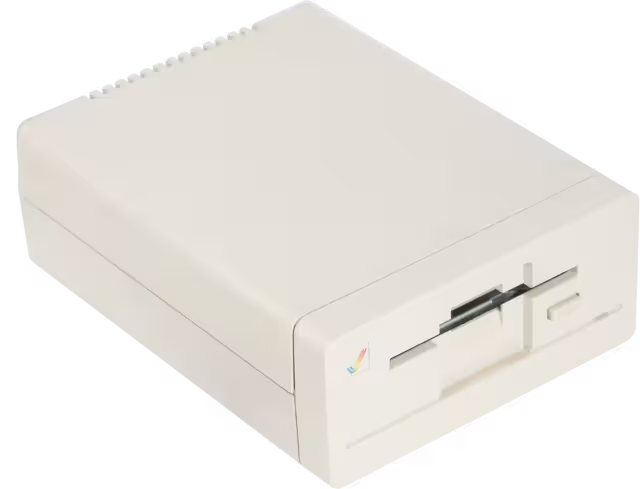
Amiga External 3.5" Floppy Disk Drive
Amiga 1010
Video Game Collection
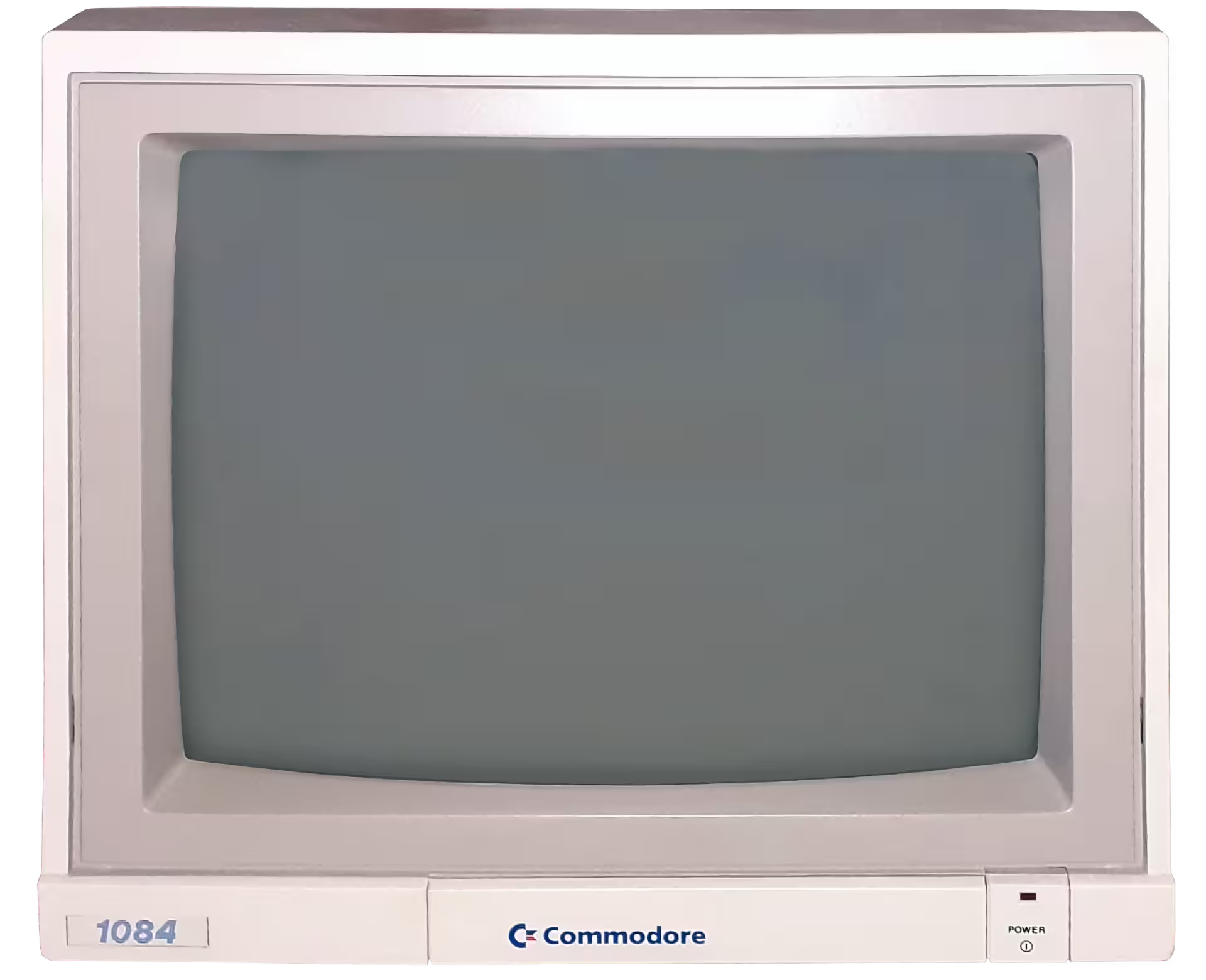
14-inch color monitor with mono audio. Designed for interlaced RGB input, is an exceptionally sharper than most CRT displays of its era – particularly TVs. Today remains a great way to play many early generation games that were designed for small CRTs. Certainly feels more authentic than going to significant lengths to recreate a similar look on modern technology using image processing.
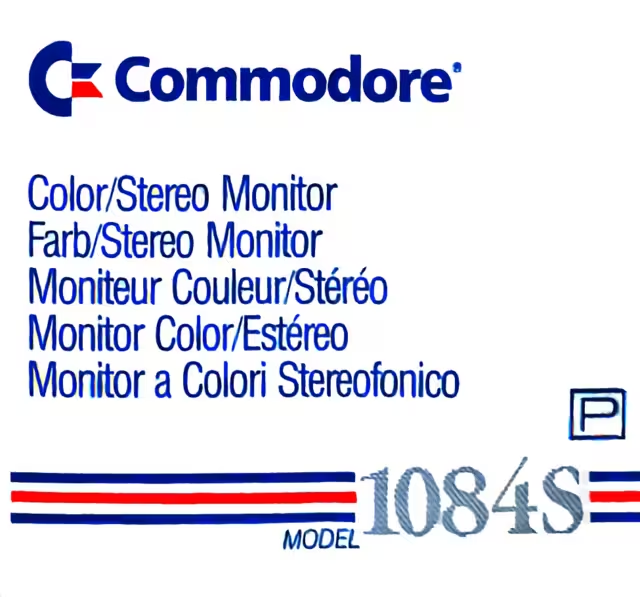
The Commodore 1084 line is a universal 14‑inch colour CRT display for Commodore systems. The standard 1084 provides composite video, digital RGB (for C128 80‑column mode or IBM CGA), and analogue RGB (for Amiga). It has one built‑in speaker, giving mono sound. The 1084S, meanwhile, was marketed as the stereo version. It retains the same video compatibility but adds two speakers, stereo audio inputs, and sometimes a headphone jack. This made it more suitable for Amiga users, since many Amiga titles and demos used stereo sound.
These monitors supported analog RGB, digital RGBI, composite video, and separate luminance/chrominance (Y/C) inputs, allowing for sharp, vibrant output from a wide range of systems. With a shadow‑mask tube, around 0.42 mm dot pitch, and the ability to handle both PAL and NTSC 15 kHz signals, it could display resolutions up to 640×512 in interlaced PAL mode. Built‑in stereo speakers, front‑panel controls for brightness, contrast, colour, and sharpness, plus rear input selectors, made it both functional and user‑friendly.
Internally, it housed a multi‑standard chassis capable of switching between formats, with a robust power supply and service adjustments for focus, convergence, and purity. The 1084 was prized for its crisp RGB output and its ability to deliver much cleaner images than composite‑only displays. Its compatibility, solid build, and period‑accurate aesthetics make it extremely ideal for playing any consoles or micro computers from the era. Throughout the 90s I’d often use them for Sega and Nintendo systems for an extremely crisp yet accurate image, particularly games of the era designed for CRT displays. The size, although small for today, reflects the period and frankly often makes for a better experience that stretching low pixel games across relatively massive, modern displays.
There are several manufacturing variations. Commodore sourced these monitors from Philips, Daewoo, and other OEMs, so case styling, LED placement, and connector layouts could vary. At the time, the 1084 was praised for versatility, working with C64, C128, Amiga, and even non‑Commodore systems like Apple IIgs or Atari ST. The 1084S was noted for better audio and became the preferred choice for Amiga users who wanted stereo output. Today, both remain usable albeit prone to needing maintenance. The absolute latest (and expensive) FPGA-based scalers that can re-create CRT display methods on a 4K panel probably make a better choice today and audio was always better routed through a high quality stereo-amp to headphones or studio speakers.