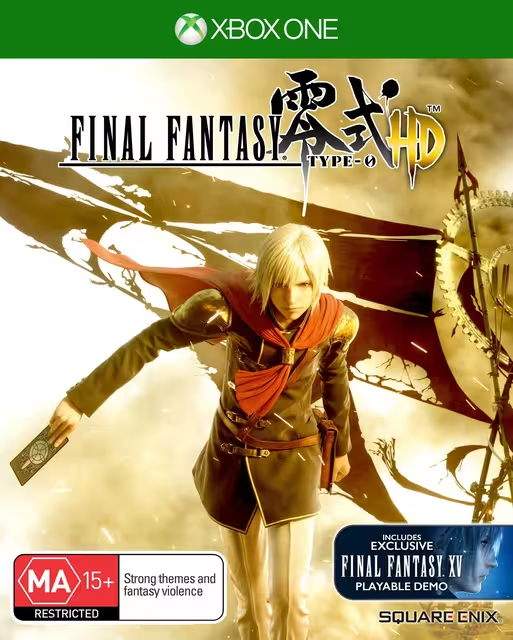
Final Fantasy Type-0 HD
900-65048
Video Game Collection

A role-playing game enhanced port for Windows PCs, designed to bring a landmark console experience to desktop platforms while introducing technical changes tied to late-1990s hardware.
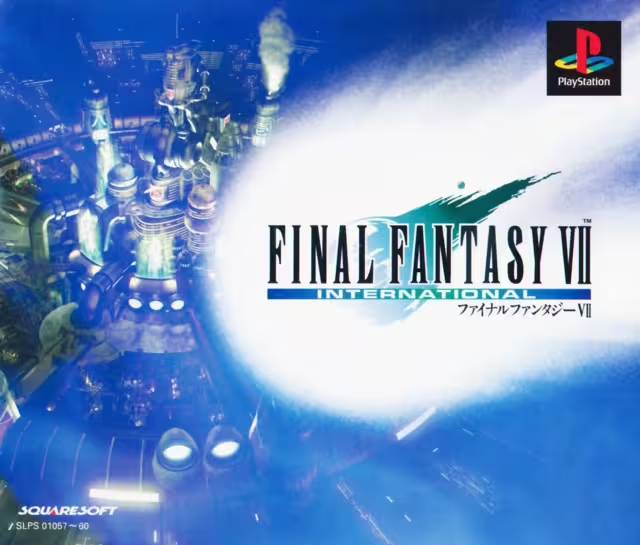
Final Fantasy VII preserves the narrative structure and pre-rendered environments of the PlayStation release, presenting a story of ecological conflict and personal identity across a mix of urban and natural settings. Players follow Cloud Strife and his allies through turn-based battles, exploration, and cinematic sequences, with the PC version maintaining the same progression systems and materia-based customisation that define the original design.
The port introduces higher display resolutions and minor visual alterations, including animated mouths on character models during field navigation. Full-motion video sequences are retained as AVI files, and the soundtrack is rendered through MIDI playback, producing variable audio quality dependent on you sound card. While the adaptation corrects some localisation errors, it also saw some bugs and performance issues including FMV playback problems and crashes, under certain configurations. These limitations prompted official patches and later community fixes, alongside fan-made enhancements to restore or improve audio fidelity.
Most poor experiences were a result of poor hardware. I was very lucky, with a fast system the 3D rendering was smooth even in VGA, quadrupling the original resolution. Although this looked amazing the backgrounds did not match, an incongruence obvious today that was acceptable back then. Yamaha software wavetable synthesis was included that made the general MIDI music much higher quality but demanded even more CPU performance, back when PCs often had little extra to give back then. However, the game also included a custom sound font sample set, which required the latest high-end sound card such as a Sound Blaster AWE64 Gold. Loading the custom sound fonts I was able to experience by far the best music solution for the game, which also saw no CPU impact. It was extremely impressive. Finally extra gigabytes of storage space meant the entire game could be installed on a hard disk, improving overall loading times and experience. I appreciate however, many did not have access to this sort of hardware.
At release, critics praised the improved resolution and the game becoming accessible to PC players but noted instability and inconsistent sound quality. Retrospective commentary regards the port as a technically imperfect but historically significant effort, remembered for extending the reach beyond its original console audience. This was really a reference point for early console-to-PC conversions, illustrating both the ambition and challenges of cross-platform adaptation during its era. Ultimately people’s memory of this version directly correlates with the quality of hardware they had, which for myself meant this was by far superior to the PlayStation original.
| Item Name |
|
|---|---|
| Original Name |
|
| Item Number |
|
| Series | |
| Type | |
| Genre | |
| Territory | |
| Packaging | |
| Documentation | |
| Developer | |
| Publisher | |
| Media | |
| Players | |
| Sound Modes | |
| Release Date | |
| Date Added |
|