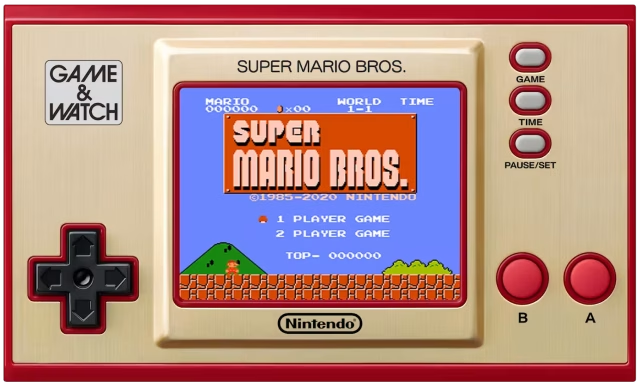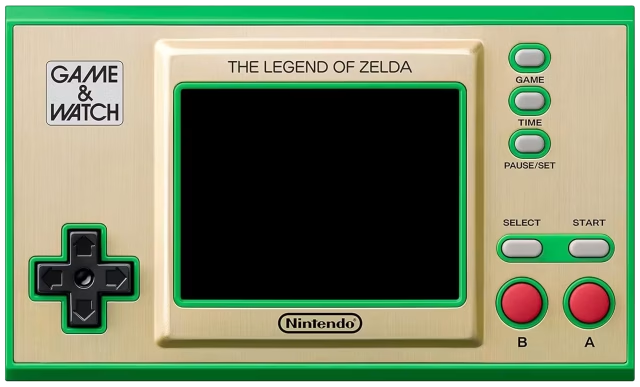
Game & Watch: The Legend of Zelda
ZL-35
Video Game Collection
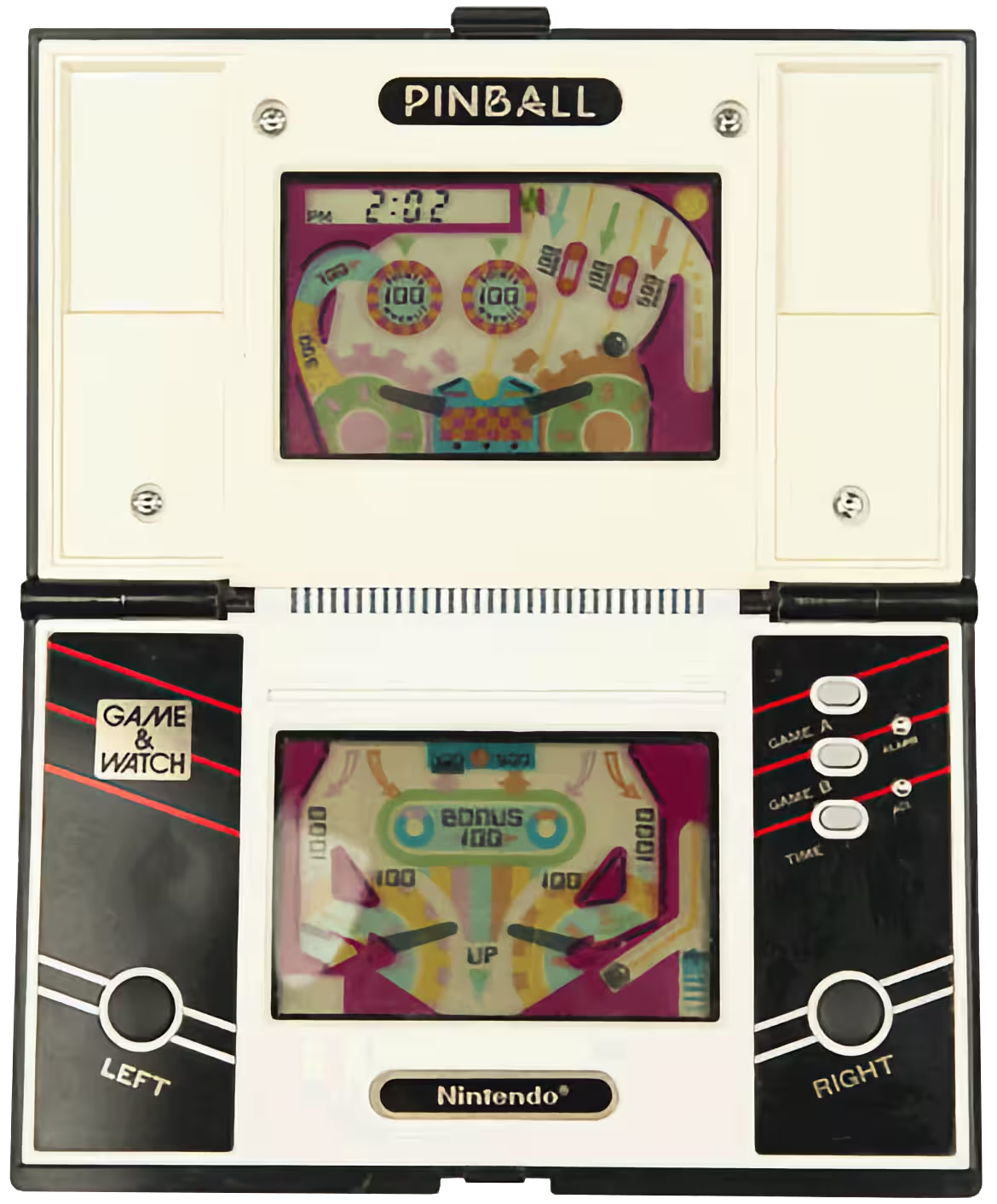
A portable pinball simulation machine across two LCD screens, with flippers, bumpers, and scoring mechanics. Part of the Game & Watch Multi Screen series.
Pinball used the familiar clamshell layout of Multi Screen units, with the lower screen showing the flippers, plunger, and ball reserves, while the upper screen displayed bumpers and scoring targets. The ball would travel between the two screens, mimicking the vertical playfield of a real pinball machine. Players controlled the flippers with the left and right buttons, aiming to keep the ball in play and rack up points.
Two modes were available: Game A and Game B. In Game A, players had three balls with no extra rewards for high scores. In Game B, the challenge was heightened with only one ball at a time, but extra balls could be earned at 10,000 points and then every 20,000 points thereafter, up to a maximum of three in reserve. Scoring was straightforward: hitting bumpers awarded 500 points, and the maximum score possible was 999,900 before the counter reset to zero.
Like other Game & Watch units, Pinball also included a clock and alarm function, with a small bell icon appearing when the alarm was set. Around 250,000 units were manufactured worldwide, making it one of the more widely distributed Multi Screen entries. Retrospectively, Pinball was one of Nintendo’s more ambitious LCD adaptations, capturing the feel of arcade pinball within the limitations of dual screens. It stands alongside titles like Donkey Kong and Mario Bros. in showcasing how the Multi Screen format could simulate complex arcade experiences in handheld form. The game would be further expanded onto the Famicom the following year, with a NES release a year later.
| Item Name |
|
|---|---|
| Item Code |
|
| Territory | |
| Packaging | |
| Documentation | |
| Manufacturer | |
| Release Date | |
| Date Added |
|