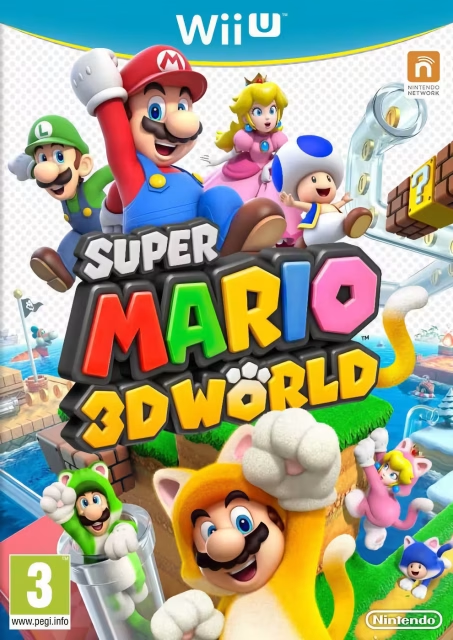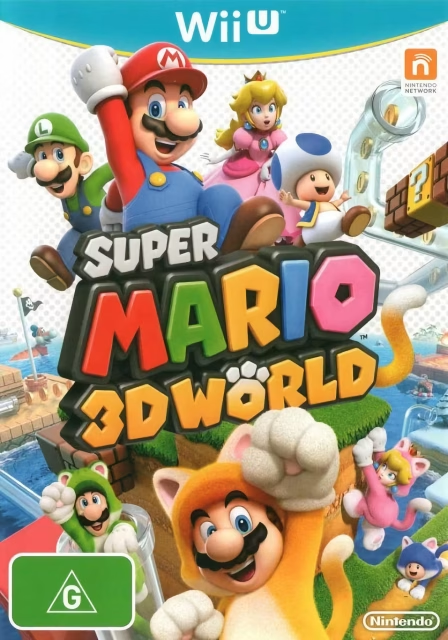
Super Mario 3D World
WUP-ARDP-AUS
Videospielsammlung


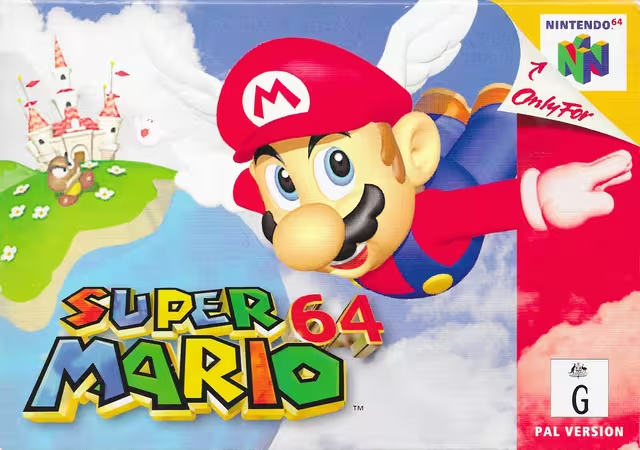
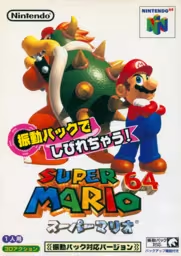 Box Front
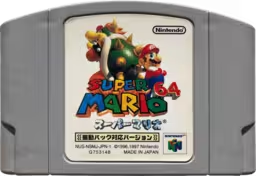 Game Cartridge
Eine exklusiv in Japan erschienene Revision des wegweisenden Launch-Titels mit Rumble-Pak-Unterstützung und zu reduziertem Preis. Diese Version enthält zudem diverse Fehlerbehebungen, die bereits in die internationalen Fassungen eingeflossen waren.
Das unter der Federführung von Shigeru Miyamoto bei Nintendo entwickelte Super Mario 64 markierte den ersten Ausflug des Klempners in eine vollständig dreidimensionale Umgebung und verabschiedete sich damit von den traditionellen Side-Scroller-Mechaniken zugunsten weitläufiger, erkundbarer Areale. Die Geschichte beginnt damit, dass Mario am Schloss von Prinzessin Peach eintrifft, nur um festzustellen, dass Bowser das Anwesen infiltriert, die Power-Sterne entwendet und Peach gefangen genommen hat. Mario muss in magische Gemälde innerhalb des Schlosses eintauchen, um thematische Welten zu betreten, in denen ihn jeweils mehrere Missionen erwarten. Durch das Sammeln von Power-Sternen werden neue Bereiche des Schlosses zugänglich, was letztlich in drei entscheidenden Konfrontationen mit Bowser mündet.Super Mario 64 (Shindou Pak Taiou Version) führte die Unterstützung für haptisches Feedback ein – eine willkommene Ergänzung für diesen bahnbrechenden Titel – und integrierte zudem diverse Fehlerbehebungen, die zwischen dem ursprünglichen japanischen Release und der internationalen Veröffentlichung vorgenommen wurden. Revisionen von Nintendo-Modulen waren sowohl bei Nintendo als auch bei Drittherstellern keine Seltenheit. Viele Module tragen am Ende ihrer Produktnummer eine -1, was meist auf eine solche subtile Überarbeitung hinweist. Diese Version ist jedoch insofern bemerkenswert, als sie explizit als eigene, neue Edition vermarktet wurde.Das Gameplay definiert sich über Bewegungsfreiheit. Dank des Analog-Sticks des Nintendo 64 kann Mario gehen, rennen, springen, sich ducken, rückwärts salto schlagen, an Wänden abspringen und seinen inzwischen legendären Dreifachsprung ausführen. Die dynamische Kamera, die durch den Charakter Lakitu gesteuert wird, gilt als eines der ersten funktionierenden 3D-Kamerasysteme, das Spielern eine Echtzeit-Anpassung der Perspektive ermöglichte. Es gibt fünfzehn Hauptkurse mit jeweils einzigartigen Herausforderungen – von den offenen Hügeln im Bob-omb-Königreich bis zu den rotierenden Zahnrädern der Ticktack-Uhr oder den riskanten Plattformen der Regenbogen-Raserei. Insgesamt lassen sich 120 Power-Sterne finden, wobei 70 ausreichen, um den finalen Kampf zu erreichen. Geheimnisse, versteckte Sterne und alternative Routen bieten einen hohen Wiederspielwert.Super Mario 64 lag in vielen Regionen als Bundle dem Nintendo 64 bei und verkaufte sich fast zwölf Millionen Mal, was es zum meistverkauften Spiel der Konsole macht. Es erntete weltweites Lob für seinen Pioniergeist, die präzise Steuerung und das Leveldesign. Rückblickend betrachtet zählt es zu den einflussreichsten Werken der Spielegeschichte und prägte das Design von 3D-Plattformern für Jahrzehnte. Der Titel wurde mehrfach neu aufgelegt: auf der Virtual Console für Wii und Wii U, als Super Mario 64 DS (2004) mit neuen Charakteren und Sternen sowie als Teil von Super Mario 3D All-Stars (2020) für Nintendo Switch. Zudem ist es Bestandteil der N64-Bibliothek von Nintendo Switch Online.
| Artikelname |
|
|---|---|
| Originalname |
|
| Artikelcode |
|
| Artikelnummer |
|
| Serie | |
| Typ | |
| Genre | |
| Merkmale | |
| Region | |
| Gebiet | |
| Verpackung | |
| Dokumentation | |
| Entwickler | |
| Verlag | |
| Medium | |
| Spieler | |
| Peripheriegeräte | |
| Startpreis |
|
| Veröffentlichungsdatum | |
| Hinzugefügt am |
|