Wii Console

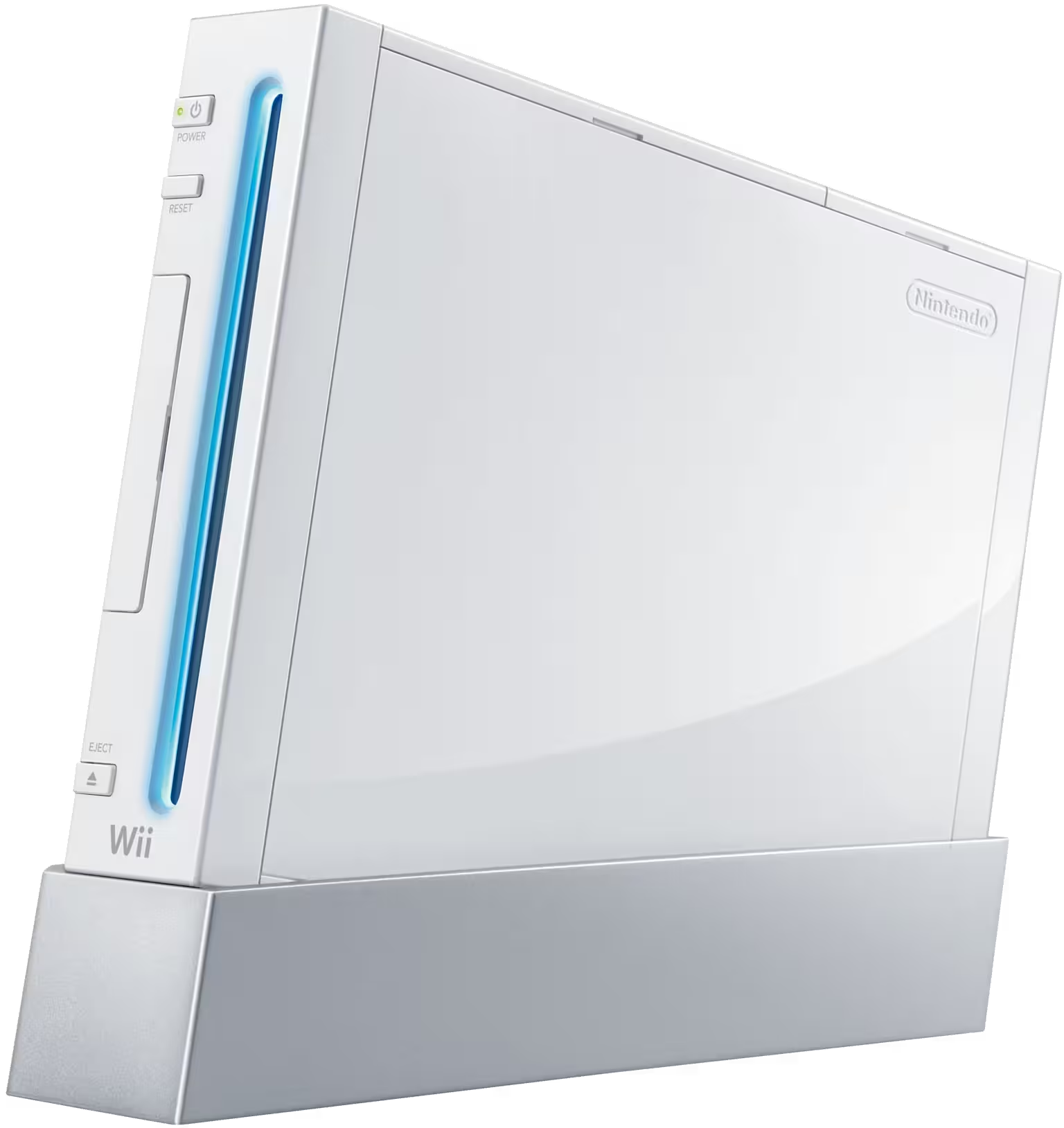
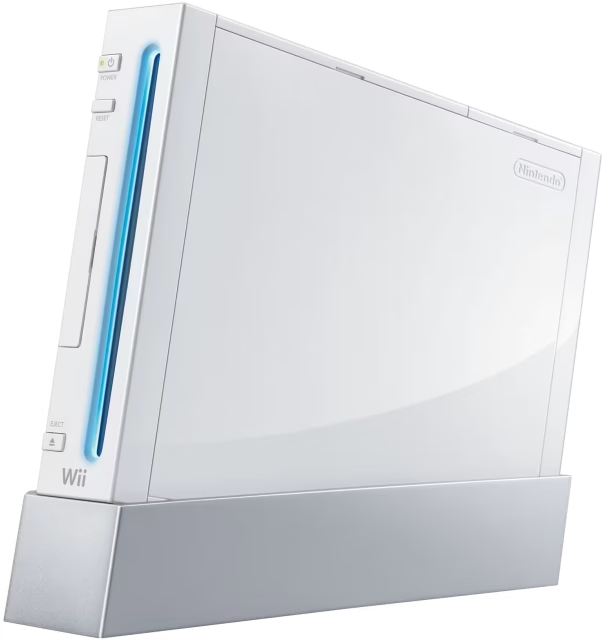
Nintendo’s seventh‑generation home console, designed to prioritise innovative motion‑based gameplay over raw processing power. Its hardware is built around cost‑efficient, customised versions of GameCube technology. This Korean version features a localised firmware that omits GameCube software compatibility despite retaining the physical controller ports.

Description

The original Korean Wii Console represents a unique regional variation of the motion-controlled hardware. While it retains the iconic aesthetic and core internal architecture of the initial global release, it contains specific regional restrictions and firmware adjustments designed for the South Korean market. The Korean Wii originally launched with a localised version of the Wii Shop Channel and the “Mii” creation suite tailored for Korean users.

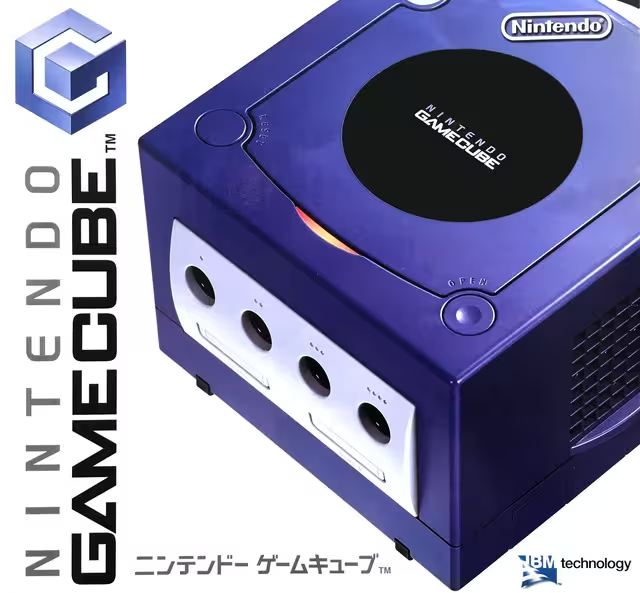
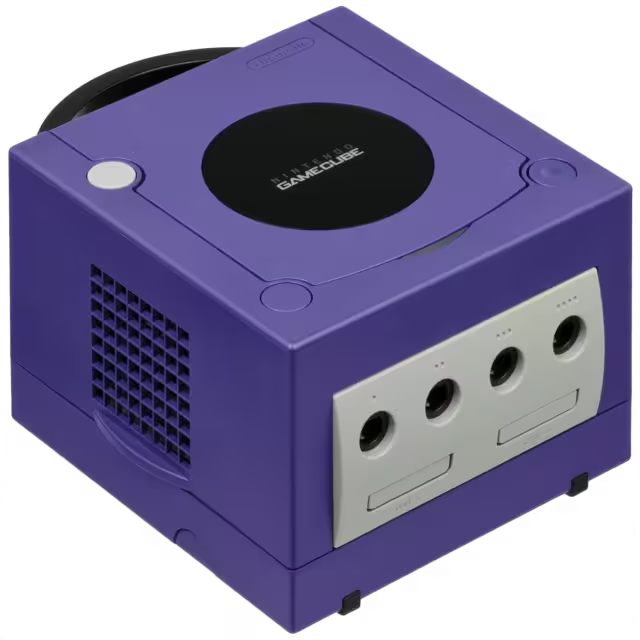
A significant regional distinction for the Korean model is its lack of backwards compatibility; while the physical unit includes the four GameCube controller ports and two memory card slots, the logic board and optical drive firmwares do not support 8 cm GameCube discs or software. This is notable because 40+ official Korean-specific GameCube titles do exist. Prior to Nintendo of Korea (NoK) being established in 2006, the GameCube was distributed in Korea the conglomerate Daewon Media. These used the existing NTSC-J (Japanese) hardware and region coding. With this model Wii, Nintendo intentionally chose to implement the unique NTSC-K / KOR region code to separate the Korean market from the Japanese one, largely to control pricing and prevent Japanese imports to address regulatory concerns.

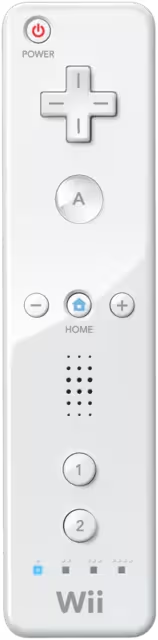
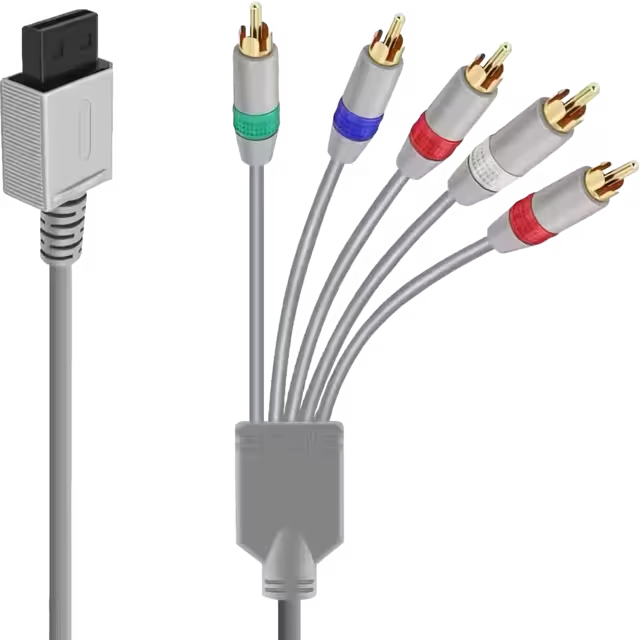
Despite the firmware differences, the hardware is otherwise unchanged. At its core is the Broadway CPU, a 729 MHz IBM-designed 32-bit PowerPC chip, paired with the Hollywood GPU running at 243 MHz. This system-on-a-chip integrates graphics, audio, I/O, and security functions. The Hollywood chip contains 24 MB of high-speed 1T-SRAM, which works alongside 64 MB of GDDR3 system memory for a total of 88 MB of RAM, plus 3 MB of embedded GPU texture memory. Storage is provided by 512 MB of internal flash memory, expandable via SD cards. The Wii outputs video up to 480p via component cables, with composite and S-Video options also available. It features built-in 802.11b/g Wi-Fi, Bluetooth for wireless controllers, and two USB 2.0 ports. Its signature Wii Remote controllers use Bluetooth, an accelerometer, and an infrared sensor via the Sensor Bar for motion and pointing controls. The console’s low-power, efficient architecture allows for a compact, quiet design and low heat output.

The reception to the Wii in South Korea was nothing short of a cultural phenomenon. NoK invested heavily in local marketing, hiring A-list celebrities like Jang Dong-gun (the “George Clooney of Korea”) to appear in commercials. This positioned the Wii not as a “toy for kids,” but as a sophisticated lifestyle device for adults and families. Within its first year, the Wii sold approximately one million units in South Korea, a staggering number for a dedicated game console in a market dominated by PC bangs and online gaming. Just like in the West, Wii Sports and Wii Fit were the primary drivers. They were widely used in Korean “Silver Towns” (retirement communities) and schools, cementing the console’s status as a mainstream success. Retrospectively, compared with all other regions, the Korean Wii library is tiny, consisting of only about 150 to 200 official titles. This makes the Korean Wii a historical oddity, isolated by its regional coding.

Datasheet

Item Name
  • Wii Console
Original Name
  • ウィー 本体
Localised Name
Item Code
  • RVL-001(KOR)
Type
Class
Color
Region
Territory
Packaging
Documentation
Developer
Manufacturer
Distributor
Release Date
Date Added
  • 11 February 2026