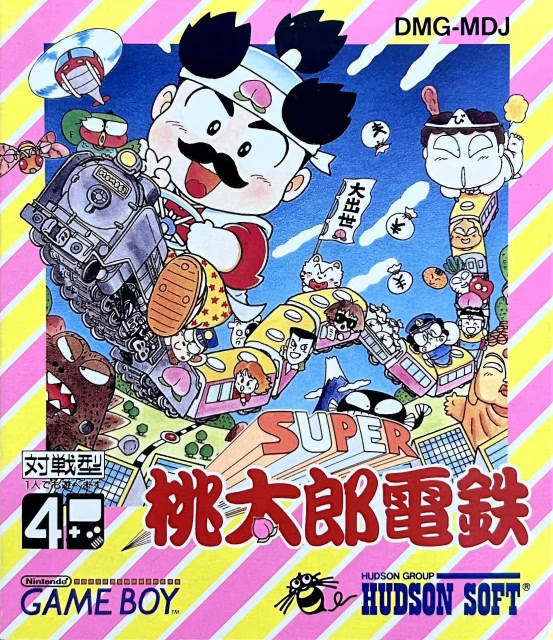
Super Momotarō Dentetsu
DMG-MDJ
Video Game Collection
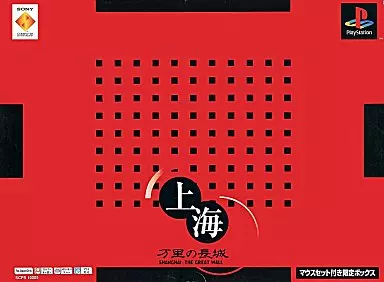
 Box Front
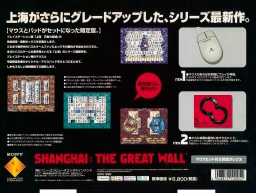 Box Back
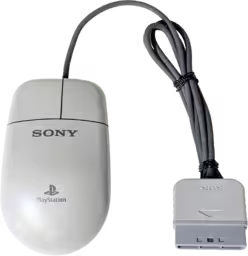
A technically refined 32-bit iteration of a Mahjong solitaire title, built on a multiplatform engine that emphasises high-resolution bitmap clarity, diverse puzzle modes, and CD-quality redbook audio. This Limited Edition includes the official PlayStation Mouse as one of the earliest supporting titles of the peripheral.
Shanghai: Banri no Chōjō (lit. Shanghai: The Great Wall) was the PlayStation port of the title known in the West as Shanghai: Triple-Threat. The title was originally released for the 3DO and X68000 before receiving ports to the newest system. Other versions of this game were distributed by Sunsoft or Electronic Arts Victor, but Sony handled the PlayStation version. Released just months after the console’s launch, it served as a primary example of Sony’s effort to curate a sophisticated library of lifestyle and board games for a mature audience. Like other ports, it supports mouse input, making it one of the earliest PlayStation mouse titles. This Limited Edition version bundled the mouse and a mouse pad that was specific for the game.
The game features high-resolution 2D assets first seen on the 3DO, offering significantly cleaner tile rendering and more detailed backgrounds than the Super Famicom or PC-Engine iterations. The soundtrack features high-fidelity, traditional Chinese instrumentation CD audio. While Activision wanted to publish the game on PlayStation in North America, Sony Computer Entertainment America rejected it. The western market at the time was self-harming, hyper-focused on high-octane 3D titles (which have all aged terribly) at a loss of numerous high quality 2D titles. While this title would have had limited Western interest, the Japanese market often saw traditional table games as an important piece of the launch-era library.
True to its Triple-Threat origins, the game includes four distinct puzzle variants, providing significantly more depth than a standard solitaire experience. These modes include The Great Wall: A unique mode where tiles are stacked vertically; removing a pair causes the tiles above to fall into the empty spaces, introducing a gravity-based strategic layer similar to falling-block puzzles; Beijing: A mode where gaps are created to allow tiles to be slid horizontally, requiring the player to navigate obstacles to find matches; and The Golden Tile: A competitive two-player mode where players race to clear the same layout.
The title represents an early moment in the 32-bit wars where high-end puzzle games were used as technical showcases for CD-ROM capacity and high-resolution 2D transparency effects. Unlike later “budget” puzzle releases, Shanghai: Banri no Chōjō was positioned as a premium product, complete with cinematic FMV transitions and a polished, professional interface that set the standard for digital board games on the system.
| Item Name |
|
|---|---|
| Original Name |
|
| Item Code |
|
| Item Number |
|
| Series | |
| Type | |
| Genre | |
| Region | |
| Territory | |
| Packaging | |
| Documentation | |
| Developer | |
| Publisher | |
| Media | |
| Players | |
| Peripherals | |
| Launch Price |
|
| Release Date | |
| Date Added |
|