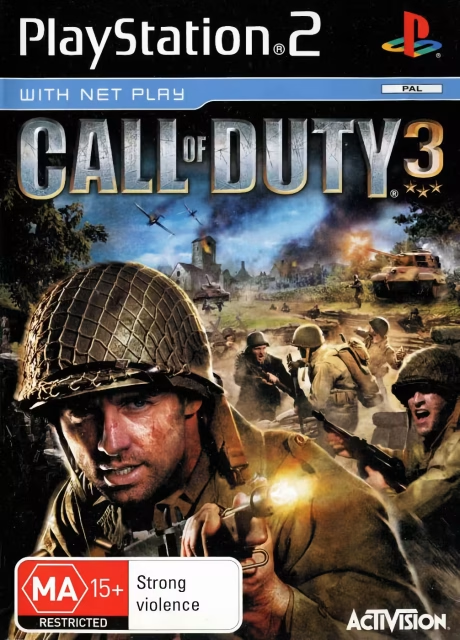
Call of Duty 3
SLES-54166, 81633.202.AU
Videogame Collectie


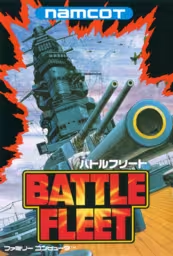 Box Front
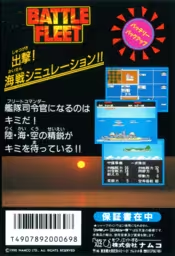 Box Back
Een maritiem strategiespel dat turn-based planning mengt met actiesequenties, en zich onderscheidt als een van de eerste pogingen om vlootcommando en tactische oorlogsvoering naar een 8-bit console te brengen.
In Battle Fleet neem je de leiding over een vloot van oorlogsschepen en onderzeeërs in een strijd tegen een vijandelijke marine, waarbij het doel is om de tegenstander te slim af te zijn en hun vloot naar de kelder te werken. In tegenstelling tot de arcade-shooters uit die tijd, legt Battle Fleet de nadruk op positionering, resource management en anticiperen. Per beurt bepaal je de koers van je schepen op een kaart met een raster, waarna je toekijkt hoe de actie zich ontvouwt terwijl schepen bewegen en vuren volgens jouw bevelen. De toon is serieus en militaristisch, wat de destijdse experimenteerdrift van Namco onderstreept om strategie naar een consolemarkt te brengen die destijds werd gedomineerd door actietitels.
De gameplay combineert strategische planning met real-time resolutie. Je kiest uit verschillende scheepstypes: torpedobootjagers, kruisers, vliegdekschepen en onderzeeërs, elk met unieke bewegingsbereiken en vuurkracht. Onderzeeërs kunnen duiken om aanvallen te ontwijken, vliegdekschepen kunnen vliegtuigen lanceren en oppervlakteschepen wisselen artillerievuur uit. De uitdaging schuilt in het voorspellen van vijandelijke bewegingen, aangezien aanvallen alleen succesvol zijn als je berekende vuurcoördinaten samenvallen met de positie van de vijand. Dit ‘guess and check’-mechanisme geeft het spel een gespannen, schaakachtige kwaliteit. Vergeleken met tijdgenoten zoals Nintendo’s Famicom Wars of de Naval Battle-titels van Koei voor de pc, was Battle Fleet gestroomlijnder, maar niettemin ambitieus voor een console-release.
De game maakte deel uit van Namco’s streven om te diversifiëren buiten hun arcade-hits zoals Xevious en Galaga. Omdat de titel nooit Japan heeft verlaten, bleef de bekendheid beperkt, maar het was een voorbode voor de tactische strategie-hybrides die later op consoles tot bloei zouden komen. Spelers die de voorkeur gaven aan langzamere, doordachte gameplay waardeerden de diepgang, maar velen vonden de game te complex vergeleken met de toegankelijke stijl van de meeste Famicom-spellen. In retrospectief is het een vroeg experiment in maritieme strategie dat de weg vrijmaakte voor latere tactische consolegames.
| Itemnaam |
|
|---|---|
| Oorspronkelijke naam |
|
| Itemcode |
|
| Itemnummer |
|
| Type | |
| Genre | |
| Thema | |
| Kleur | |
| Regio | |
| Territorium | |
| Verpakking | |
| Documentatie | |
| Ontwikkelaar | |
| Uitgever | |
| Media | |
| Spelers | |
| Lancering prijs |
|
| Release datum | |
| Datum toegevoegd |
|