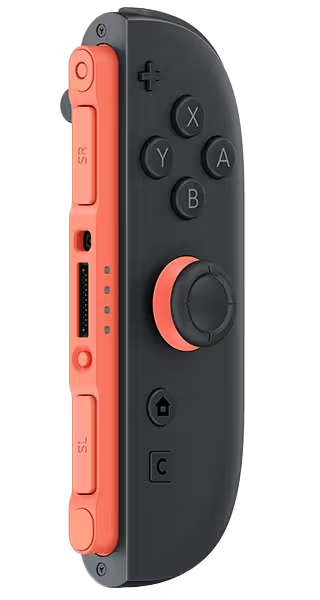
Joy-Con 2 (R)
BEE-014
Colección de videojuegos

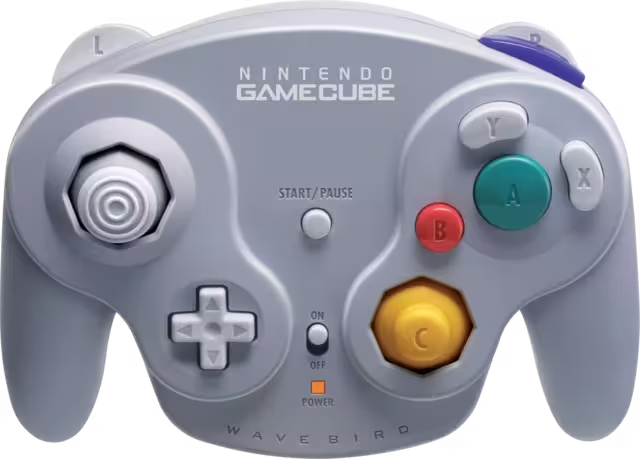
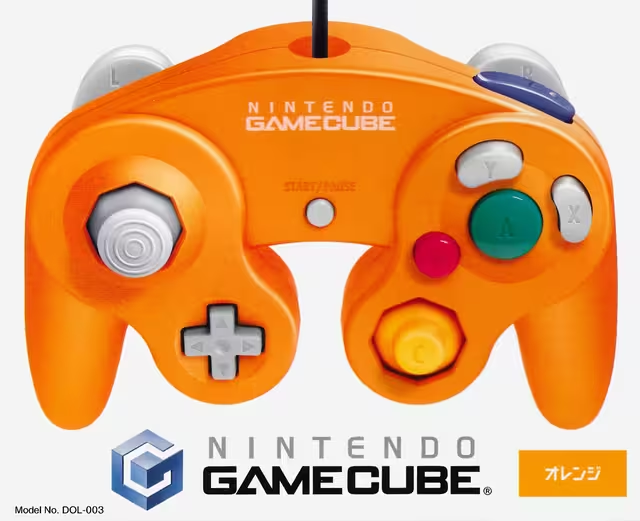
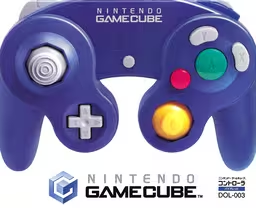
El mando de GameCube introdujo un diseño ergonómico de doble empuñadura con botones asimétricos, dos sticks analógicos, gatillos híbridos analógicos/digitales y retroalimentación de vibración integrada.
El mando de GameCube fue el dispositivo de control estándar de Nintendo para su consola homónima, lanzado en 2001, y es considerado ampliamente como uno de los diseños más característicos de la compañía. Este mando abandonó la forma de tres brazos de la Nintendo 64 en favor de un diseño convencional de doble empuñadura, ergonómico y diseñado para un ajuste natural en las manos. Presentaba un stick analógico principal a la izquierda, un C-stick amarillo más pequeño a la derecha, una cruceta compacta y un grupo de botones frontales dispuestos alrededor del gran botón A de color verde, enfatizado deliberadamente como entrada central. Complementando esto, se encontraban el botón B en rojo y los botones X e Y en gris, con forma de alubia, creando una disposición que guiaba el pulgar del jugador instintivamente hacia el botón A mientras mantenía el resto al alcance.
| Nombre del artículo |
|
|---|---|
| Nombre original |
|
| Código del artículo |
|
| Cantidad |
|
| Tipo | |
| Clase | |
| Color | |
| Territorio | |
| Embalaje | |
| Fabricante | |
| Precio de lanzamiento |
|
| Fecha de lanzamiento | |
| Fecha de incorporación |
|