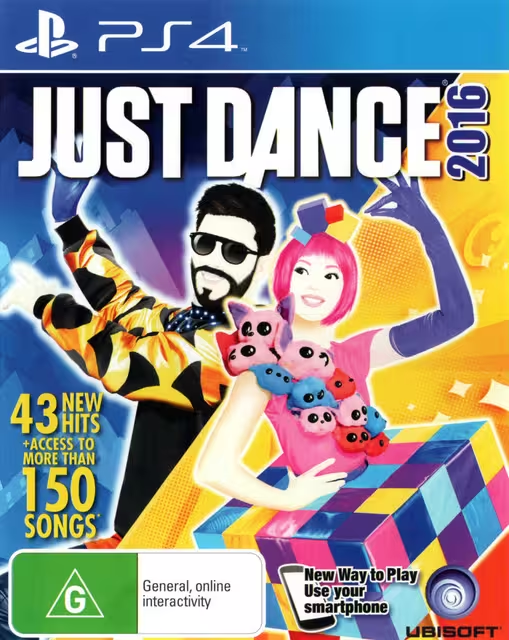
Just Dance 2016
CUSA-02315
Video Game Collection
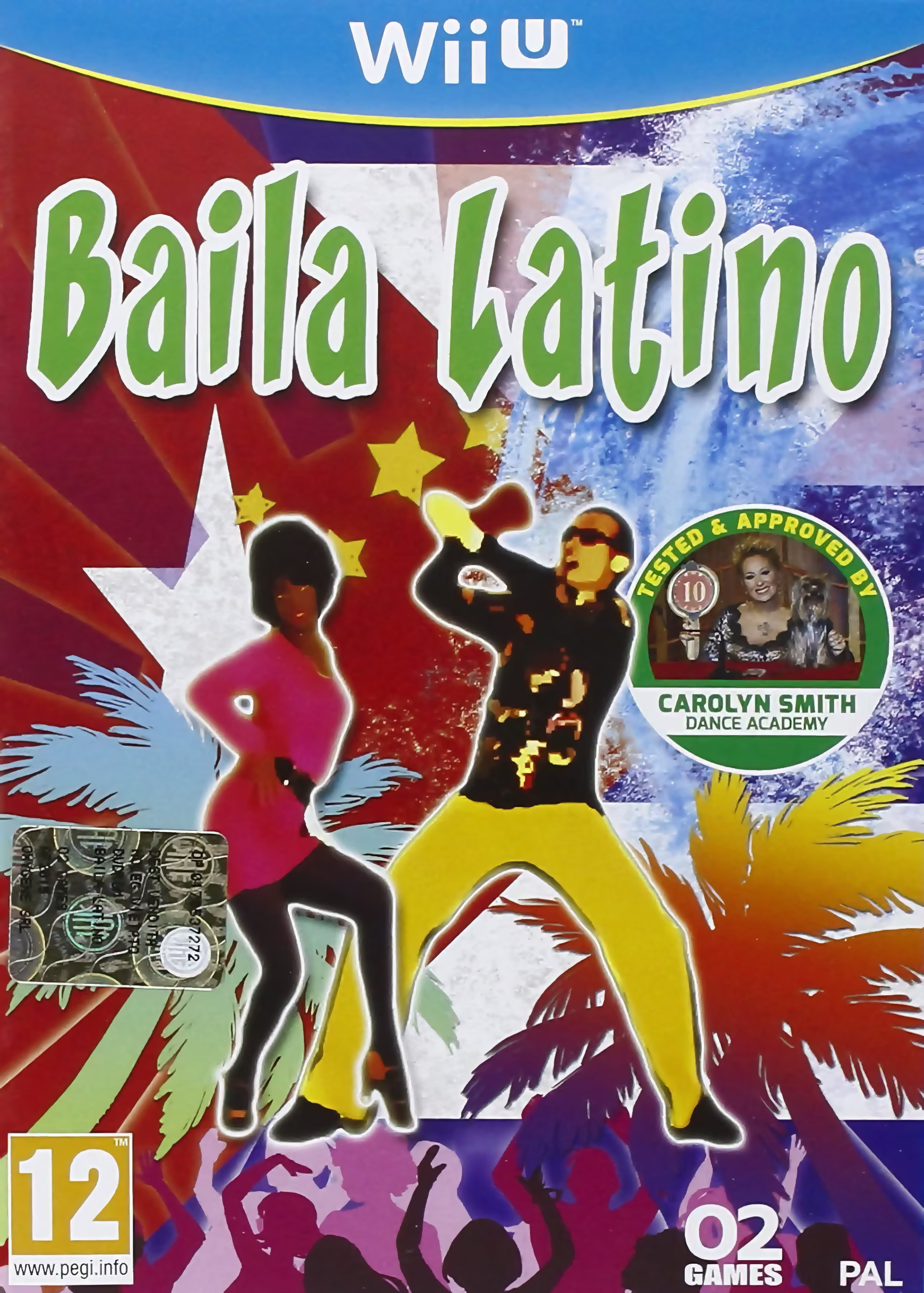
 Front Cover
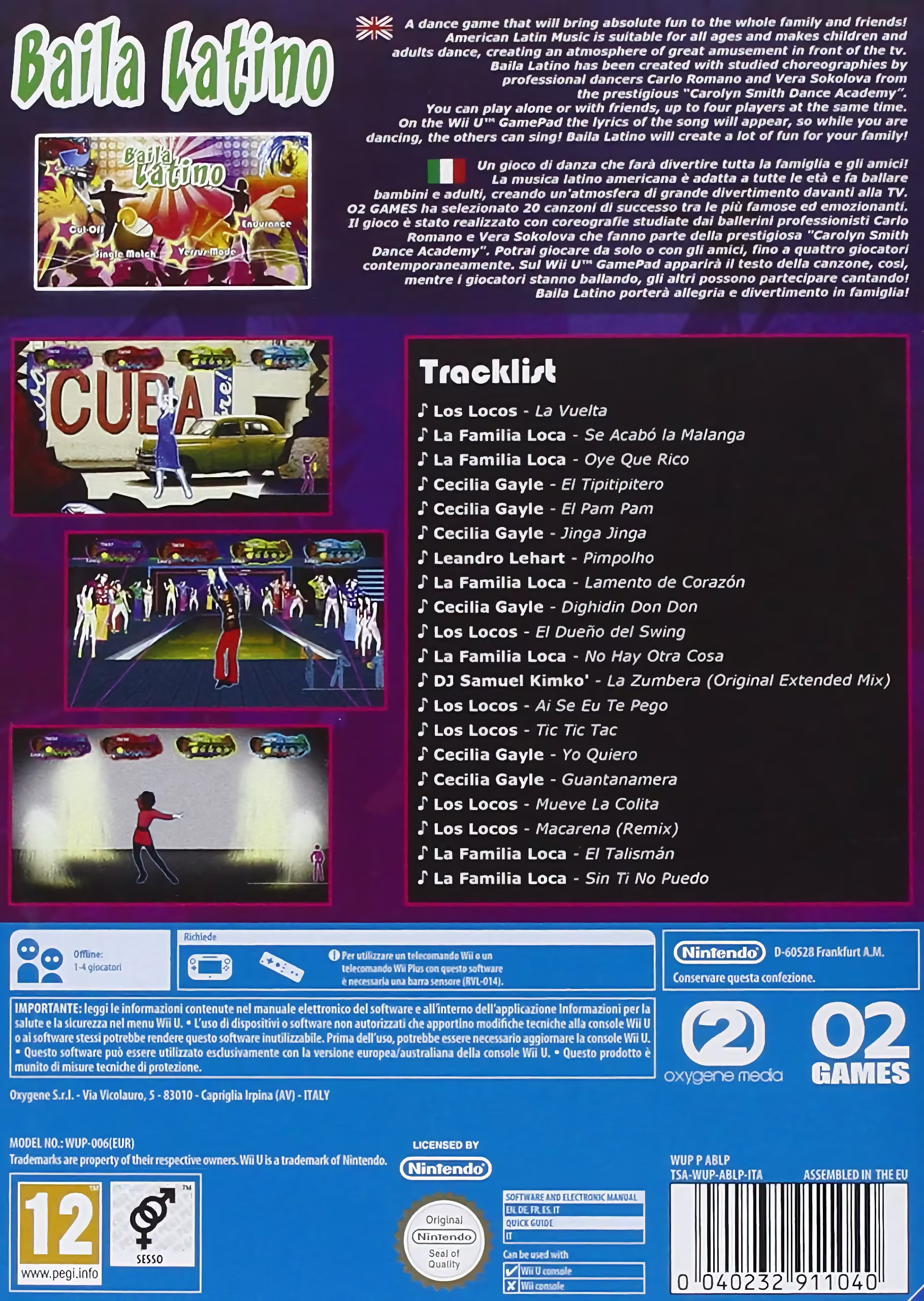
 Back Cover
A Latin music dance game built around motion-controlled choreography, featuring 20 songs, support for up to four dancers, and lyrics displayed on the Wii U GamePad for accompanying singers.
Baila Latino might draw parallels to Just Dance, but it concentrates entirely on Latin American and Spanish-language popular music rather than offering a broader selection of international pop. Its 20-song soundtrack covers several regional influences and dance styles, including salsa, merengue, reggaeton, and Brazilian popular dance music. The choreography was created by professional dancers Carlo Romano and Vera Sokolova of the Carolyn Smith Dance Academy.
The gameplay involves mirroring the movements of a dancer displayed on the screen with a Wii Remote. Upcoming actions are represented by pictograms scrolling along the lower portion of the screen with arrows for the direction and a visual beat marker to indicate timing. Performance is evaluated according to how accurately and rhythmically the Wii Remote reproduces the expected movements, awarding points, flowers, and trophies at the end of each routine. Songs can be played individually by up to four players, each requiring a separate Wii Remote. Meanwhile the Wii U GamePad provides an interface for profiles and song selection, while song lyrics appear on its screen during performances so others can sing while the dancers follow the television. Although this gives the GamePad a secondary karaoke function, the division of controls is awkward as the Wii Remote is only for dancing. Either device could have functionally handled the complete menu and gameplay interface.
Its colourful dancers, psychedelic backgrounds, upbeat soundtrack, and straightforward multiplayer give Baila Latino an appropriately cheerful party atmosphere, and the exclusive focus on Latin music distinguishes it from more general dance compilations. However, the limited selection of 20 tracks provides considerably less variety than contemporary competitors, and the available modes do little to extend the experience beyond repeating songs for higher scores. More seriously, the interface has its problems. Notably, the pictograms do not always correspond clearly with the movements demonstrated by the on-screen dancer, while some choreography proceeds with inadequate visual instructions. This can leave you uncertain whether to follow the dancer or the movement icons.
| Item Name |
|
|---|---|
| Item Code |
|
| Item Number |
|
| Type | |
| Genre | |
| Region | |
| Territory | |
| Packaging | |
| Documentation | |
| Media | |
| Players | |
| Peripherals | |
| Classification | |
| Release Date | |
| Date Added |
|