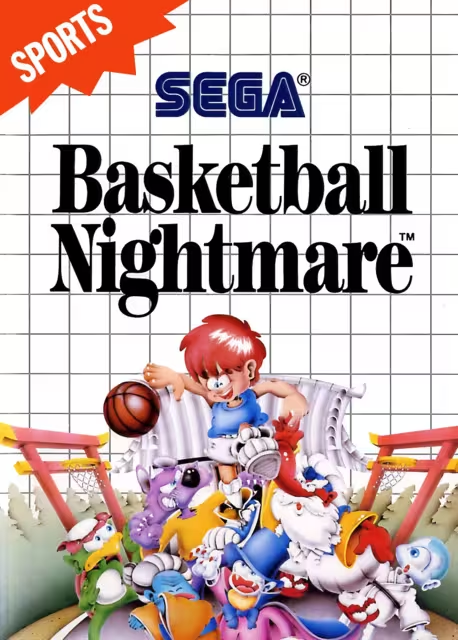
Basketball Nightmare
7025
Videopelikokoelma


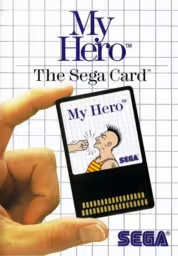 Front Cover
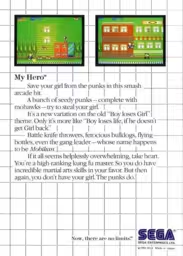 Back Cover
Sivusuunnassa rullaava tappelupeli, jossa seurataan suoraviivaista pelastustarinaa korkeakontrastisissa kaupunki- ja fantasiaympäristöissä. Seishun Scandal -kolikkopelin alkeellinen käännös, joka toimi varhaisena näyttönä Sega Master Systemin kyvyistä. Peli yritti tuoda ”delinquent-brawler” -genren kotikonsolille, mutta kolikkopelin armottoman vaikeustason siirtäminen kotikäyttöön ei tarjonnut tyydyttävää pelikokemusta.
My Hero keskittyy hahmoon, joka jahtaa jengijohtajaa pelastaakseen kaapatun tyttöystävänsä. Tämä takaa-ajo kulkee kaupungin katujen, esihistoriallisten maisemien ja futurististen ympäristöjen halki. Jokaisessa kentässä hahmo liikkuu jatkuvasti eteenpäin, ja vihollisia ilmestyy ruudun molemmilta puolilta. Pelaajan on taisteltava tiensä läpi, jotta hän kohtaa jokaisen osion lopussa odottavan pomovastustajan. Peli noudattaa alkuperäisen kolikkopelijulkaisun Seishun Scandal rakennetta, mutta sen visuaalista ilmettä on yksinkertaistettu kotikonsolille. Tyylillisesti ja kerronnallisesti peli ammentaa 1980-luvun japanilaisista manga- ja elokuvien ”delinquent”- ja Sukeban-teemoista. Tämä ”pelasta tyttö” -perusasetelma hioutui myöhemmin tunnetummaksi ja suositummaksi Double Dragonin ja Renegaden myötä, jättäen My Heron beat ’em up -genren kehityskaaren varhaiseksi, joskin yksinkertaiseksi askeleeksi.
Pelin pelattavuus on tunnetusti suoraviivaista: se koostuu peruslyönneistä ja -potkuista, jotka toistuvat kolmessa kentässä (kaupunki, saari ja tulevaisuus). Mekaniikka perustuu yhden osuman kuolemaan, eli mikä tahansa kosketus viholliseen tai ammukseen tarkoittaa elämän menetystä. Pelaaja käyttää yksinkertaisia lyöntejä tai hyppypotkuja raivatakseen tiensä. Toiminnot vaativat tarkkaa ajoitusta, sillä hahmon liikkeet ovat varsin kankeita. Kentät toistuvat silmukkana, mutta niiden nopeus kasvaa ja vihollisten määrä lisääntyy. Peli tukee kaksinpeliä vuoropohjaisessa muodossa, jossa pelaajat vaihtavat vuoroa elämän menetyksen jälkeen.
My Heroa verrataan usein epäsuotuisasti Iremin Kung-Fu Masteriin. Vaikka Master Systemin rauta mahdollisti NES-versiota suuremmat ja värikkäämmät sprite-hahmot, käännös kärsi huomattavista graafisista heikennyksistä verrattuna alkuperäiseen Sega System 1 -kolikkopeliin. Aikalaisarvostelijat kritisoivat peliä toistuvista kentistä ja korkeasta vaikeustasosta. Pelaajat huomauttivat, että kolme kenttää tarjoavat kotikonsolipeliksi vähän vaihtelua. Peli sai moitteita myös ruudunpäivityksen vilkkumisesta, kun näytöllä oli kerralla useita vihollisia. Jälkikäteen tarkasteltuna se oli varhainen täytepeli. Se toimi 1980-luvulla viikonlopun vuokrapelinä, mutta siitä puuttuu Segan myöhempien 8-bittisten klassikoiden, kuten Alex Kiddin tai Shinobin, syvyys ja viimeistely.
| Nimi |
|
|---|---|
| Alkuperäinen nimi |
|
| Tuotekoodi |
|
| Tyyppi | |
| Lajityyppi | |
| Teema | |
| Alue | |
| Markkina-alue | |
| Pakkaus | |
| Ohjekirja | |
| Kehittäjä | |
| Julkaisija | |
| Media | |
| Pelaajat | |
| Julkaisupäivä | |
| Lisäyspäivä |
|