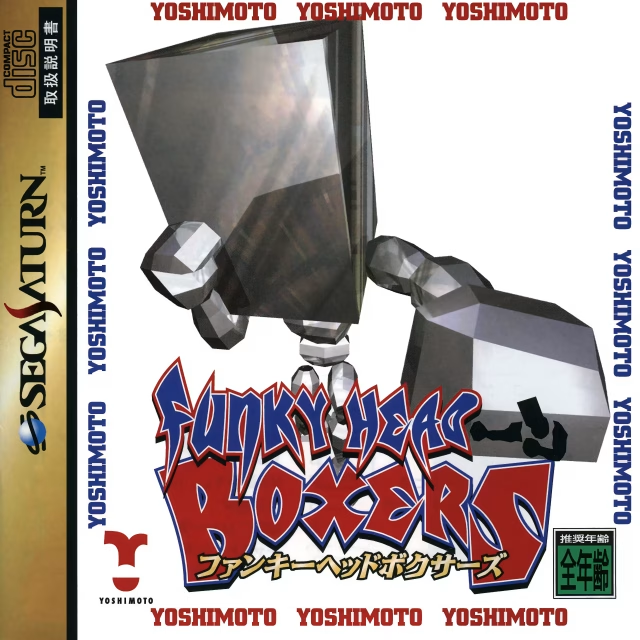
Funky Head Boxers
T-20003G
Collection de jeux vidéo


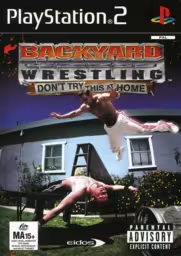 Front Cover
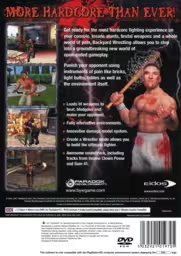 Back Cover
Un jeu de combat environnemental viscéral qui privilégie le choc et les décors destructibles aux mécaniques de catch classiques, resté célèbre pour son ancrage dans la culture underground et son approche frontale de la violence extrême.
Backyard Wrestling: Don’t Try This at Home marque une rupture radicale avec les spectacles léchés des titres WWE, préférant capturer le chaos brut et amateur de la scène underground. Ce titre tente de réinventer le genre du catch en le transformant en un jeu de combat environnemental où le décor s’avère tout aussi mortel que les adversaires. Il propose une forme de carnage en monde ouvert qui reflète la fascination du début des années 2000 pour les sous-cultures extrêmes et le choc visuel sur PlayStation 2. Le gameplay met en scène des icônes du milieu « hardcore » comme Sabu et Mad Man Pondo, ainsi que les membres d’Insane Clown Posse. Ici, point de cordes ni d’arbitres : les affrontements se déroulent dans des zones interactives allant de jardins pavillonnaires à des abattoirs. L’aspect central repose sur un système d’interaction où chaque élément du décor — ampoules, barbelés, capots de voiture ou murs de briques — devient une arme. La structure du jeu s’articule autour d’un récit façon « Talk Show », privilégiant les cascades à haut risque et la violence graphique au détriment des prises techniques. Techniquement, le développement s’appuie sur une version primitive du moteur de State of Emergency, modifiée pour gérer la profusion d’objets destructibles. Si les environnements impressionnent par leur fragilité, la physique des lutteurs manque cruellement d’impact, souffrant d’animations imprécises et de modèles traversant les textures. Malgré des glitchs persistants et un rendu visuel parfois confus dû au système de blessures en temps réel, l’immersion sonore est une réussite, portée par une bande-son nu-metal et punk qui incarne l’agressivité de l’ère MTV. Accueilli de manière polarisée à sa sortie, le titre fut souvent réduit à un simple « button-masher » par la presse spécialisée, tandis que son public cible saluait sa violence décomplexée. Rétrospectivement, il s’impose comme une relique culturelle fascinante, un témoignage brut de la contre-culture américaine du début des années 2000 et une tentative audacieuse, bien que chaotique, de fusionner catch et combat environnemental.
| Nom de l'article |
|
|---|---|
| Code article |
|
| Numéro d'article |
|
| Série | |
| Type | |
| Genre | |
| Thème | |
| Région | |
| Territoire | |
| Emballage | |
| Documentation | |
| Développeur | |
| Éditeur | |
| Distributeur | |
| Support | |
| Joueurs | |
| Classification par âge | |
| Prix de lancement |
|
| Date de sortie | |
| Date d'ajout |
|
| Liens externes |
|