Family Jockey 2: Meiba no Kettō
ファミリージョッキー2 名馬の血統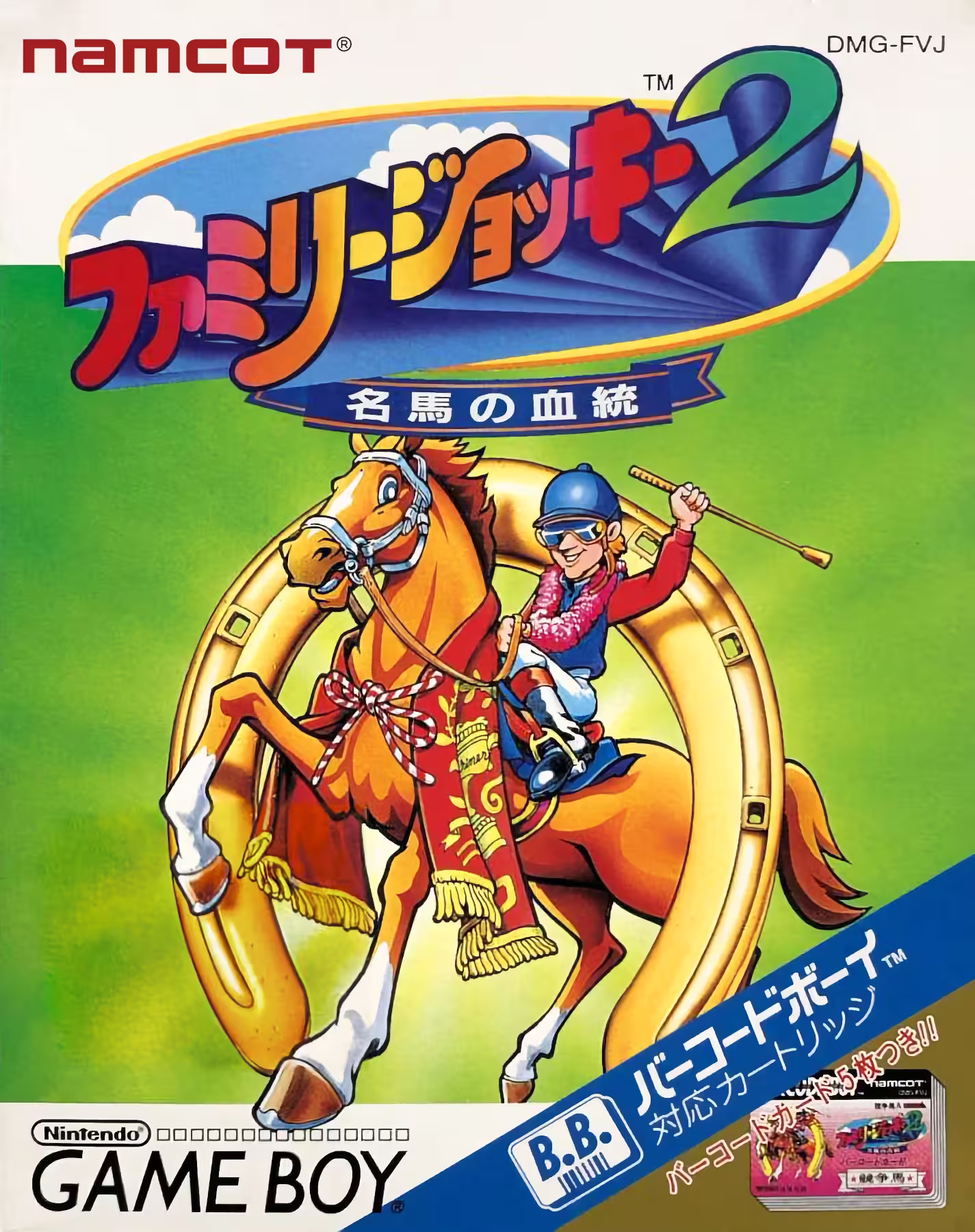
-
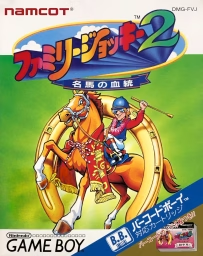 Box Front
-
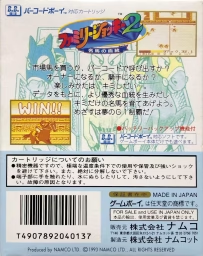 Box Back
A horse-racing sequel that shifts Family Jockey away from pure arcade racing and toward breeding, money management, and long-term horse production. It keeps direct jockey control during races, but the real focus is now creating stronger bloodlines capable of winning every G1 race.
Description
Family Jockey 2: Meiba no Kettō still uses familiar Family Jockey race stats such as speed, stamina, guts, turbo, jump, and type, but these no longer improve through item panels during races. Instead, horse ability is largely determined before racing through breeding or horse selection, making preparation more important than mid-race power-ups. It moved away from the arcade gameplay of Family Jockey, to a major horse-production and management structure around buying broodmares, using stallions, breeding racehorses, and trying to create a horse strong enough to win major races.
The main mode revolves around earning money, preparing horses, entering races by class, and eventually winning all eight G1 races. Race classes progress from newcomer and lower-money races through GIII, GII, and finally GI, and a horse can run up to 16 races before retirement. Once retired it can become a stallion, feeding back into the breeding loop. The racing itself is more grounded and less chaotic than the earlier title. Item zones and stamina recovery pickups are gone, collisions mainly waste stamina, and races put more emphasis on pacing, positioning, and preserving stamina for a late run. The player can ride manually, or pay to hire a jockey and let the race play out under AI control, which further pushes the game toward simulation rather than pure action. A historically curious feature is the Barcode Boy support. Barcodes can be scanned to generate racehorses, stallions, or broodmares, and the game originally included five Barcode Boy cards. This turns the barcode peripheral into a shortcut for obtaining new horse data and potentially stronger horses, especially useful because the starting horses are weak and breeding can be expensive early on.
As a sequel, it is interesting but divisive. The breeding system gives it more depth and greater player agency, but fans of the older, more frantic arcade-style racing may find it less exciting. It is best treated as a horse-racing simulation/action hybrid, rather than simply another portable version of the original.
Datasheet
| Item Name |
|
|---|---|
| Original Name |
|
| Item Code |
|
| Item Number |
|
| Type | |
| Genre | |
| Territory | |
| Packaging | |
| Documentation | |
| Publisher | |
| Media | |
| Players | |
| Peripherals | |
| Launch Price |
|
| Release Date | |
| Date Added |
|