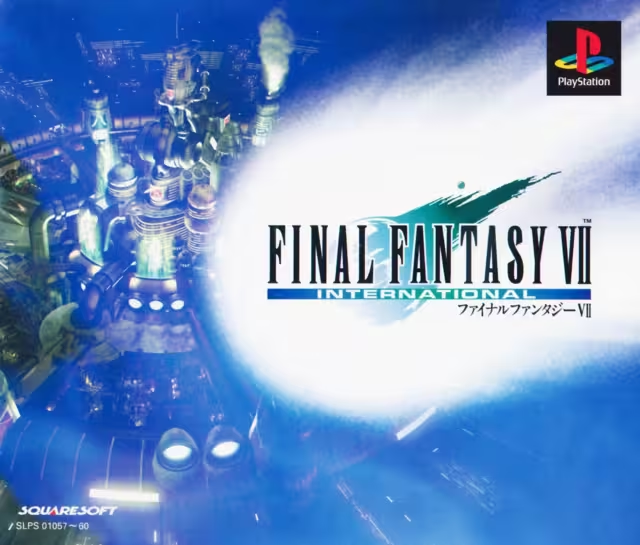
Final Fantasy VII International
SLPS-01057~60
Video Game Collection
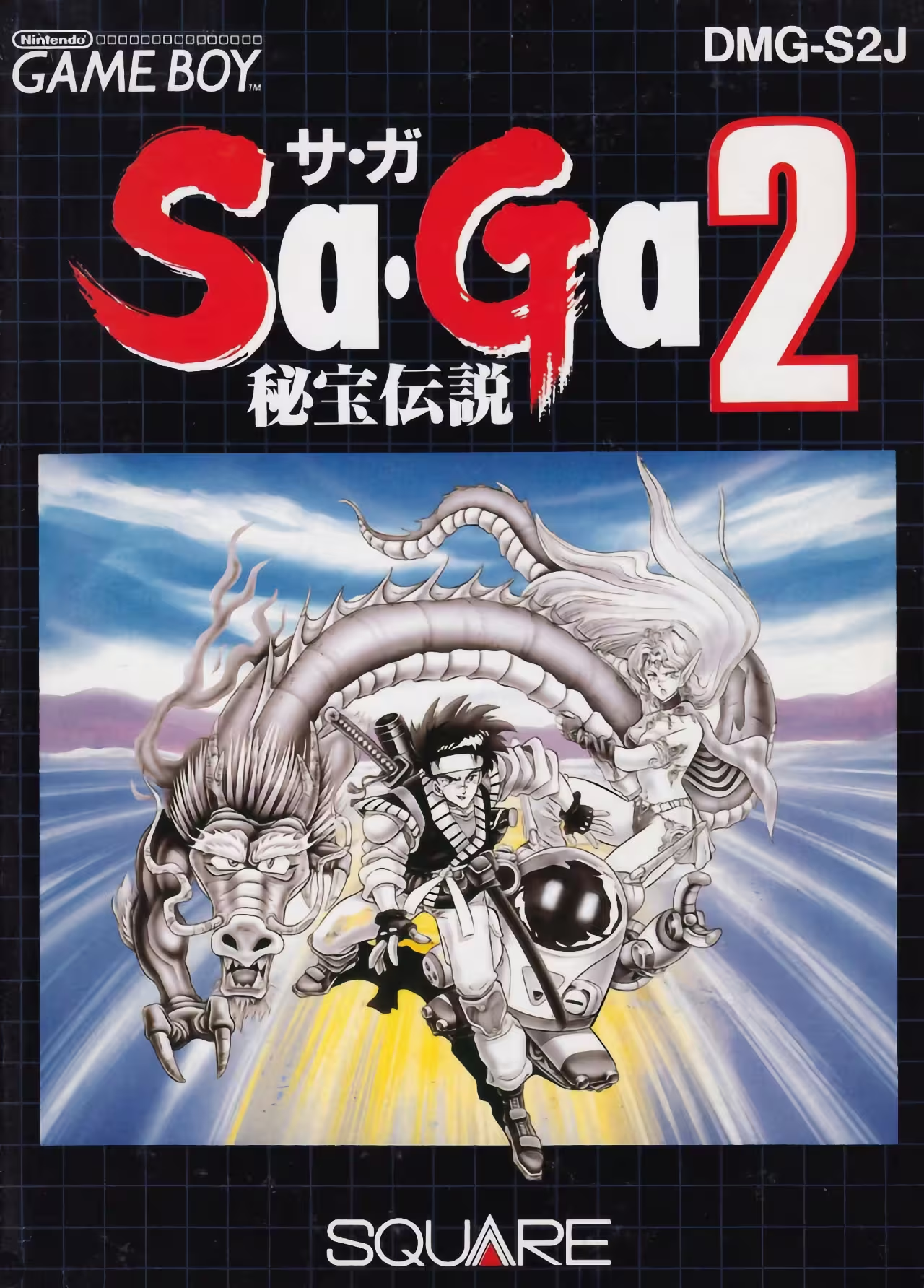
 Box Front
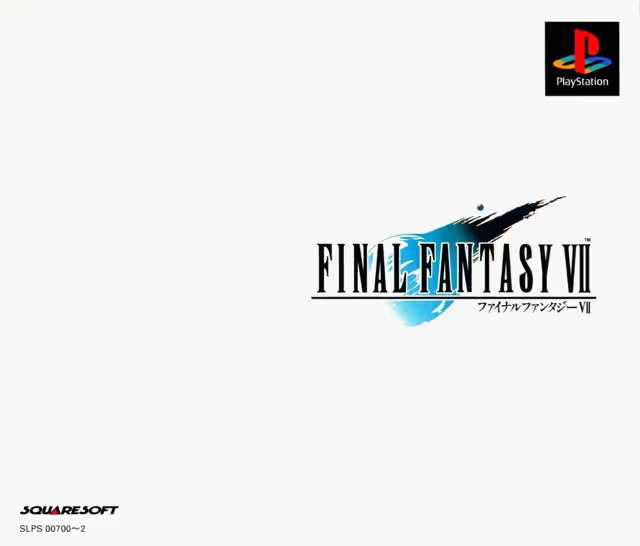
 Box Back
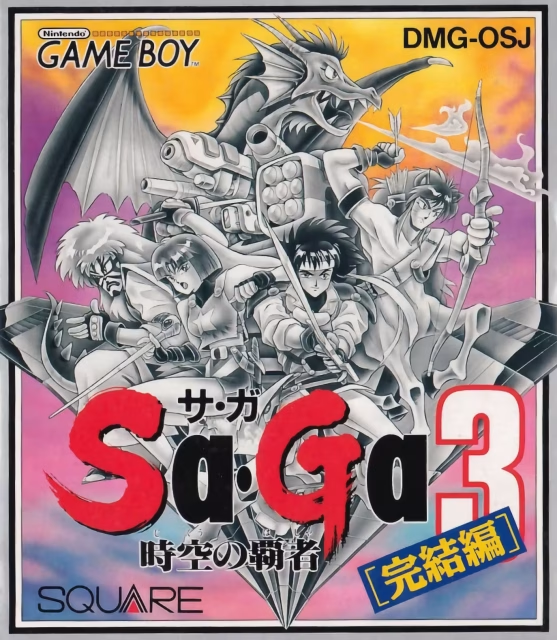
A handheld RPG about a child pursuing a missing father and the mysterious relics powerful enough to reshape the worlds. Its compact adventure mixes myth, science fiction, strange civilisations, and party-building systems that reward experimentation over traditional levelling.
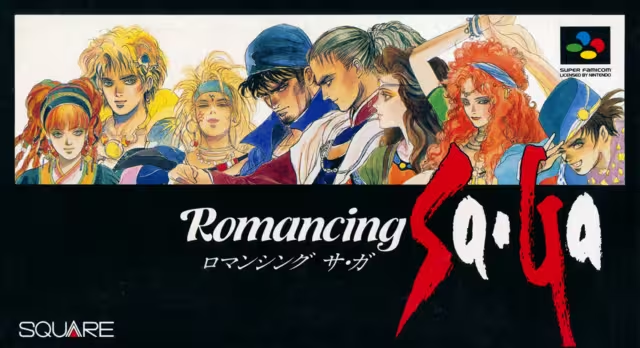
SaGa 2 saw the SaGa games become less an handheld experiment and became a real second RPG pillar to Final Fantasy. The initial SaGa was the first RPG released for Game Boy and Square’s first title to pass one million sales. This entry would form the middle of the original trilogy before the series moved to Super Famicom with Romancing SaGa.
The journey revolves around collecting 77 MAGI, ancient treasures left behind by the gods, while travelling through connected worlds via the Pillar of Sky. The party visits varied settings such as deserts, giant lands, divine cities, Edo-inspired regions, and harsher late-game areas, giving the adventure a strong sense of moving through distinct miniature worlds rather than one continuous map. Its party system is the main hook with each class growing differently. Humans and espers improve through battle actions, mechs become stronger through equipment, and monsters transform by eating enemy meat, making party composition a bit more complicated and important than a standard RPG.
The game belongs to the same design lineage as Final Fantasy II more than Final Fantasy III. Final Fantasy II had already experimented with usage-based stat growth instead of normal levels, and Kawazu continued that philosophy into SaGa, while Final Fantasy III moved the mainline series toward a more structured job system and traditional party progression. In that sense, SaGa 2 represents Square’s alternative RPG branch: portable, systems-heavy, strange, and comparatively freeform, while the main Final Fantasy line was becoming larger, more polished, and more classically heroic. It also helped define what the wider SaGa series would become: standalone stories, odd worlds, unconventional growth, and party mechanics that vary heavily by character type.
Retrospectively, the portable trilogy was later recognised as the beginning of a franchise known for exploration, non-linear or freeform progression, and unconventional systems, with most entries having their own settings rather than forming a single continuous saga. SaGa 2 is especially important because it refined the first game’s ideas, added the mech race, gave each race a clearer identity, and made the whole structure more approachable without losing the experimental edge. Meanwhile its Western release reflects the era, being sold under the Final Fantasy Legend name even though they were not part of the main Final Fantasy continuity, a marketing decision that tied Square’s less familiar handheld series to its stronger RPG brand.
| Item Name |
|
|---|---|
| Original Name |
|
| Item Code |
|
| Series | |
| Type | |
| Genre | |
| Territory | |
| Packaging | |
| Documentation | |
| Developer | |
| Publisher | |
| Media | |
| Players | |
| Launch Price |
|
| Release Date | |
| Date Added |
|