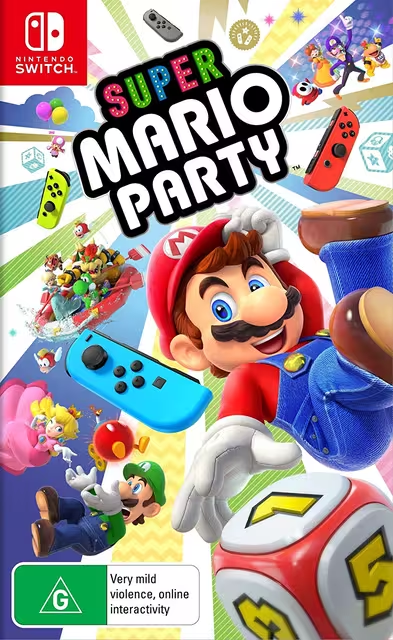
Super Mario Party
HAC-ADFJA-AUS
Video Game Collection

A remake of the turn-based role-playing game built around puzzle-like battles and light-hearted storytelling, originally on the GameCube. Presents a blend of humour and strategy within a richly illustrated paper-themed world.
Paper Mario: The Thousand-Year Door follows Mario as he searches for the mythical Thousand-Year Door and the Crystal Stars needed to unlock it. The story mixes adventure with comedy, introducing a cast of eccentric allies and villains across varied locations such as haunted mansions, pirate coves, and ancient ruins. It touches on themes of friendship and curiosity throughout the dialogue and character interactions, supported by a playful tone and visual style that treats the world as folded paper. The game was the second entry in the series and was originally released on the GameCube.
Gameplay uses a turn-based battle system where timing-based inputs enhance attacks and defences. Players manage badges to customise abilities and combine Mario’s skills with those of his partners, each offering unique moves for combat and exploration. The remake refines these mechanics with updated visuals, orchestral music, and quality-of-life improvements such as faster load times and streamlined menus. It retains the original structure of chapter-based progression and environmental puzzles while improving clarity in interface design. However, it doesn’t update the mechanics, remaining very close to the original.
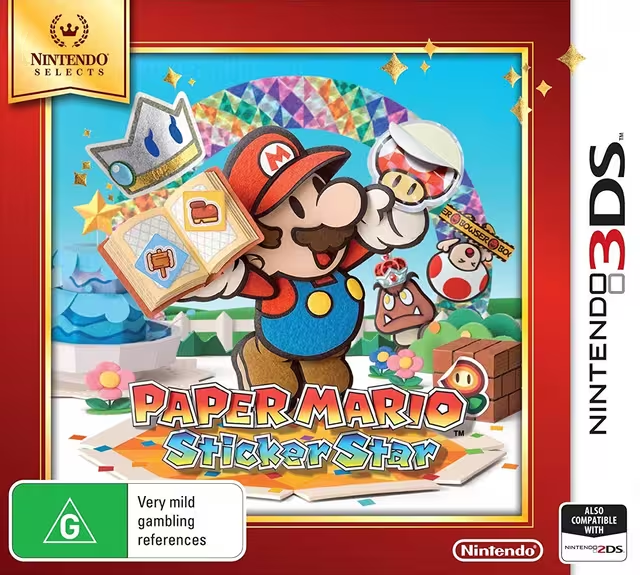
Since this entry was first released, the Paper Mario series has shifted away from traditional role-playing systems toward lighter mechanics and a stronger focus on puzzle-solving and visual humour. Super Paper Mario introduced platforming elements and real-time interactions instead of turn-based battles. Later titles such as Sticker Star and Color Splash removed experience points and partner depth, replacing them with consumable attack items and environmental gimmicks. These changes simplified progression and placed more emphasis on creative presentation and themed worlds. Origami King continued this trend with ring-based combat and exploration-driven rewards rather than character-building systems. The series now leans more on visual style and playful writing. This remake returns to the character-driven humour and layered strategy that defined the first two games.
The remake is a faithful adaptation with nice visual upgrades. Any minor performance dips are resolved in the Switch 2 hardware. It is regarded as one of the strongest modern remasters on the Switch platform, preserving the charm and complexity of the original while making it accessible to new players.
| Item Name |
|
|---|---|
| Original Name |
|
| Item Code |
|
| Item Number |
|
| Quantity |
|
| Series | |
| Type | |
| Genre | |
| Territory | |
| Packaging | |
| Developer | |
| Publisher | |
| Distributor | |
| Media | |
| Players | |
| Peripherals | |
| Sound Modes | |
| Classification | |
| Release Date | |
| Date Added |
|