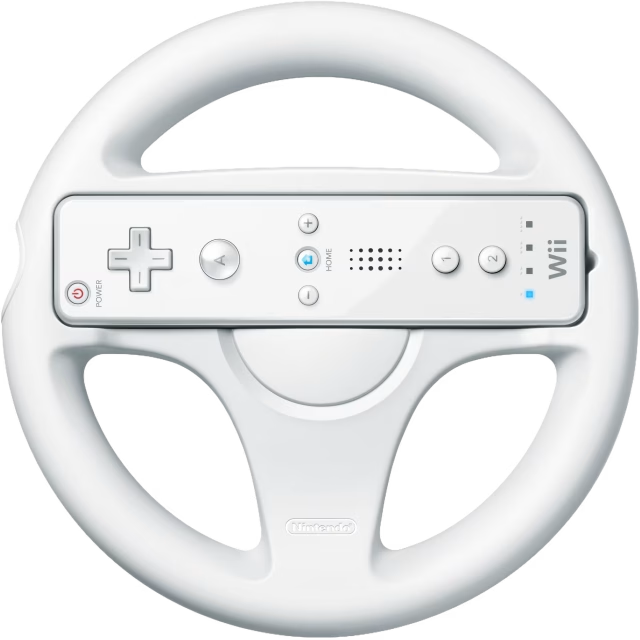
Wii Wheel
RVL-024, RVL-A-HA-JPN
Video Game Collection

An essential aftermarket accessory that unlocks the Nintendo Wii’s maximum visual fidelity at a fraction of the cost of the official first-party equivalent. Similar to the GameCube, the Wii offered up a EDTV/progressive scan (480p/576p) output through a component video cable.
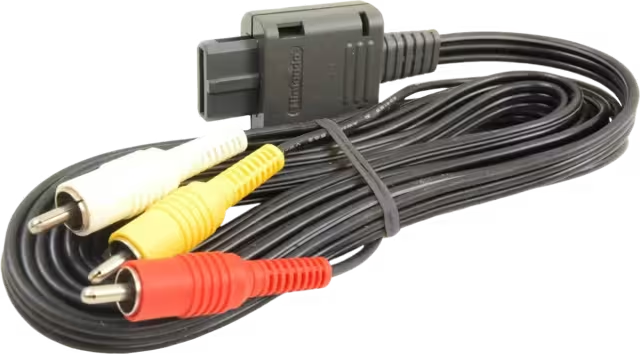
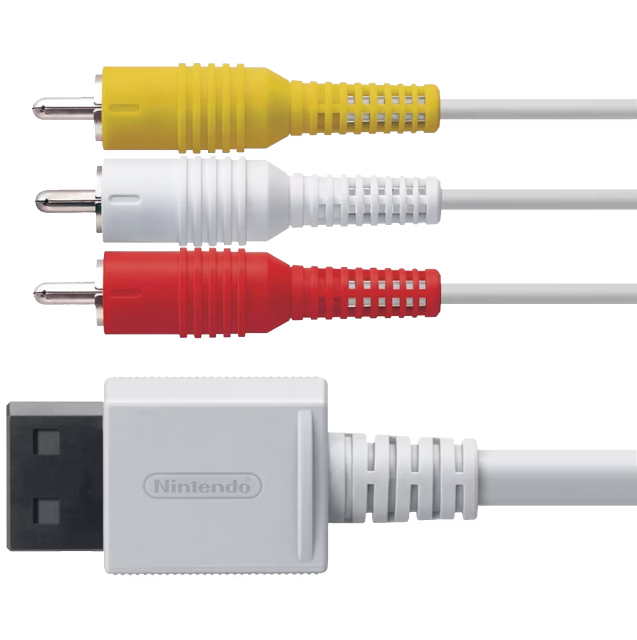
A Component AV Cable saw countless third-party manufacturers rush to fill a massive void in the console’s audiovisual ecosystem starting in 2006. Because Nintendo controversially launched the Wii as a standard-definition console during the rapid global transition to high-definition flat-panel televisions, the included composite cables (the standard yellow, red, and white plugs) produced a notoriously muddy and blurry image on modern displays. While Nintendo produced an official Component Video Cable (the RVL-011), persistent stock shortages and a premium price tag led to a booming cottage industry of unbranded and budget-tier alternatives attempting to bridge the gap between standard-definition hardware and HD screens.
The physical hardware relies on the YPbPr analog video standard, terminating in five RCA connectors: three for video (red, green, and blue) and two for stereo audio (red and white). By splitting the video signal into distinct luma (brightness) and chroma (colour) channels, the cable allows the Wii console to output at 480p (Progressive Scan). Activating this setting in the Wii’s system menu drastically sharpens the image, eliminates the colour bleed inherent to composite video, and significantly reduces the input lag introduced by the de-interlacing processors of modern LCD and plasma televisions. For competitive players and archival enthusiasts alike, this analogue bump was critical for titles with fast-paced action or dense visual information.
From a historical and collecting standpoint, the generic component cable market was defined by aggressive cost-cutting. While functionally capable of delivering a 480p signal, a major technical negative of unbranded cables was their severe lack of internal shielding. Thinner wire gauges and poor insulation often meant the cables were highly susceptible to electromagnetic interference, frequently resulting in a faint audio hum or diagonal scrolling lines visible in darker areas of the screen. Despite these build quality issues, their extreme affordability made them one of the highest-selling third-party accessories of the generation. Retrospectively, they stand as a crucial, utilitarian piece of the Wii’s lifespan, bridging the gap long before modern plug-and-play HDMI adapters became the standard for retro upscaling.
| Item Name |
|
|---|---|
| Type | |
| Class | |
| Color | |
| Developer | |
| Manufacturer | |
| Release Date | |
| Date Added |
|