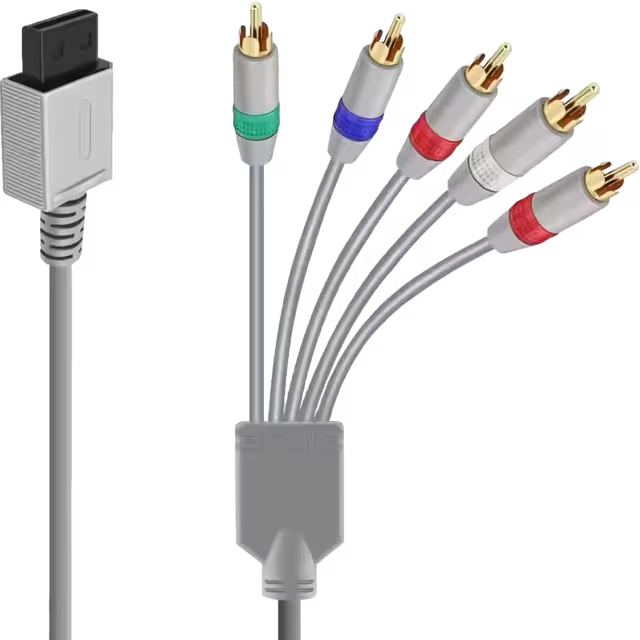
Component AV Cable
Coleção de Jogos


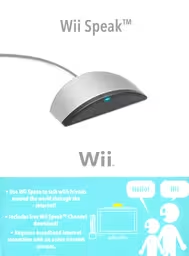 Box Front
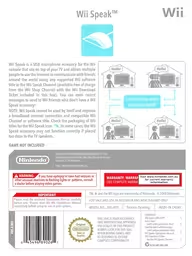 Box Back
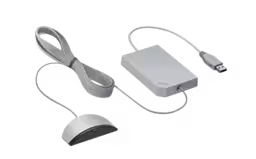 Wii Speak –
Um microfone mãos-livres para a Nintendo Wii que se liga via USB e foi concebido para ser colocado perto da televisão, captando as vozes de todos na sala para conversação online em jogos compatíveis. Versão australiana em caixa, adquirida numa liquidação final.
O Wii Speak foi revelado na E3 2008 como uma proposta para tornar a comunicação online mais comunitária. Ao contrário dos headsets tradicionais, que isolam a voz de um único jogador, o Wii Speak foi concebido para captar múltiplas vozes numa sala de estar e transmiti-las através da internet. O hardware consiste numa unidade de microfone retangular com um cabo USB que se liga à consola Wii. Um pequeno LED indica quando o microfone está ativo.
Internamente, utiliza um DSP dedicado para filtrar o áudio do jogo proveniente das colunas da televisão e um perfil USB personalizado, o que significa que não é reconhecido como um microfone USB convencional — apenas jogos programados para suportar o Wii Speak o podem utilizar. A Nintendo lançou o Wii Speak como um acessório independente e incluído num pacote com Animal Crossing: Let’s Go to the City. Juntamente com o hardware, a empresa lançou o Canal Wii Speak, uma aplicação transferível que permitia a quatro agregados familiares conversarem entre si, com cada participante representado pelo seu Mii no ecrã. Os utilizadores podiam também deixar mensagens de áudio ou narrar legendas para fotografias. Recebeu um suporte limitado de terceiros, incluindo: The Conduit, Monster Hunter Tri, Endless Ocean: Blue World, Tetris Party Deluxe, NBA 2K10, NBA 2K11, NHL 2K10, NHL 2K11, Jeopardy! (2010) e Wheel of Fortune.
Apesar do seu design inovador, o Wii Speak teve uma adoção reduzida. Poucos jogos o suportaram para além de Animal Crossing, e o Canal Wii Speak foi descontinuado em 2013, quando a Nintendo encerrou os serviços online da Wii. O acessório foi efetivamente sucedido pelo microfone incorporado no Wii U GamePad, mas o conceito apenas seria plenamente concretizado com a funcionalidade GameChat da Nintendo Switch. Em retrospetiva, o Wii Speak foi uma experiência de curta duração em conversação por voz comunitária, um exemplo da propensão da Nintendo para seguir ideias de hardware pouco convencionais que nem sempre alcançam um sucesso generalizado.
| Nome do item |
|
|---|---|
| Nome original |
|
| Código do item |
|
| Número do item |
|
| Tipo | |
| Classe | |
| Cor | |
| Território | |
| Embalagem | |
| Documentação | |
| Desenvolvedor | |
| Fabricante | |
| Distribuidor | |
| Preço de lançamento |
|
| Data de lançamento | |
| Data de adição |
|