Dreamcast
HKT-3010
Coleção de Jogos

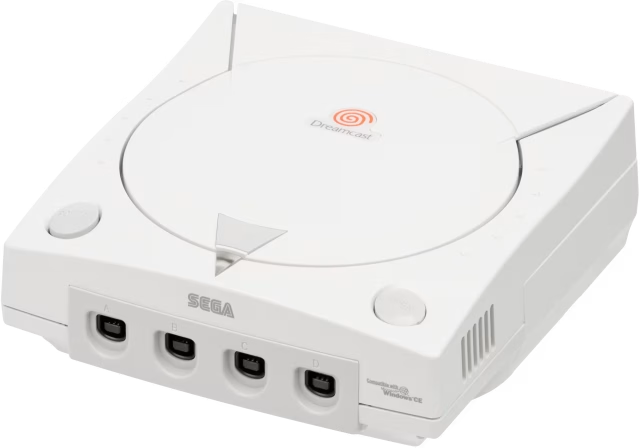
A primeira consola da sexta geração concebida para oferecer gráficos 3D avançados e conetividade online, marcando a última incursão da Sega no mercado de consolas e um passo decisivo para o jogo em rede. Modelo norte-americano, revisão VA1.
A Dreamcast apresenta uma estrutura branca compacta com uma unidade de disco GD-ROM de carregamento frontal, quatro portas de comando e uma baía de expansão modular para acessórios. A sua arquitetura baseia-se num processador Hitachi SH-4 RISC de 32 bits a 200 MHz, acompanhado por um GPU PowerVR2 CLX2, capaz de renderização 3D acelerada por hardware com funcionalidades como bump mapping e anti-aliasing. A memória do sistema integra 16 MB de RAM principal, 8 MB de VRAM e 2 MB de RAM de áudio, garantindo visuais e som de elevada fidelidade. O processamento de áudio está a cargo de um chip Yamaha AICA baseado em ARM7, com reprodução de 64 canais PCM e ADPCM.
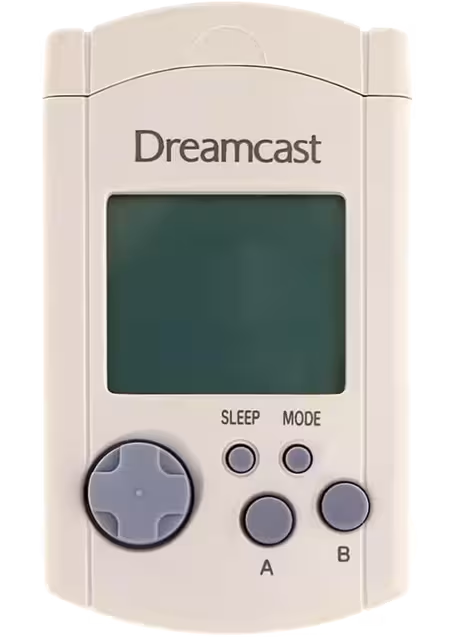
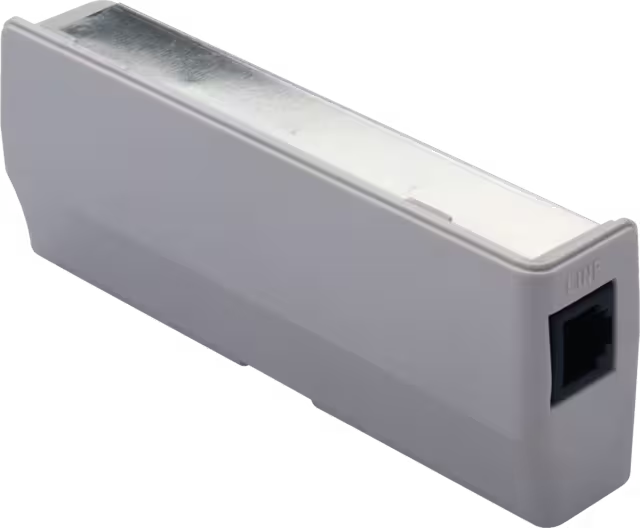
O armazenamento é efetuado através de discos GD-ROM (com uma capacidade de até 1 GB), enquanto a gestão de dados gravados é assegurada pelas Visual Memory Units (VMUs), unidades amovíveis que funcionam também como dispositivos portáteis de mini-jogos. A saída de vídeo suporta resoluções até 480p através de adaptadores VGA, além das opções padrão de vídeo composto e RGB. A conetividade é um elemento central: a consola inclui uma baía para modem, com variantes regionais que oferecem 33,6 kbps no Japão e territórios PAL, 56 kbps na América do Norte, existindo ainda adaptadores de banda larga opcionais lançados posteriormente.
A Dreamcast foi aclamada pelo seu desempenho técnico, conversões de qualidade de salão de jogos e serviços online pioneiros. Numa retrospetiva, tratou-se de um sistema visionário que influenciou o design de consolas posteriores, lembrado pela sua inovação, catálogo distinto e um estatuto de culto duradouro, apesar do seu curto ciclo de vida comercial.
Este é um modelo norte-americano, especificamente a revisão VA1. Embora tivesse acesso a boot loaders, possuí unidades das três regiões, sendo esta a consola que utilizei quase exclusivamente para jogar Dead or Alive 2.
| Nome do item |
|
|---|---|
| Código do item |
|
| Tipo | |
| Classe | |
| Região | |
| Território | |
| Embalagem | |
| Documentação | |
| Fabricante | |
| Data de lançamento | |
| Data de adição |
|