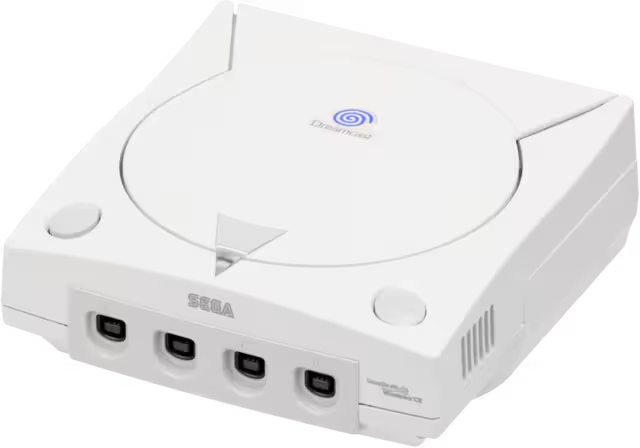
Dreamcast
HKT-3030
Videospelsamling

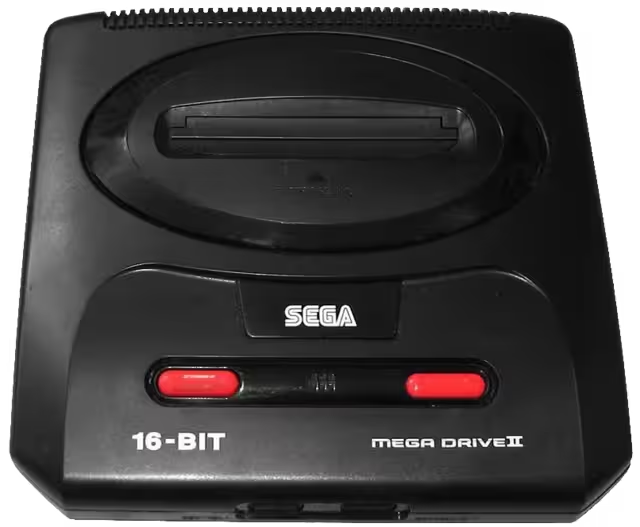
En 16-bitars spelkonsol konstruerad för att leverera arkadliknande spelupplevelser i hemmet, vilket cementerade Segas ställning i den fjärde konsolgenerationen. Detta är en originalmodell, australiensisk enhet med kretskortrevidering 2, som saknar EXT-porten.
Lanseringsmodellen av Mega Drive kännetecknas av ett stilrent svart chassi med en toppmatad kassettslits, en tydlig röd strömindikator och dubbla portar för handkontroller. Designen innefattar stereoutgång via ett hörlursuttag med volymreglage samt kompositvideo som standard, där RGB-signal kan erhållas via DIN AV-kontakten. Konsolen lanserades ursprungligen i Japan 1989, medan PAL-modellerna nådde marknaden 1991.
Internt drivs konsolen av en Motorola 68000-processor klockad till 7,67 MHz, assisterad av en Zilog Z80-koprocessor för ljudhantering och bakåtkompatibilitet med Master System-spel via en passande kassettadapter. Grafiken hanteras av Segas specialbyggda VDP, vilket möjliggör en upplösning på 320×224 pixlar, en färgpalett på 512 kulörer och upp till 64 sprites samtidigt på skärmen. Ljudbilden kombinerar Yamaha YM2612 FM-syntes med SN76489 PSG för ett fylligt flerspårigt ljud. Även om interna komponenter genomgick förenklingar över tid, förblev den underliggande arkitekturen i stort sett intakt.
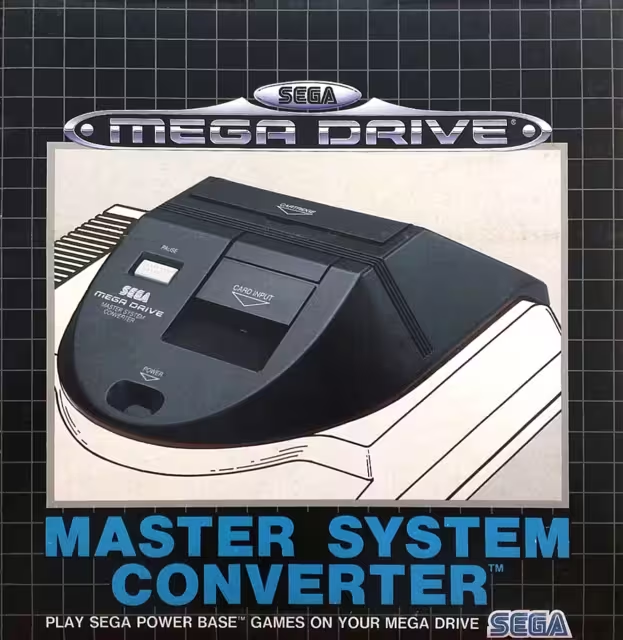
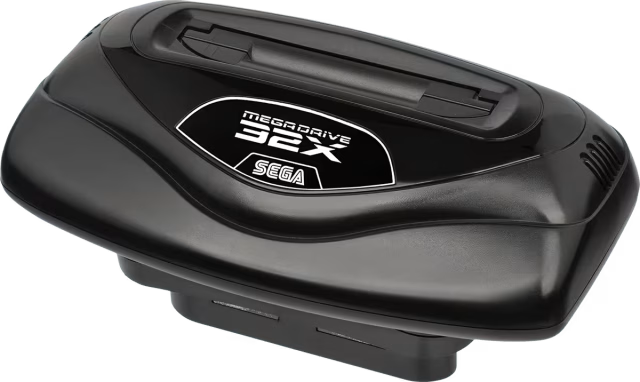
Systemet levererar kompositvideo och RGB, med smärre regionala skillnader i namnvalet (Mega Drive i Japan och Europa, Genesis i Nordamerika). Lagring sker via kassetter, där kapaciteten ökade från tidiga 4 Mb ROM-enheter till 16 Mb och mer i senare utgåvor. Tillbehör som Mega CD och 32X utökade funktionaliteten med stöd för optiska medier och avancerade 3D-beräkningar.
Vid lanseringen hyllades Mega Drive för sin arkadlika prestanda och omfattande stöd från tredjepartsutvecklare, vilket etablerade Sega som en huvudkonkurrent till Nintendo inför deras Super Nintendo. Det var en av 16-bitarsgenerationens mest tongivande konsoler, utrustad med snabb grafik och ett ikoniskt spelbibliotek som definierade 1990-talets tidiga spelkultur.
| Produktnamn |
|
|---|---|
| Artikelkod |
|
| Typ | |
| Klass | |
| Region | |
| Territorium | |
| Förpackning | |
| Dokumentation | |
| Tillverkare | |
| Distributör | |
| Släppdatum | |
| Datum tillagt |
|