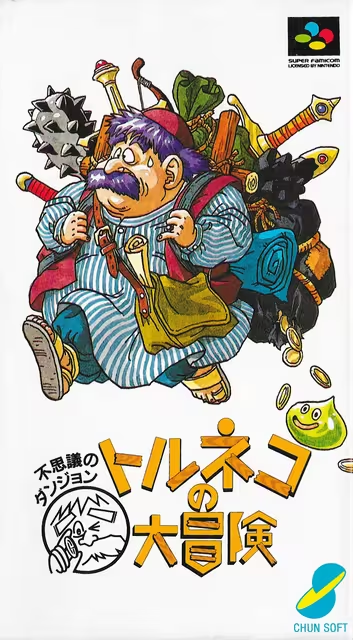
Torneko no Daibōken: Fushigi no Dungeon
SHVC-TQ
Videospelsamling


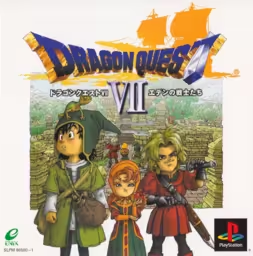 Front Cover
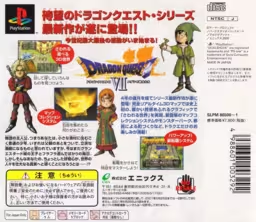 Back Cover
Ett massivt, episodiskt rollspel känt för sin mekanik kring ö-restaurering och ett huvudäventyr som sträcker sig över 100 timmar. Det hyllas för sin intrikata berättarkonst och för att vara det definitiva eposet från 32-bitars generationen.
Dragon Quest VII: Eden no Senshi-tachi är en milstolpe i spelserien och den första numrerade delen som tog steget in i 3D-miljöer. Spelet släpptes mot slutet av PlayStation-konsolens livscykel och pressade hårdvaran till bristningsgränsen med en berättelse av enastående omfattning. Det är alltjämt ett av de bäst säljande spelen i japansk historia och utgör kulmen på seriens traditionella RPG-struktur innan den senare utvecklades på PlayStation 2.
Berättelsen följer en ung pojke – son till en fiskare från byn Fishbel – och hans vänner, prins Kiefer och Maribel. De upptäcker att deras lilla ö, Estard, inte är den enda landmassan i världen. Genom att lokalisera och pussla ihop antika stenfragment reser de tillbaka i tiden till förlorade kontinenter som förseglats av en mörk kraft. Berättelsen är ett episodiskt epos där spelaren besöker olika tidsepoker för att lösa lokala kriser, vilket i sin tur återställer öarna till nutiden. Spelet är känt för sitt metodiska tempo och en inledning helt utan strider som kan pågå i flera timmar, där fokus ligger på världsbygge och mysterier snarare än omedelbar action.
Spelmekaniken använder en förfinad version av det klassiska yrkessystemet, där karaktärer kan bemästra över 50 olika roller, allt från krigare och magiker till monsterbaserade klasser. Medan omvärlden och städerna renderas i roterbar 3D, använder striderna och karaktärerna detaljerade 2D-sprites, vilket bevarar 16-bitars erans estetik samtidigt som det erbjuder djupet hos ett modernt rollspel. Stridssystemet förblir strikt turbaserat men betonar taktisk positionering och långsiktig utveckling av gruppens förmågor.
Trots att spelet var ett kulturellt fenomen i Japan, mötte den internationella utgåvan en mer komplicerad väg. I Japan var spelet en enorm kritisk och kommersiell succé som hyllades av publikationer som Famitsu. Dess framgång bekräftade seriens status som en nationell institution, där den traditionella och långsamma spelmekaniken sågs som ett tecken på kvalitet. Det blev det bäst säljande spelet till den ursprungliga PlayStation-konsolen i Japan och förblir en av de mest framgångsrika spelsläppen i landets historia. När spelet slutligen nådde Nordamerika 2001, under titeln Dragon Warrior VII, blev mottagandet mer polariserat. Den visuella stilen med 2D-sprites i 3D-miljöer ansågs daterad, och den långsamma inledningen kolliderade med västerländska förväntningar på tempo. I efterhand ses spelet som en fulländning av det traditionella japanska rollspelet, universellt uppskattat av dem som upplevt genrens 8-, 16- och 32-bitars era. Titeln fick senare en modern nyversion som lanserades på samtliga samtida plattformar under tidiga 2026.
| Produktnamn |
|
|---|---|
| Originalnamn |
|
| Artikelkod |
|
| Artikelnummer |
|
| Serie | |
| Typ | |
| Genre | |
| Teman | |
| Region | |
| Territorium | |
| Förpackning | |
| Dokumentation | |
| Utvecklare | |
| Utgivare | |
| Mediaformat | |
| Spelare | |
| Perifera enheter | |
| Lanseringspris |
|
| Släppdatum | |
| Datum tillagt |
|
| Externa länkar |
|