Mortal Kombat
FMOR00SMR, T-81025-50
Colección de videojuegos


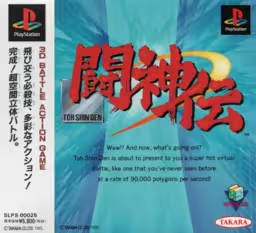 Outercover
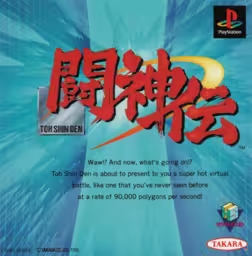 Front Cover
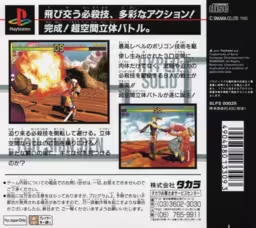 Back Cover
Un referente de la lucha con armas en 3D que exhibió la potencia gráfica temprana de PlayStation a través de una iluminación compleja y sombreado Gouraud. Aunque sus mecánicas fueron superadas por franquicias posteriores, se mantiene como el título fundamental que introdujo el desplazamiento lateral en 3D y estableció la plantilla para el género.
Tōshinden, lanzado al inicio de la era PlayStation, representa un punto de inflexión en el género de lucha, marcando la transición del combate en planos 2D a un entorno tridimensional completamente realizado. Como pieza clave para exhibir las capacidades técnicas tempranas de PlayStation, ofreció modelos de personajes de alta fidelidad y efectos de iluminación complejos que superaron notablemente la estética plana y poligonal de sus contemporáneos en los salones recreativos. Fue fundamental para consolidar el subgénero de lucha con armas, proporcionando una alternativa fluida al combate cuerpo a cuerpo de los primeros competidores en 3D y demostrando el salto visual que permitía el hardware de 32 bits.
La narrativa se centra en el torneo Tōshinden, una competición clandestina organizada por una sombría sociedad secreta. La trama sigue a un ecléctico grupo de ocho maestros de armas internacionales, encabezados por el espadachín japonés Eiji Shinjo y su rival Kayin Amoh, mientras luchan por descubrir la verdad tras el torneo y su enigmático anfitrión, Gaia. La atmósfera del juego está profundamente influenciada por la estética del anime de los 90, con diseños de personajes dramáticos y una banda sonora cargada de energía que fusiona rock duro con melodías sintetizadas. Esta entrega inicial sentó las bases de la historia de la serie, centrada en temas de venganza, legados familiares y las luchas de poder ocultas en los círculos de artes marciales a escala global.
La jugabilidad destaca por su uso pionero del movimiento en 3D, específicamente la capacidad de realizar un desplazamiento lateral (sidestep) hacia el primer o segundo plano para esquivar ataques mediante los botones superiores del mando. Esta mecánica alteró fundamentalmente el panorama estratégico del género, superando el tradicional espaciado de avance y retroceso de los juegos 2D. El combate se centra en el uso de armas, empleando una configuración de cuatro botones para tajos y patadas. El juego introduce un sistema de ‘Secret Moves’ con ataques desesperados de gran daño que solo pueden ejecutarse cuando la barra de vida del jugador parpadea en rojo. Fue un referente técnico por su implementación de sombreado Gouraud y efectos de transparencia, lo que proporcionó un acabado visual que lo posicionó como una exhibición gráfica de primer nivel para la consola. En comparación con las versiones domésticas iniciales de Virtua Fighter, Tōshinden ofreció una experiencia más accesible, con un estilo arcade enfocado en efectos visuales llamativos y elementos sobrenaturales.
Tras su lanzamiento, el juego fue recibido con críticas muy positivas por su impresionante apartado visual 3D y la novedad de su combate con armas. La prensa alabó frecuentemente la fluidez de las animaciones de los personajes y el logro técnico de mantener una tasa de frames constante al renderizar polígonos tan detallados. Aunque la llegada de Tekken más tarde ese mismo año desplazó el foco del género hacia sistemas de combos más complejos, Tōshinden siguió siendo una pieza vital en la identidad temprana de PlayStation. Su impacto condujo al desarrollo inmediato de la refinada secuela Battle Arena Tōshinden 2, que amplió el plantel y mejoró el motor 3D, mientras que una versión para Sega Saturn titulada Tōshinden S fue lanzada incluyendo secuencias narrativas exclusivas y un personaje adicional, aunque con concesiones técnicas en sus transparencias. En retrospectiva, el juego supuso un intento audaz por definir el movimiento en 3D y, aunque títulos posteriores como SoulCalibur perfeccionarían estos conceptos, el Tōshinden original sigue siendo el punto de partida esencial para los juegos de lucha con armas en 3D.
| Nombre del artículo |
|
|---|---|
| Nombre original |
|
| Código del artículo |
|
| Número de artículo |
|
| Serie | |
| Tipo | |
| Género | |
| Región | |
| Territorio | |
| Embalaje | |
| Documentación | |
| Desarrollador | |
| Editor | |
| Soporte | |
| Jugadores | |
| Periféricos | |
| Precio de lanzamiento |
|
| Fecha de lanzamiento | |
| Fecha de incorporación |
|