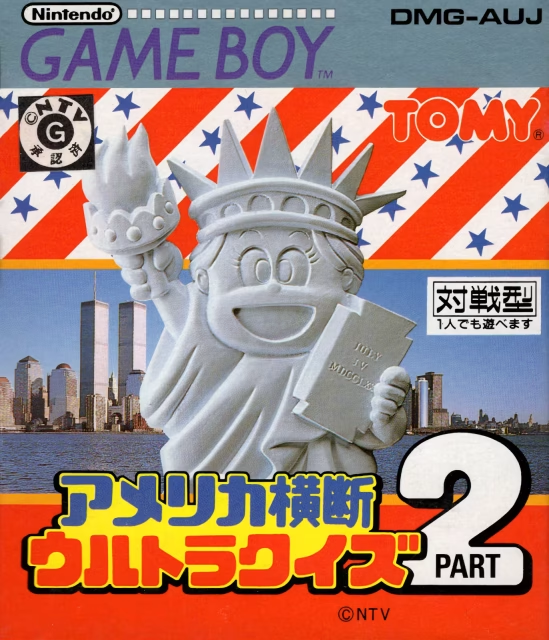
America Ōdan Ultra Quiz Part 2
DMG-AUJ
Video Game Collection

A historic puzzle title that marked the franchise’s transition away from Nintendo and the first release under The Tetris Company. It features a blend of professional, high-level classic play and the chaotic, character-focused 4-player Battle mode inherited from Tetris Battle Gaiden.
Tetris X is a landmark puzzle title that is historically significant as the first console Tetris game released after the licensing rights reverted to the creator, Alexey Pajitnov, from the Soviet agency Elorg. This shift led to the founding of The Tetris Company, making Tetris X the first official release on a non-Nintendo console under this new era of ownership. While it was released exclusively in Japan, almost all of the in-game text is in English, making it highly accessible to international players.
The game is divided into two primary modes: Classic and Battle. The Classic Mode is a traditional endless marathon on a standard 10×22 grid, utilizing an early version of the Super Rotation System (SRS). It features a memoryless randomiser, which provides a more unpredictable experience compared to the “7-bag” systems used in modern entries. The visual presentation in this mode is clean and utilitarian, focusing on the core stacking mechanics. A unique technical quirk of this version is that the level counter stops at 200, and if the player surpasses a score of 99,999,990, the counter is replaced with Japanese characters reading “one hundred million points” (ichiokuten).
The Battle Mode offers a sharp contrast in tone, featuring a colorful, character-driven versus experience for up to four players utilising the PlayStation Multitap. This mode directly borrows the cast of characters from the Super Famicom cult classic Tetris Battle Gaiden, including the Pumpkin, Shaman, Rabbit, and Princess. Played on smaller 7×17 grids, it introduces a tactical “minion” system where players can stockpile garbage lines and choose exactly which opponent to target by moving their character along the bottom of the screen. This interactive targeting and the ability to cancel incoming garbage make it one of the most mechanically deep competitive Tetris games of the 32-bit generation.
| Item Name |
|
|---|---|
| Original Name |
|
| Item Code |
|
| Item Number |
|
| Series | |
| Type | |
| Genre | |
| Characteristics | |
| Region | |
| Territory | |
| Packaging | |
| Documentation | |
| Developer | |
| Publisher | |
| Media | |
| Players | |
| Peripherals | |
| Launch Price |
|
| Release Date | |
| Date Added |
|