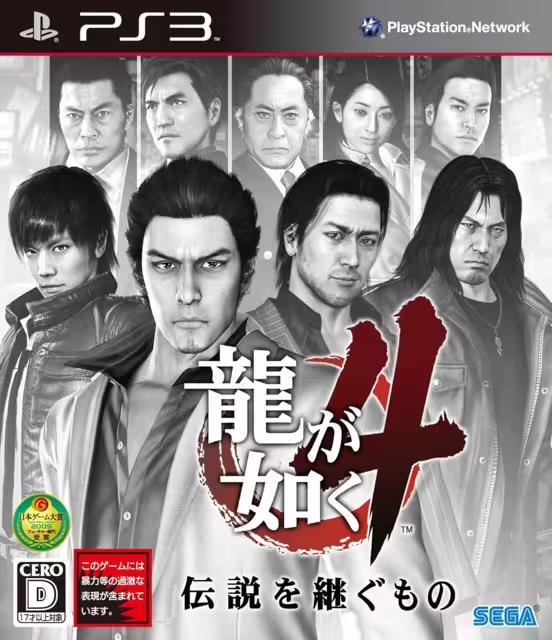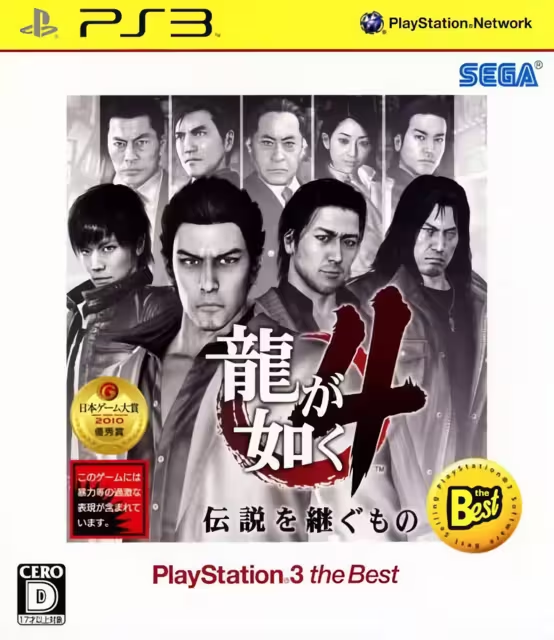
Ryu ga Gotoku 4: Densetsu o Tsugumono (PlayStation 3 the Best Reprint)
BLJM-55021
Colección de videojuegos


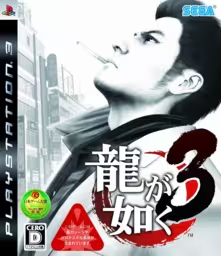 Front Cover
 Back Cover
Una intensa experiencia de rol urbano que marca el debut de la serie en la alta definición, explorando la dualidad entre la paz doméstica y el deber criminal.
Ryu ga Gotoku 3 narra la búsqueda de tranquilidad de Kazuma Kiryu, quien intenta llevar una vida apacible gestionando el orfanato Morning Glory en las costas de Okinawa. La trama explora su faceta como figura paterna de nueve niños, mientras es arrastrado de vuelta a los conflictos del Clan Tojo debido a un turbio acuerdo inmobiliario que involucra al gobierno nipón y a la CIA. La obra examina la responsabilidad familiar, la corrupción del poder político y el peso ineludible del pasado. La atmósfera destaca por el contraste entre la luminosidad de Ryukyu y los icónicos callejones de neón de Kamurocho. Este título establece los cimientos emocionales del arco de Kiryu que prosigue en Ryu ga Gotoku 4 hasta culminar en Ryu ga Gotoku 6.
En el apartado técnico, la transición a PlayStation 3 permitió avances como el sistema S-Sequence, que suaviza la transición entre la exploración y el combate. El sistema de lucha es un brawler en tiempo real donde Kiryu emplea diversos estilos y Heat Actions para abatir a sus adversarios. Una característica relevante es el sistema de Revelaciones, donde Kiryu registra sucesos urbanos inusuales con su teléfono móvil para aprender nuevas técnicas, una mecánica que se convirtió en pilar de secuelas como Ryu ga Gotoku 5. El juego incluye actividades adicionales como golf, mahjong y un modo de gestión de hostess más profundo que el visto en Ryu ga Gotoku 2. Asimismo, permite la exploración en primera persona para aumentar la inmersión. A menudo se le compara con Ryu ga Gotoku Kenzan! por compartir motor gráfico y con Ryu ga Gotoku 4 por centrarse exclusivamente en un solo protagonista.
La crítica valoró positivamente el salto técnico y la emotividad de los fragmentos centrados en el orfanato. Se subrayó cómo la detallada recreación de la cultura de Okinawa y la carga emocional de la historia supusieron una evolución refrescante para la franquicia. Aquella sensación de paz doméstica en los capítulos iniciales fue considerada una elección narrativa valiente. En retrospectiva, este título definió la estructura moderna de la saga y consolidó la madurez de Kiryu, equilibrando el drama criminal con la intimidad familiar.
| Nombre del artículo |
|
|---|---|
| Nombre original |
|
| Código del artículo |
|
| Número de artículo |
|
| Cantidad |
|
| Serie | |
| Tipo | |
| Género | |
| Región | |
| Territorio | |
| Embalaje | |
| Documentación | |
| Desarrollador | |
| Editor | |
| Soporte | |
| Jugadores | |
| Modos de vídeo | |
| Modos de sonido | |
| Clasificación | |
| Precio de lanzamiento |
|
| Fecha de lanzamiento | |
| Fecha de incorporación |
|