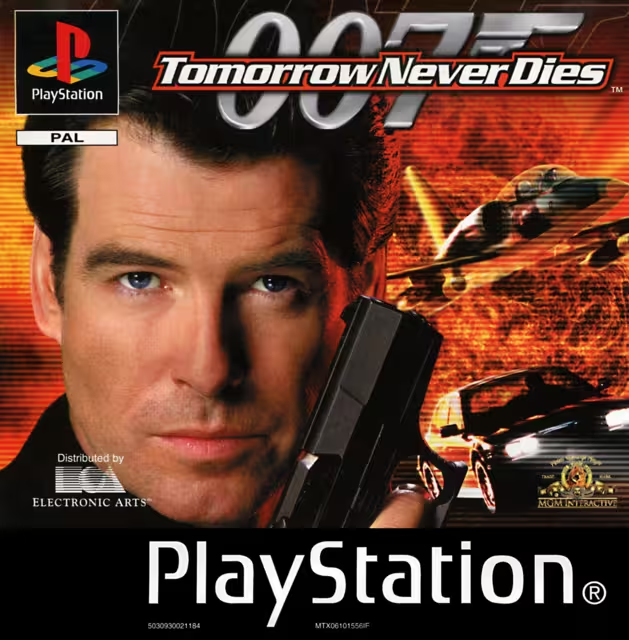
Tomorrow Never Dies
SLES-01324
Video Game Collection

A violent descent into heartbreak framed as supernatural noir, this shooter recasts action cinema traditions as a confessional spiral. It is as much about memory, regret, and dependency as it is about bullets and monsters.
El Paso, Elsewhere centres on James Savage, a self-destructive vampire hunter drawn back to a shifting motel in Texas to confront Draculae, his former lover turned apocalyptic force. What begins as a mission to prevent the end of the world quickly reveals itself as a deeply personal reckoning, with each descent into the motel’s impossible subterranean levels reflecting the fractures in their shared past. Through fragmented monologues and audio logs, the narrative threads addiction, love, and betrayal into a bleak meditation on toxic attachment. The supernatural framing, filled with vampires, werewolves, and void entities, exists as both literal threat and symbolic extension of emotional collapse, presenting a world where intimacy and destruction are inseparable.
Play unfolds as a third person shooter built around speed, precision, and theatricality, heavily reliant on slow motion mechanics, allowing the player to dive, dodge, and line up shots in mid air, recalling the “Bullet Time” gun play from Max Payne. Each level operates as a contained encounter within the motel’s warped geometry, tasking the player with clearing hostile creatures, rescuing hostages, and navigating destructible environments filled with weapons, explosives, and environmental hazards. The arsenal ranges from conventional firearms to improvised tools such as holy infused items, while movement emphasises fluid traversal through vertical spaces and tight corridors. Encounters are deliberately dense, often pitting the player against multiple enemy types simultaneously, encouraging constant repositioning and aggressive play.
The game positions itself openly within the lineage of Max Payne, borrowing its slow motion dives, internal monologue style narration, and neo noir framing, while filtering those influences through a lo-fi visual identity that evokes early 2000s hardware. Mechanical cues from Quake and Hotline Miami are evident in its emphasis on quick restarts and lethal encounters, while its shifting spaces and surreal interludes draw comparisons to Control. Unlike its inspirations, it leans heavily into emotional narrative, framing each firefight as a step deeper into personal ruin rather than a simple escalation of stakes. It stands as a deliberate homage that recontextualises familiar systems for introspective ends.
Critical reception was broadly positive at launch, with aggregate scores in the high seventies and low eighties and strong recommendation rates reflecting consistent praise for its style and storytelling ambition. Reviewers commended the writing, voice work, and cohesive tone, while some criticised the shooting mechanics as functional rather than exceptional. Its deliberate pacing and aesthetic choices do not appeal universally. It is a confident revival of classic shooter language that ultimately circles back to its core theme, the cost of loving something that is already lost.
| Item Name |
|
|---|---|
| Item Code |
|
| Item Number |
|
| Type | |
| Genre | |
| Territory | |
| Packaging | |
| Documentation | |
| Developer | |
| Publisher | |
| Distributor | |
| Media | |
| Players | |
| Classification | |
| Launch Price |
|
| Release Date | |
| Date Added |
|
| External Links |
|