Street Racer
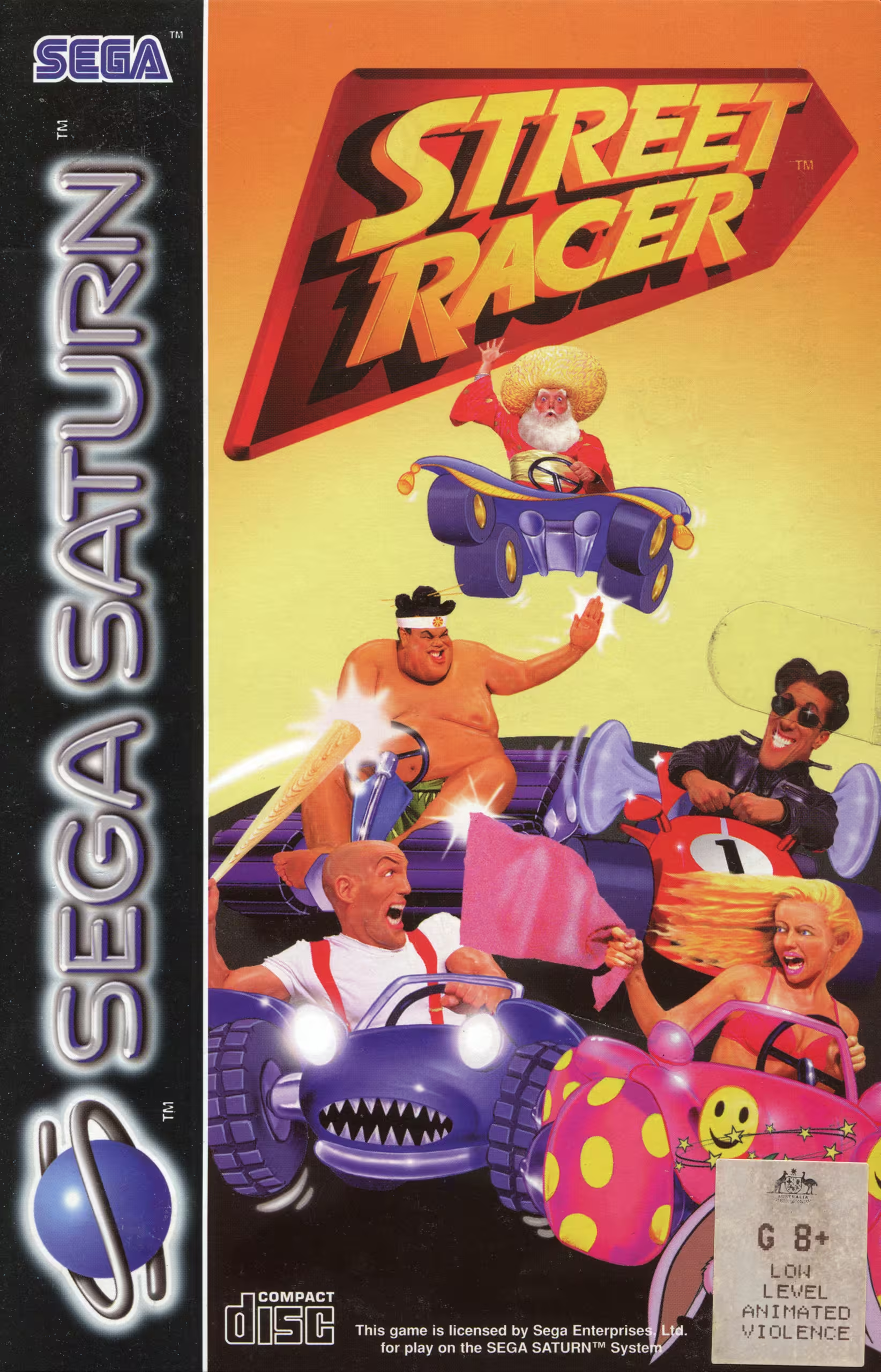
An expanded 32‑bit version of the kart‑combat racer, offering 24 tracks, five modes, and up to eight‑player multiplayer split-screen, making it an unusual multi-player experience. Only released in PAL and NTSC-J regions.
Description
Street Racer was part of Ubi Soft’s push to bring its 16‑bit franchises into the 32‑bit era, following earlier releases of Street Racer on the SNES, Mega Drive, Amiga, and PlayStation. The game follows the template established by Nintendo’s Super Mario Kart, blending arcade racing with combat mechanics. Players choose from a roster of eight eccentric characters, each with unique vehicles and themed circuits.
In effect this saw a 16-bit game be set free on relatively unlimited processing power of the Saturn’s dual 32-bit CPUs + handful of other processors. The Saturn edition included 24 tracks across multiple environments, with five game modes: Championship, Single Race, Time Trial, Rumble (a battle mode), and Soccer (a novelty mode where players push a giant ball into goals). Graphically, the Saturn version improved on the 16‑bit originals with smoother scaling, richer colours, and more detailed backgrounds, though critics noted that it still looked dated compared to contemporary 3D racers like Sega Rally Championship or Daytona USA. In my opinion though this is yet another case of being desperate for 3D before the hardware was even ready instead of 2D which really reached its peak with the Saturn — ironically these 2D games have aged well, 3D titles have mostly aged extremely poorly. The game supported up to eight players simultaneously requiring two of Saturn’s 6‑player adaptors, though understandably split‑screen visibility was limited.
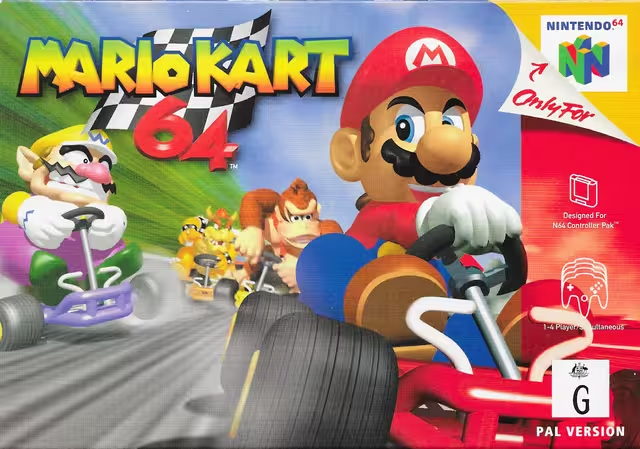
Reception at the time was mixed. Despite the variety of tracks and the chaotic multiplayer fun, it was seen as an unoriginal Mario Kart clone that struggled to stand out against Sega’s own racing titles. Retrospectively, this perspective has shifted. Street Racer Extra built substantially on the Mario Kart formula and offered up to 8 player split-screen, while Super Mario Kart only offered 2, something the eventual release of Mario Kart 64 would not even offer. While contemporary attention was fixed on the cutting‑edge move to 3D, most of those early 3D games have aged poorly, whereas advanced 2D titles of the same era, such as this, now appear more polished and enduring.
Datasheet
| Item Name |
|
|---|---|
| Item Code |
|
| Item Number |
|
| Type | |
| Genre | |
| Region | |
| Territory | |
| Packaging | |
| Documentation | |
| Developer | |
| Publisher | |
| Distributor | |
| Media | |
| Players | |
| Peripherals | |
| Classification | |
| Release Date | |
| Date Added |
|