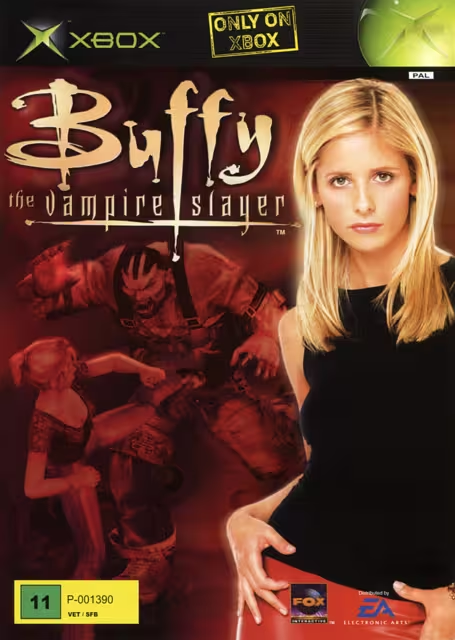
Buffy the Vampire Slayer
FXEX7403228, EA-018
Colección de videojuegos


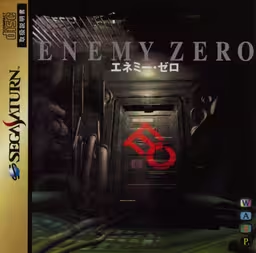
 Front Cover
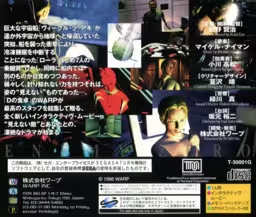 Back Cover
 Instruction Manual
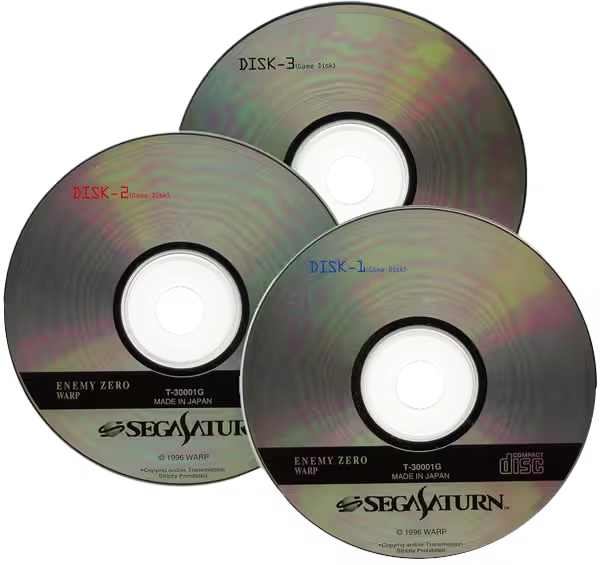
 Game Disc
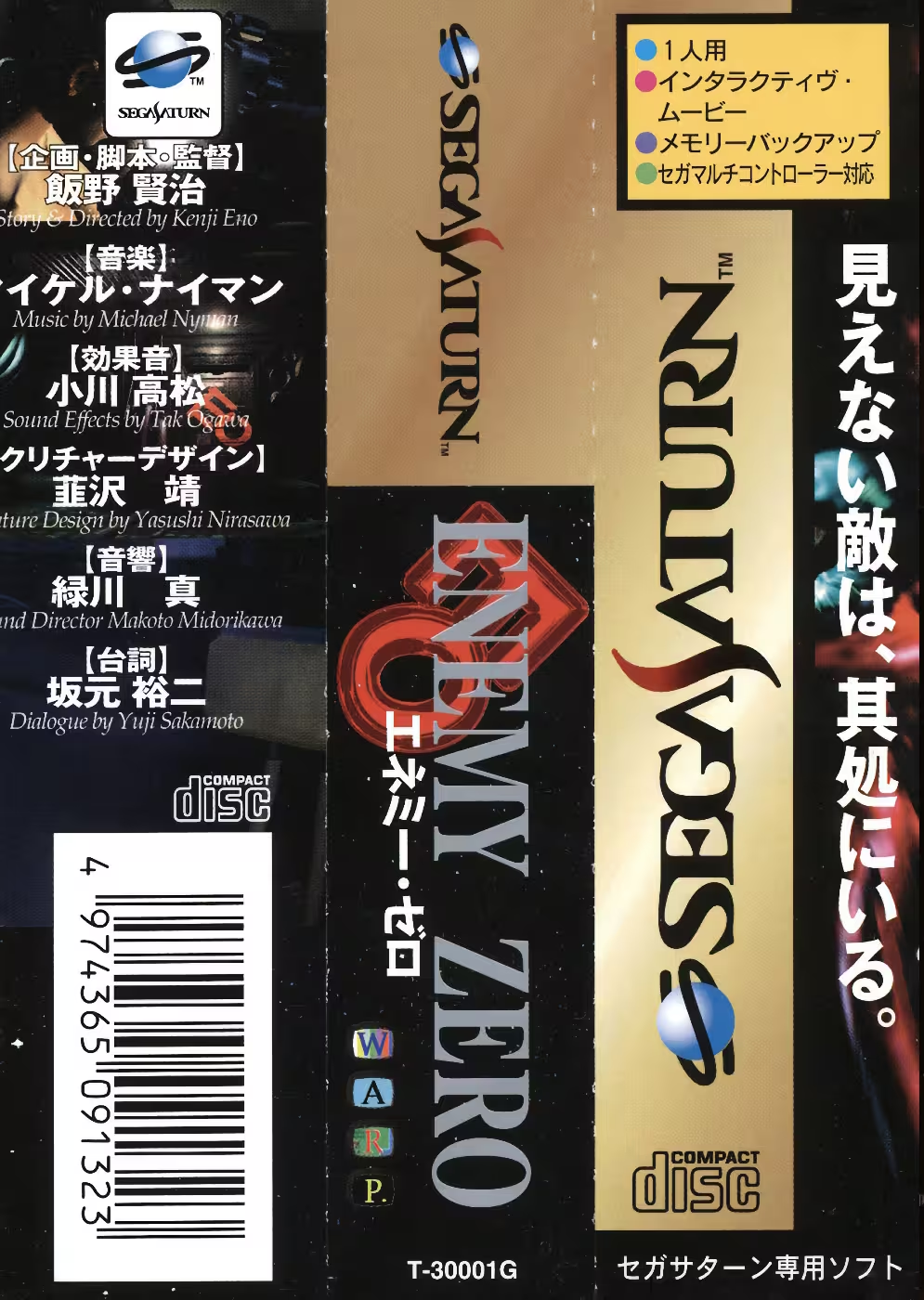
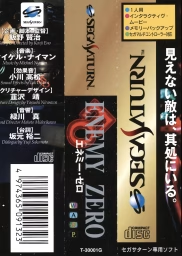 Spine Card
Aventura de terror recordada por su singular mecánica de enemigos invisibles, detectables solo a través del sonido, y por su drástico cambio de exclusividad de PlayStation a Saturn. Esta es la versión con portada pseudoholográfica. Se incluye una segunda copia suelta sin el Disco 0 (no necesario para jugar), recibido como obsequio.
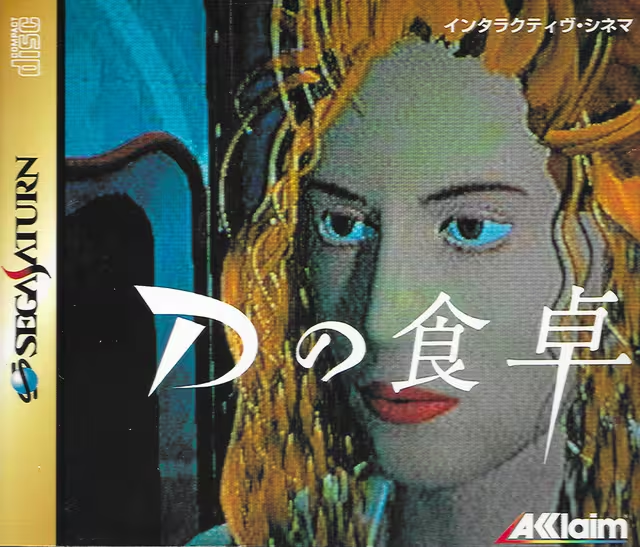
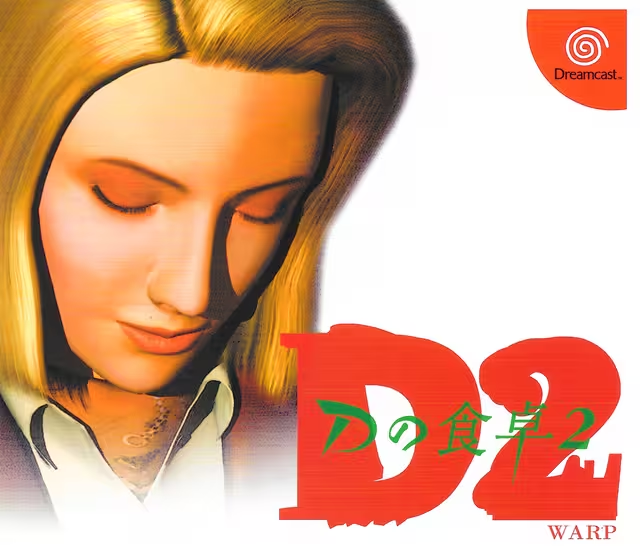
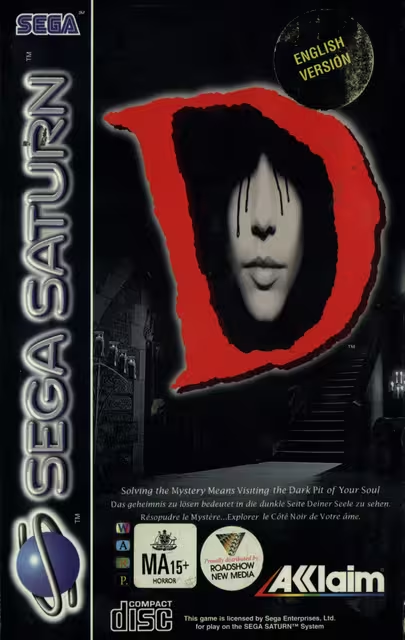
Enemy Zero ocupa un lugar central en la trilogía de títulos de WARP dirigidos por Kenji Eno, protagonizados por la «actriz digital» Laura; su identidad se comprende mejor en relación con D (1995) y D2 (1999). En D, Laura aparece en una narrativa de terror surrealista centrada en puzles, desplazándose a través de un entorno FMV basado en nodos donde el jugador desentraña un misterio gótico. El juego definió el estilo característico de WARP: una presentación cinematográfica, una atmósfera inquietante y el concepto de una actriz digital recurrente capaz de asumir roles distintos en cada proyecto.Enemy Zero recupera a Laura, pero la sitúa en un entorno de ciencia ficción a bordo de una nave espacial a la deriva. La exploración mediante FMV persiste, pero se combina con una navegación en primera persona en tiempo real donde los enemigos son invisibles y solo pueden detectarse a través de señales sonoras. Esta mecánica obliga a los jugadores a depender del sonido en lugar de la vista, generando una tensión que lo diferencia de D. Este planteamiento basado en el audio se materializó plenamente en otro título de WARP, Real Sound Kaze no Regret, que carecía prácticamente de gráficos.Enemy Zero destaca también por su exclusividad en Saturn. Inicialmente se presentó para PlayStation, pero durante su anuncio oficial se reveló que llegaría únicamente a Saturn, en un giro dramático tras la renuncia de Eno en un evento de Sony debido a discrepancias con la compañía. El juego se lanzó posteriormente en Windows, pero nunca llegó a ver la luz en PlayStation.D2, publicado más tarde para Dreamcast, cierra el arco narrativo devolviendo a Laura a un entorno de terror, pero esta vez en 3D completo, combinando mecánicas de supervivencia con una narrativa cinematográfica. Mientras que D era estático y centrado en puzles, y Enemy Zero experimentaba con el sonido y la invisibilidad, D2 adoptó una jugabilidad de supervivencia orientada a la acción, demostrando la evolución de los roles de Laura según el hardware y las expectativas de cada género. En conjunto, la trilogía refleja la fascinación de Eno por utilizar a una única actriz digital para explorar géneros dispares como el terror gótico, el suspense de ciencia ficción y la acción de supervivencia, mientras desafiaba los límites de la presentación y la percepción del jugador. Enemy Zero resultó ser el más radical de los tres, no solo por sus enemigos invisibles y su dependencia del audio, sino también por su ruptura simbólica con Sony, consolidándose como un videojuego y, a la vez, como una declaración de independencia creativa.
| Nombre del artículo |
|
|---|---|
| Nombre original |
|
| Código del artículo |
|
| Número de artículo |
|
| Cantidad |
|
| Serie | |
| Tipo | |
| Género | |
| Tema | |
| Región | |
| Territorio | |
| Embalaje | |
| Documentación | |
| Desarrollador | |
| Editor | |
| Soporte | |
| Jugadores | |
| Periféricos | |
| Precio de lanzamiento |
|
| Fecha de lanzamiento | |
| Fecha de incorporación |
|