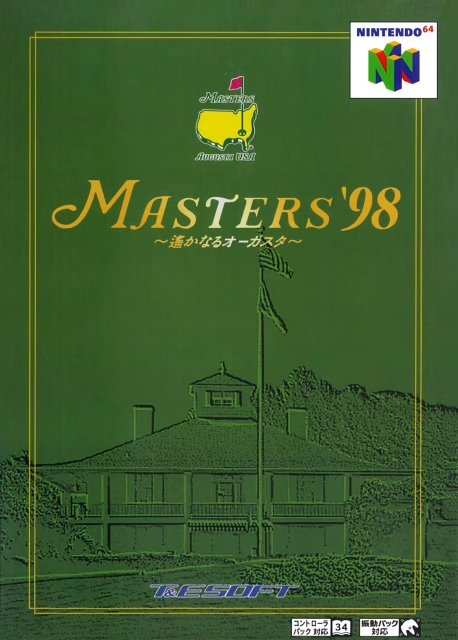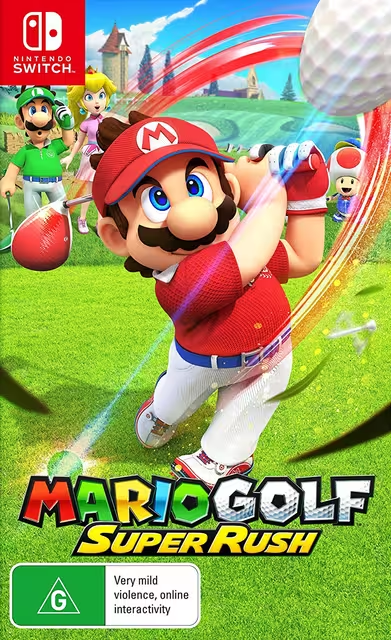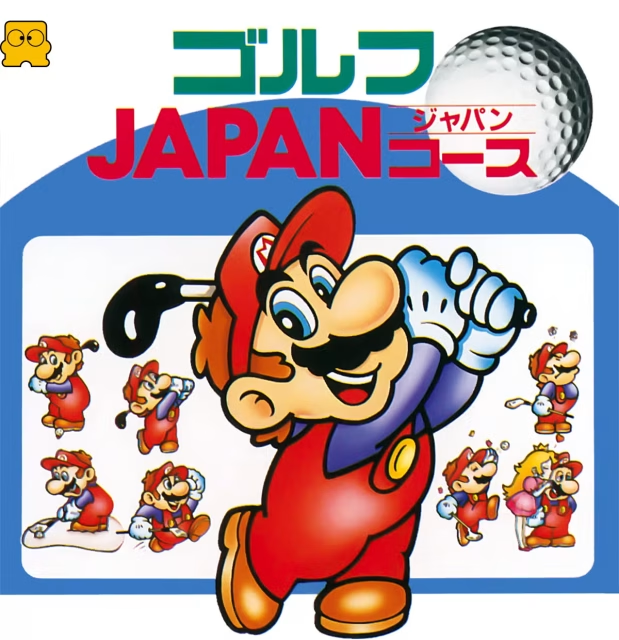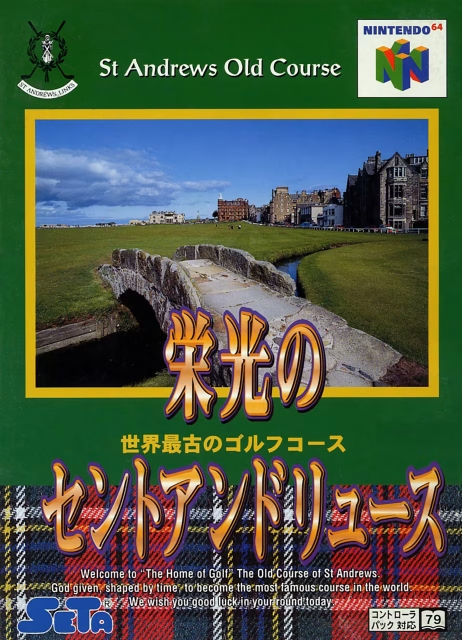
Eikō no Saint Andrews
NUS-NSTJ-JPN
Video Game Collection

A sports simulation built around measured pacing and accessible design. Presents the personal computer as a platform for casual recreation and technical demonstration. Purchased in OEM software bundle with new Windows 95 PC.
Microsoft Golf 2.0 is a rebranded port of Links 386 CD, which itself is an enhanced version of Links 386 Pro. The golf simulator depicts courses through digitised backdrops and simplified three‑dimensional perspectives. It positions golf as a recreational pastime translated into software, aligning with Microsoft’s broader strategy at the time of showcasing multimedia capabilities on consumer PCs. It carried the Microsoft Home branding as part of this initiative, and was commonly provided in OEM bundles with new systems.
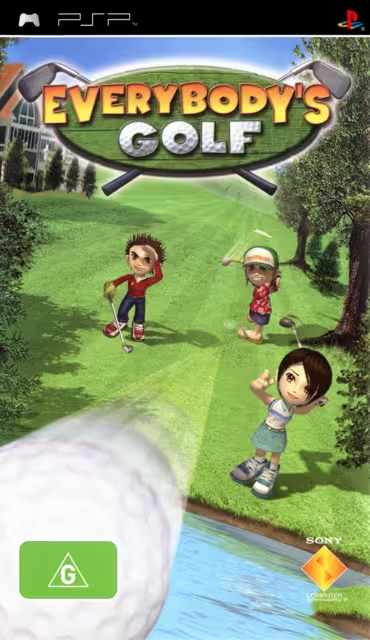
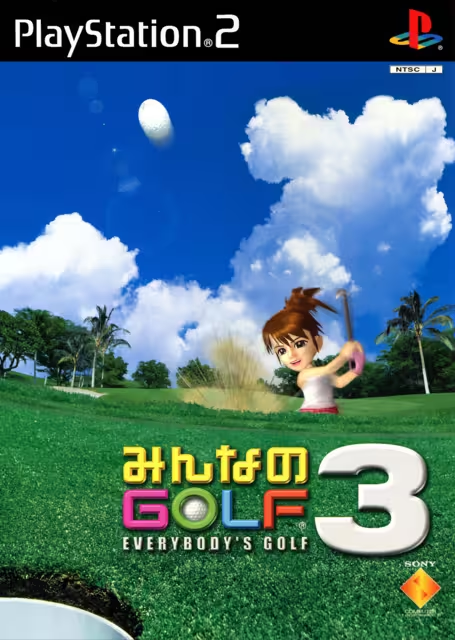
Mechanically, the game builds upon the Access Software Links engine, offering multiple courses, adjustable difficulty, and a swing meter that governs shot strength and accuracy. Players select clubs, manage wind and terrain, and attempt to complete rounds under stroke play rules. The interface integrates Windows conventions, with menus and dialogue boxes reinforcing its identity as productivity‑adjacent entertainment. Compared with contemporaries such as Links LS and Jack Nicklaus Golf, Microsoft Golf 2.0 emphasises accessibility over simulation depth, situating itself as an entry point for casual players. Consoles were also hosting more advanced golf simulations. Pebble Beach Golf Links on Saturn and Everybody’s Golf (Hot Shots Golf internationally) on PlayStation emphasised simulation and accessibility, respectively.
Reception in the mid‑1990s noted its technical polish and ease of installation, but also observed that it lacked the realism and depth of more specialised golf simulations. Reviewers described it as competent and approachable, yet overshadowed by the more advanced Links series. Retrospective perspectives recognise it as part of Microsoft’s effort to expand the Windows 95 software library with recreational titles, with it demonstrating multimedia integration and casual play, rather than sporting authenticity. Its identity lay in how Windows positioned itself as both a work and play environment.
| Item Name |
|
|---|---|
| Item Number |
|
| Type | |
| Genre | |
| Territory | |
| Packaging | |
| Documentation | |
| Developer | |
| Publisher | |
| Media | |
| Release Date | |
| Date Added |
|