Yo-Kai Watch
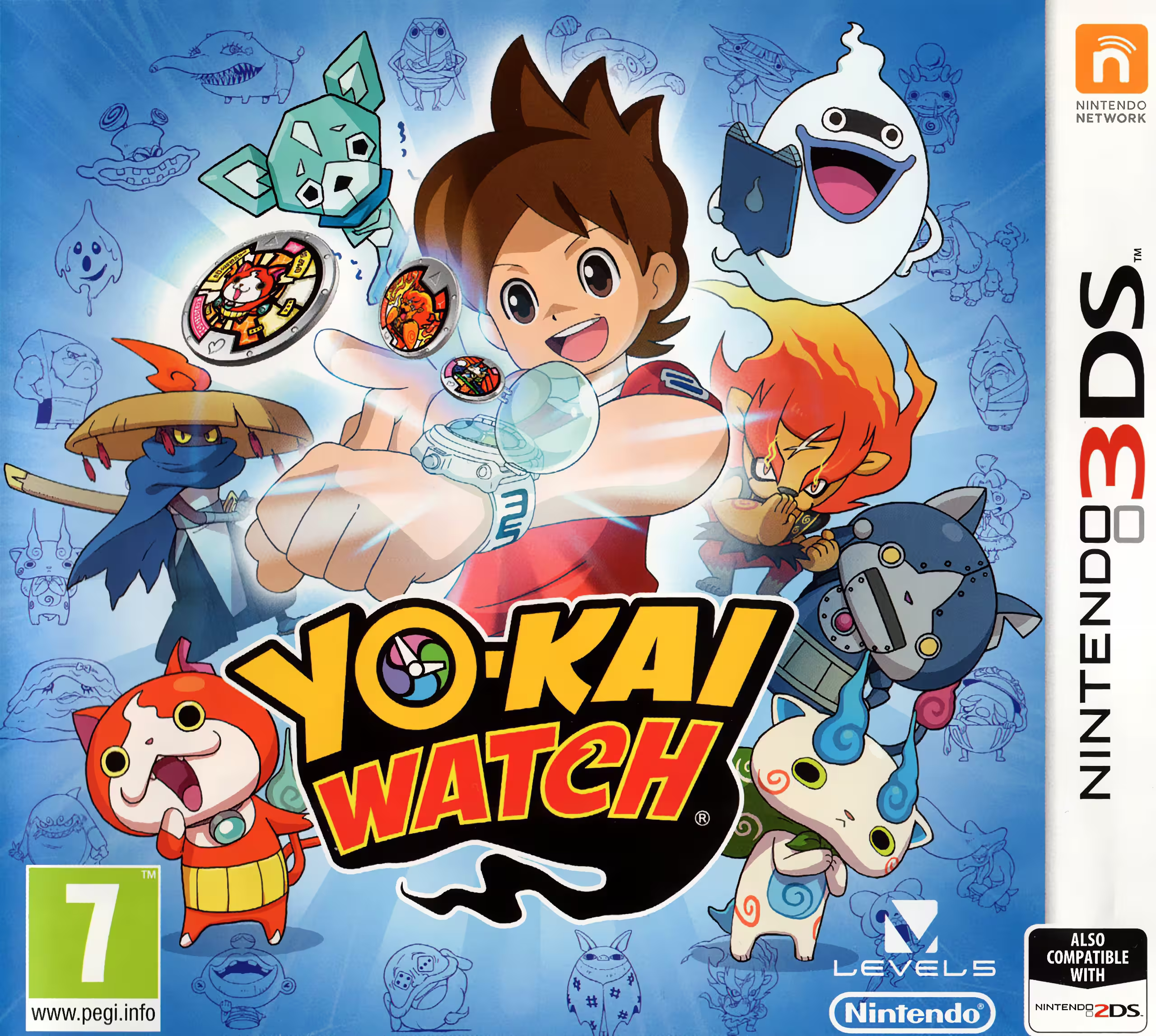
-
 Front Cover
-
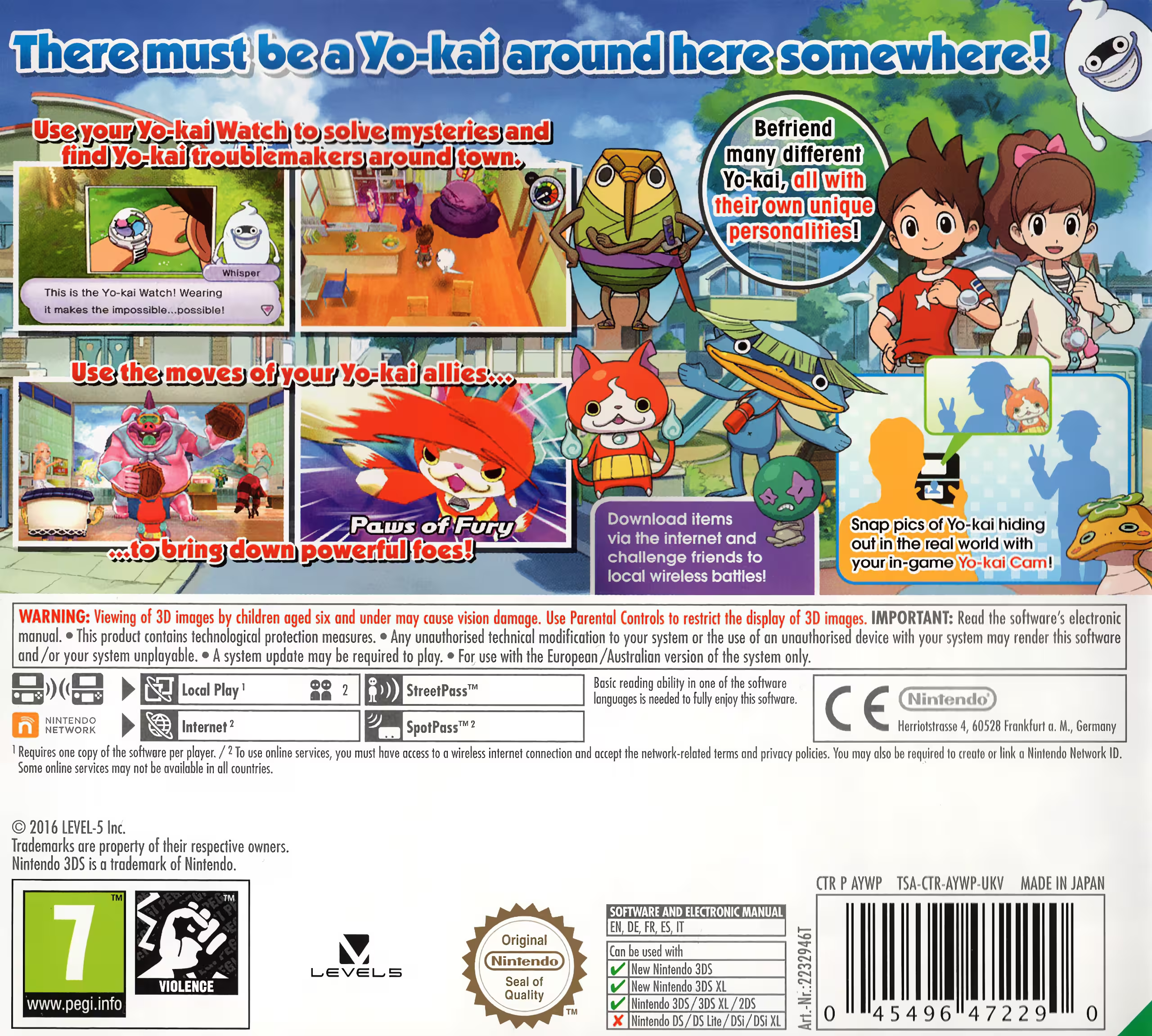
 Back Cover
A monster collecting RPG with a bright comic pulse, built the idea that every bad mood, lost item, or strange habit has a spirit grinning behind it.
Description
Yo-kai Watch follows Nate Adams or Katie Forester after a chance encounter with Whisper, the butler-like Yo-kai who grants the power to see the hidden creatures troubling the town of Springdale. The world is one where suburbs, shopping streets, schools, forests, and back alleys are places where folklore sits beside vending machines and homework. Its central idea is wonderfully direct: Yo-kai are not just monsters to collect, they are explanations for the small disruptions of daily life, from arguments at home to odd behaviour in public.
The game plays as a role-playing and auto-battler hybrid, with the player exploring Springdale, scanning suspicious areas with the Yo-kai Watch, battling Yo-kai, and befriending more than 200 of them for use in combat. Battles use a six-member team arranged on a rotating wheel, with three Yo-kai active at once, while the touchscreen is used to rotate positions, purify status effects, feed enemies, and trigger Soultimate moves through short input challenges. StreetPass features, local wireless battles, the Crank-a-kai capsule machine, side quests, bug catching, fishing, and the Yo-kai Cam give the 3DS version a comprehensive handheld experience rather than a straight RPG story.
Its most common comparison is Pokémon, and the surface case is obvious: children, collectable creatures, elemental-style matchups, towns, friendship, evolution, and a portable format. Yet Yo-kai Watch has a very different feel, swapping route-based trainer conquest for neighbourhood investigation, semi-automated battles, comedy vignettes, and a stronger connection to Japanese folklore and children’s television pacing. As the first game in the series, it led directly into Yo-kai Watch 2: Bony Spirits and Yo-kai Watch 2: Fleshy Souls, while later entries such as Yo-kai Watch 3 reworked the battle system and broadened the setting. Contemporary reception was favourable, with praise for its humour, visual polish, accessible systems, and distinctive battle format. In Japan it became a major commercial and cultural success, selling over a million copies and helping launch the anime, toys, sequels, and wider media franchise, though its Western performance never matched that domestic explosion. Retrospectively it is one of the 3DS era’s defining new RPG properties, charming, approachable, and more idiosyncratic than its obvious comparisons suggest.
Datasheet
| Item Name |
|
|---|---|
| Item Code |
|
| Item Number |
|
| Type | |
| Genre | |
| Theme | |
| Characteristics | |
| Region | |
| Territory | |
| Packaging | |
| Documentation | |
| Developer | |
| Publisher | |
| Distributor | |
| Media | |
| Players | |
| Video Modes | |
| Classification | |
| Release Date | |
| Date Added |
|
Related Products
-
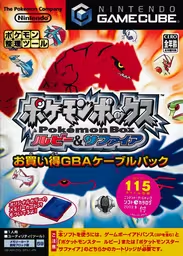 Pokémon Box Ruby & Sapphire (Great Value GBA Cable Pack)GB-A2A-DOL-GPXJ-JPN
 -
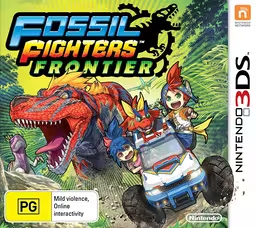 Fossil Fighters: FrontierCTR-AHRD-AUS
 -
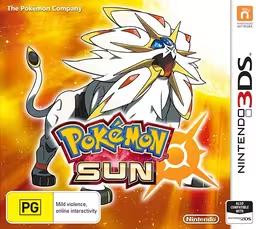 Pokémon SunCTR-BNDP-AUS
 -
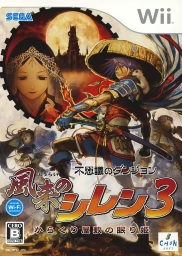 Fushigi no Dungeon: Fuurai no Shiren 3: Karakuri Yashiki no Nemuri HimeRVL-RFSJ-JPN
 -
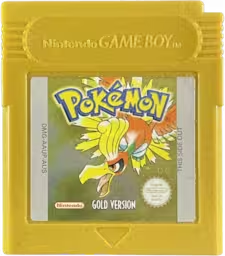 Pokémon Gold VersionDMG-AAUP-AUS
 -
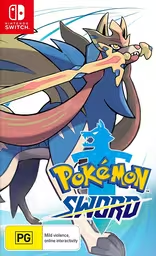 Pokémon SwordHAC-ALZAA-AUS
 -
Pokémon Box Ruby & SapphireDOL-GPXJ-JPN
-
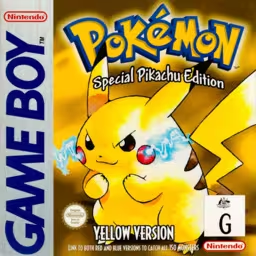 Pokémon Yellow Version: Special Pikachu EditionDMG-APSU-AUS