Hōkago Ren’ai Club: Koi no Étude (Limited Edition)
放課後恋愛クラブ -恋のエチュード- (限定版)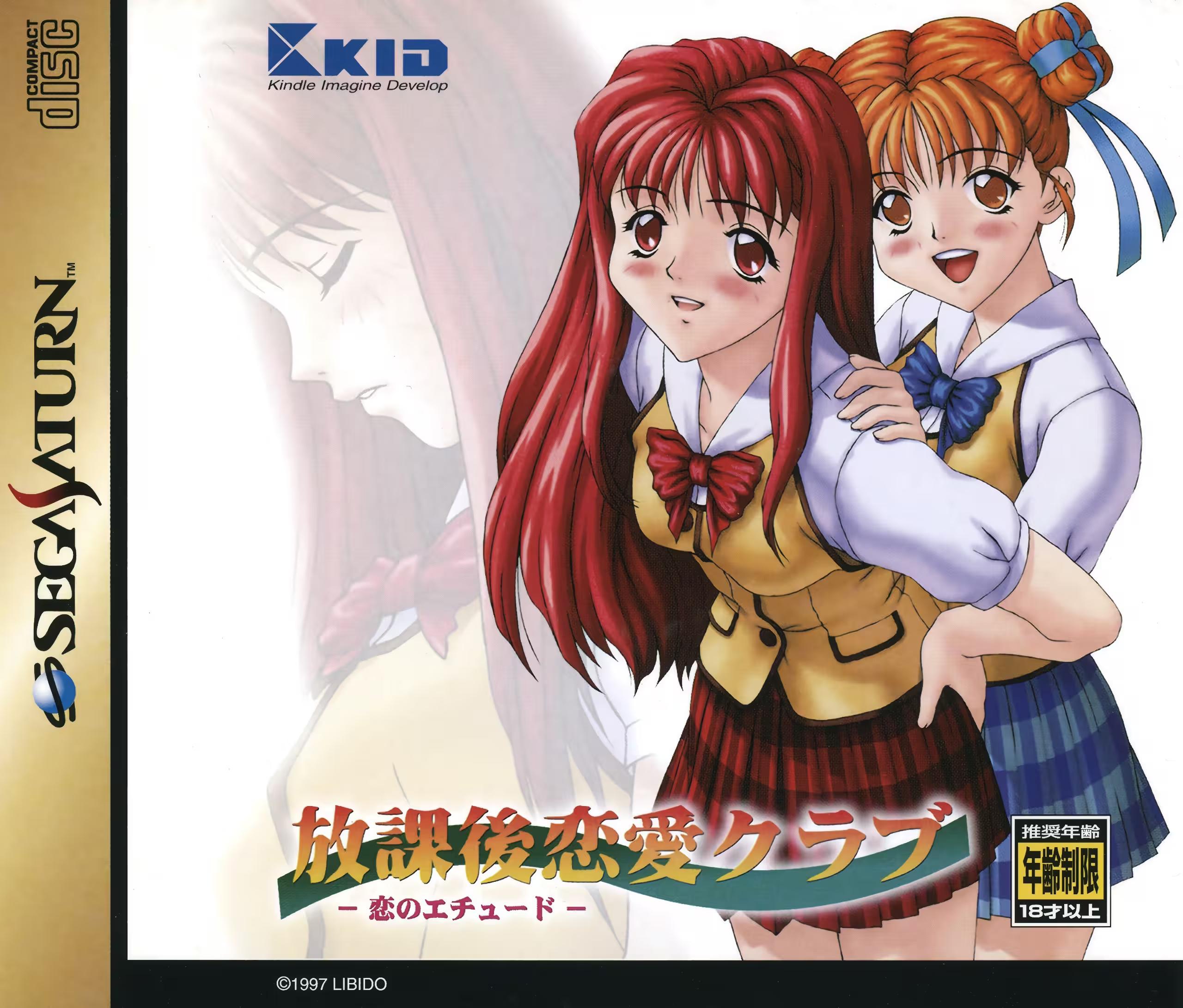
-
 Front Cover
-
 Back Cover
A dating visual novel that tasks players with balancing high school schedule management, statistics building, and conversation trees to win the affection of various school peers. Re-engineered from its explicit PC roots to strictly comply with 1990s console publishing standards, this release strips out all adult material to focus entirely on its daytime calendar mechanics and branching romantic narratives.
Description
Hōkago Ren’ai Club: Koi no Étude (Afterschool Romance Club: Etude of Love) introduces players to the bustling daily life of a Japanese high school student navigating academic pressures, personal development, and the complexities of adolescent romance. Set across a structured academic calendar, the narrative focuses heavily on school club activities and after-school interactions, where the choices made during these formative hours dictate the trajectory of the protagonist’s relationships.
Originally released for Japanese home computers by LIBIDO, the game was a typical eroge of the era. KID (Kindle Imagine Develop) completely re-engineered the game’s core architecture to meet Sega’s strict consumer console guidelines. This version was stripped out all explicit content, pivoting the focus entirely toward a robust stats-management loop heavily inspired by genre definitive titles like Tokimeki Memorial. Players manage a weekly schedule to build personal attributes such as intelligence, athleticism, and charisma, which are required to unlock specific character routes, clubs, and location-based date events. KID also implemented full voice acting for the game’s various heroine archetypes, expanding upon the text-heavy delivery of the original.
Retrospectively, Hōkago Ren’ai Club is an artifact of the 1990s Japanese visual novel boom, when the Sega Saturn became the premier destination for PC-to-console ports. While contemporary critics viewed it as a mechanically standard entry within a highly saturated market, it was well-received by genre enthusiasts who appreciated KID’s clean mechanical translation and high-quality audio integration. In hindsight its a classic example of the era’s unique censorship and platform migration pipeline, demonstrating how dedicated porting houses could successfully sanitise and repackage eroge into mainstream, retail-friendly console software.
Datasheet
| Item Name |
|
|---|---|
| Localised Name |
|
| Item Code |
|
| Item Number |
|
| Type | |
| Genre | |
| Theme | |
| Region | |
| Territory | |
| Packaging | |
| Documentation | |
| Developer |
|
| Publisher | |
| Media | |
| Players | |
| Peripherals | |
| Classification | |
| Launch Price |
|
| Release Date | |
| Date Added |
|
Related Products
-
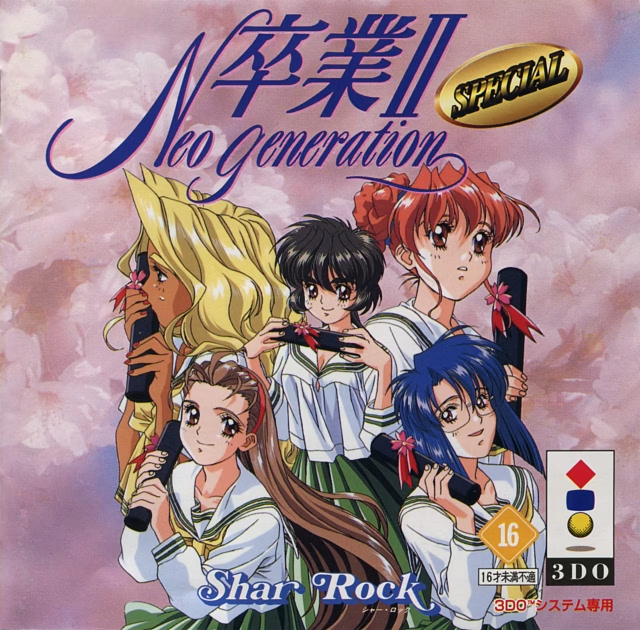 Sotsugyō II: Neo Generation SpecialFZ-SJ7451
 -
 The Sims 4 Bundle: Outdoor Retreat, Cool Kitchen Stuff, Spooky Stuff103203501601
 -
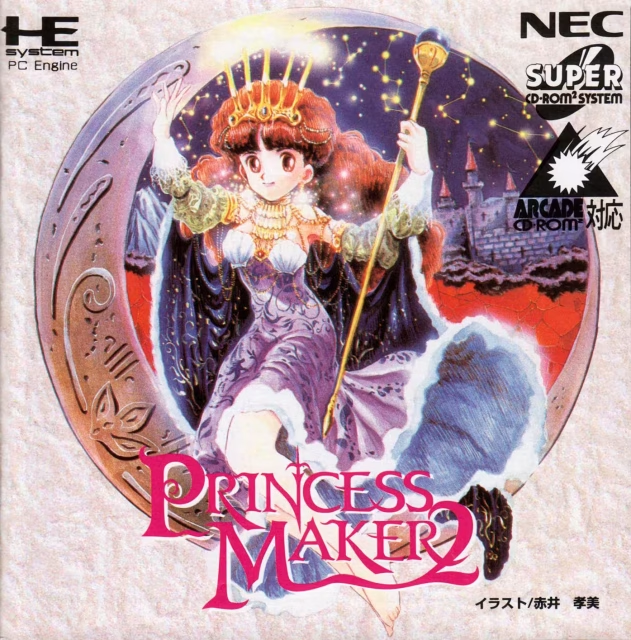 Princess Maker 2HECD5020
 -
 Petz CountrysideCTR-APOP-AUS
 -
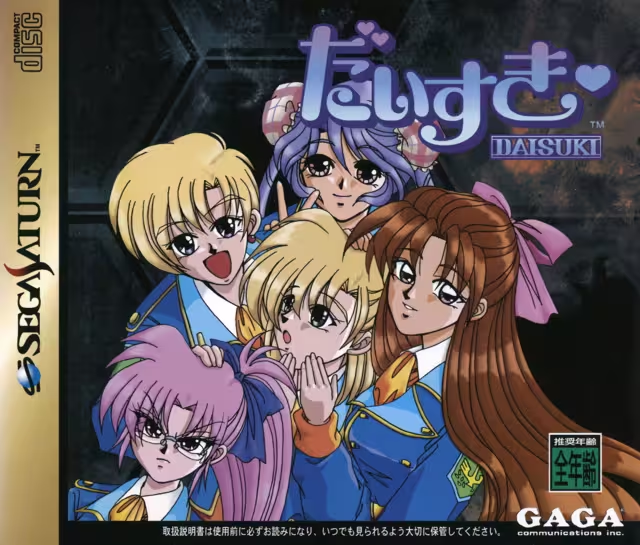 DaisukiT-18510G
 -
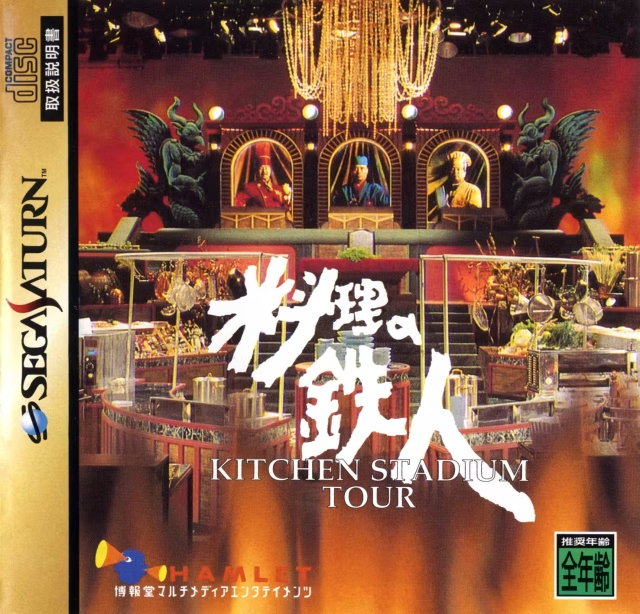 Ryouri no Tetsujin: Kitchen Stadium TourT-21702G
 -
 Persona 5PLJM-80169
 -
 The Sims 4: Get to Work101385501601