Final Fantasy VIII
ファイナルファンタジーVIII

-
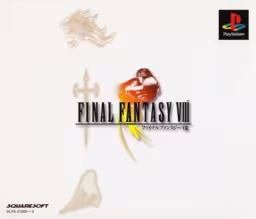 Front Cover
-
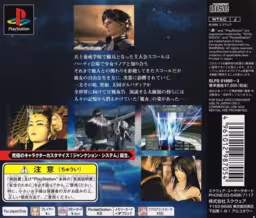 Back Cover
A cinematic RPG experience that focuses on the internal lives and romantic development of elite student mercenaries within a world of advanced technology and ancient sorcery. Showcased the move toward realistic character proportions and high fidelity motion captured animations.
Description
Final Fantasy VIII follows Squall Leonhart, a reserved trainee at a military academy who is thrust into a global conflict involving a manipulative sorceress from the future. This journey explores the formation of a resistance group and the blossoming relationship between the protagonist and a spirited young woman caught in the political crossfire. Themes of memory, the weight of destiny, and the struggle to open oneself to others are central to the story. The heavy narrative focus on a modern military romance and questionable plot twists, moved the series far away from its high-fantasy roots. The visual presentation relies on a contemporary science fiction aesthetic, featuring sprawling urban landscapes and mechanical fortresses that contrast with the series’ traditional fantasy origins. It is the second entry of the series on the PlayStation and is often compared with its predecessor Final Fantasy VII for its even greater emphasis on cinematic spectacle and narrative experimentation.
Gameplay changes see players manage their party’s power through the junction system, where magical spells are drawn from enemies and assigned to character attributes to enhance strength and defence. This mechanic replaces traditional equipment based progression and requires the strategic collection of magic to increase effectiveness in combat. Battles utilise a three member party and feature interactive elements, such as timed trigger pulls for the protagonist’s gunblade and rhythmic button presses to boost the damage of summoned entities. The mechanics altered some design fundamentals. Traditional RPG growth was replaced with the Junction System, creating a paradox where casting your best spells actually made your characters weaker. Furthermore, the implementation of level scaling meant that grinding for experience could inadvertently make bosses more difficult. The game includes a comprehensive collectible card game known as Triple Triad, which allows players to win rare items and character cards from non player characters throughout the world. The Japanese version also includes Chocobo World, a mini-game exclusive to the PocketStation handheld.
Contemporary reviews praised the game for its groundbreaking visual quality and the ambition of its complex junction system. Retrospectively the entry was bold but polarising. While pushing the technical boundaries of its era, it became the series’ first truly “love it or hate it” entry due to various experimental risks that broke from the established JRPG formula. The title reflects the mid-generation shift toward adult themes and realistic presentation in the genre.
Datasheet
| Item Name |
|
|---|---|
| Original Name |
|
| Item Code |
|
| Item Number |
|
| Quantity |
|
| Type | |
| Genre | |
| Region | |
| Territory | |
| Packaging | |
| Documentation | |
| Developer | |
| Publisher | |
| Media | |
| Players | |
| Peripherals | |
| Launch Price |
|
| Release Date | |
| Date Added |
|