Tales of Eternia
SLPS-03050~2
Video Game Collection

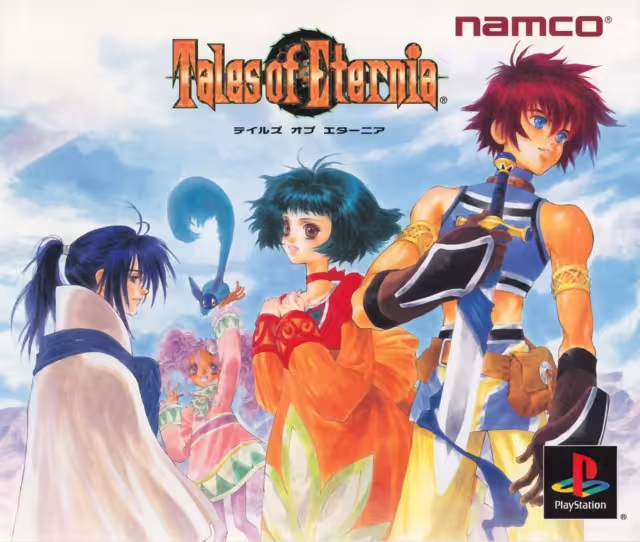
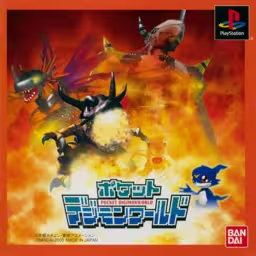 Front Cover
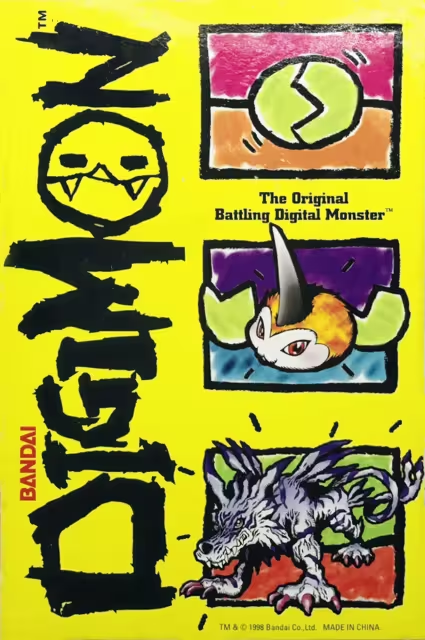
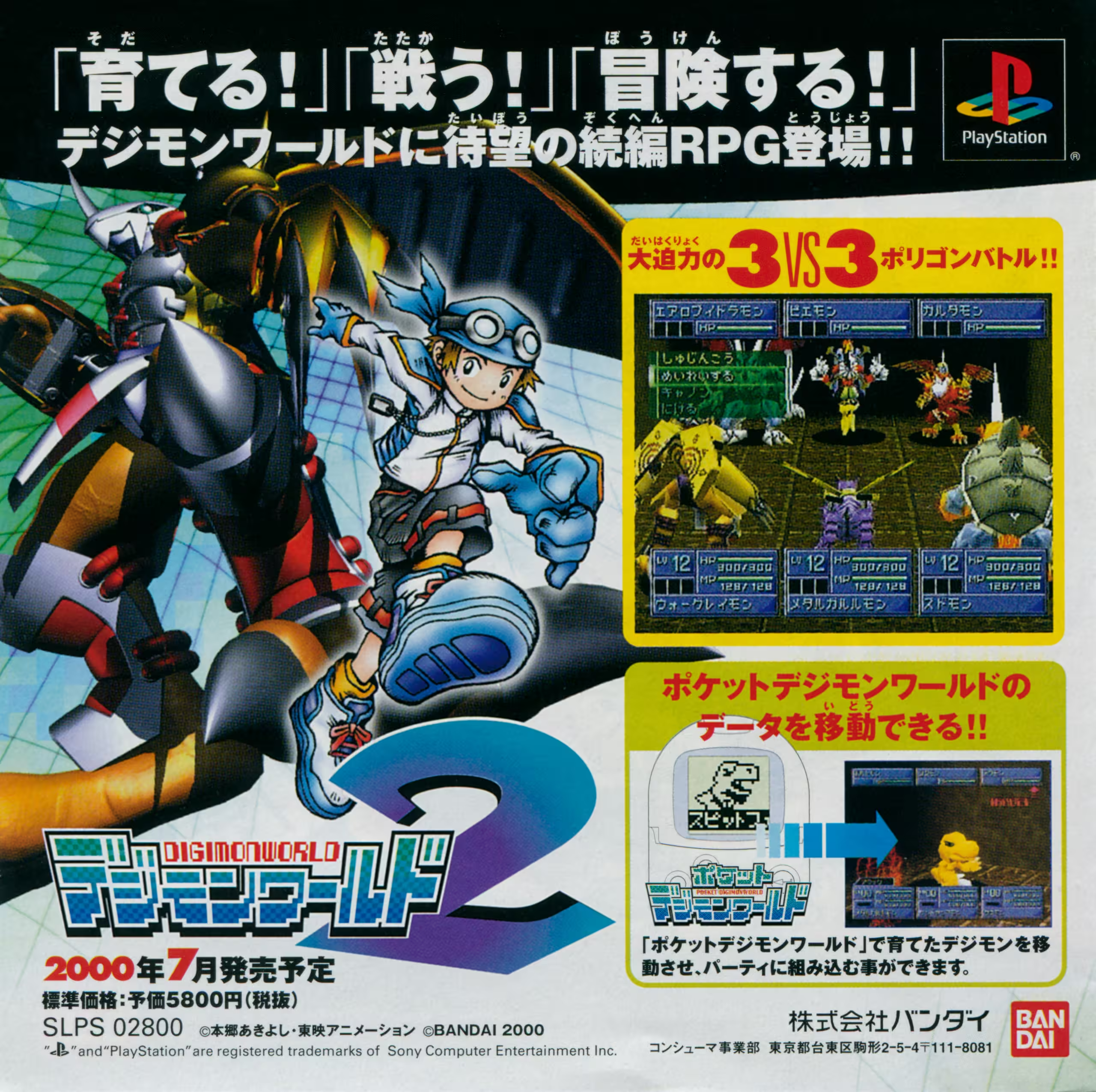
 Flyer
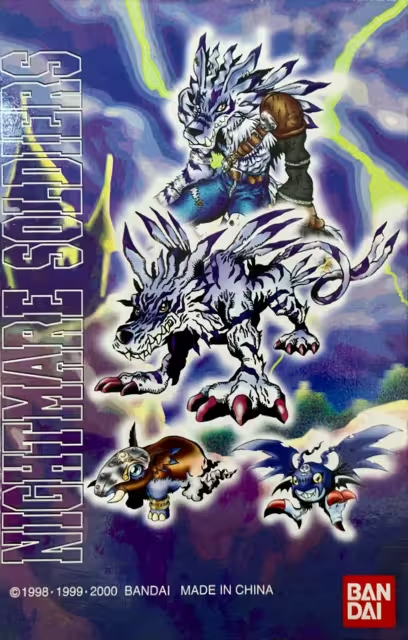
Flyer
An expansion to the V-Pet RPG that bridges between the PlayStation and Bandai’s handheld ecosystem, focusing on portable training and cross-platform data synchronisation. It is the height of the interconnected era of the late 90s, designed to live simultaneously on the PlayStation, a PocketStation, and a WonderSwan.
Pocket Digimon World was developed to capitalise on the massive success of the original Digimon World while leaning into the portability of the new PocketStation peripheral. The core feature revolves around the Digimon Link System, which allows players to download their raised Digimon from the PlayStation onto a PocketStation to be trained on the go. This “away-from-console” training is essential for stat growth and evolution, effectively turning the PlayStation into a high-fidelity “dock” for what is essentially a digital pet. The game was released in three distinct versions, this original, followed by Wind Medal and Ice Medal. Each featuring different obtainable Digimon and items, mirroring the multi-version release strategy of the Pokémon and Tamagotchi franchises.
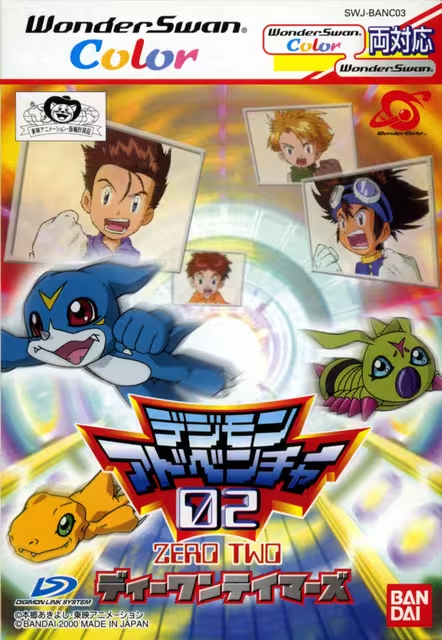
The most technically significant feature is the integration with Bandai’s WonderSwan hardware. Through the PocketStation and the WonderWave infrared peripheral, players could facilitate a two-way data transfer between Pocket Digimon World and WonderSwan titles such as Digimon Adventure: Anode Tamer and Cathode Tamer. This allowed for the trading of Digimon and items across completely different hardware architectures, an amazing feat of interoperability that was highly advanced for the era.
Visually, the game utilises a mix of graphics from basic 2D sprites for the PocketStation training screens to detailed 3D models for the PlayStation museum and battle sequences. While it lacks the sprawling overworld of Digimon World 3, it compensates with an exhaustive archival focus; the Digimon Museum allows players to catalog every creature they have raised, effectively functioning as a physical database of the franchise’s early roster. This is a title that is quite dependent on original hardware to fully appreciate. Although the core game is independent the overall experience relies on having a PocketStation, the WonderWave, and the other various link accessories. It stands as one of the most hardware-dependent entries in the series, representing the pinnacle of Bandai’s early-2000s multi-platform ambition.
| Item Name |
|
|---|---|
| Original Name |
|
| Item Code |
|
| Item Number |
|
| Series | |
| Type | |
| Genre | |
| Theme |
|
| Characteristics | |
| Region | |
| Territory | |
| Packaging | |
| Documentation | |
| Developer | |
| Publisher | |
| Media | |
| Players | |
| Peripherals | |
| Launch Price |
|
| Release Date | |
| Date Added |
|