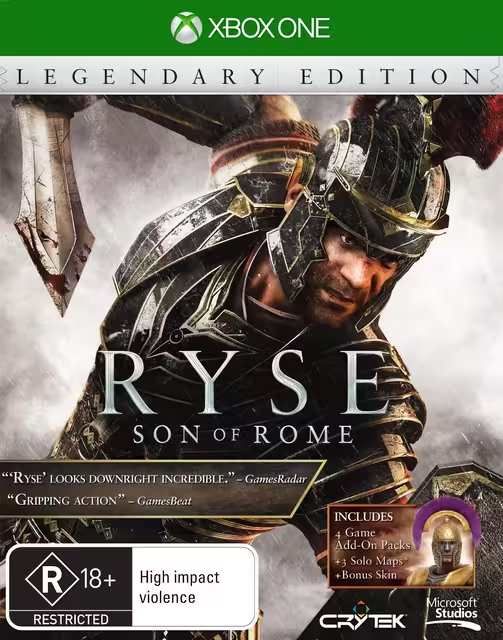
Ryse: Son of Rome (Legendary Edition)
5F2-00005
Video Game Collection

A historical action adventure built around shifting identities, political conflict, and a mixture of stealth and open combat. The Wii U version contains unique GamePad specific features.
Assassin’s Creed III follows Ratonhnhaké:ton, known as Connor, as he moves through the forests, towns, and battlefields of eighteenth‑century North America during the American Revolution. The story focuses on his divided loyalties as he navigates his Haudenosaunee heritage, his connection to the Assassins, and the wider struggle between colonial powers and local communities. It touches on personal loss, shifting alliances, and the changing landscape of a continent in turmoil, linking directly to the broader series arc established in earlier entries.
Gameplay features a mixture of free‑running, stealth, and close‑range combat, with Connor climbing trees, cliffs, and buildings to cross large areas without interruption. The frontier region introduces hunting, tracking, and seasonal weather that affects visibility and movement. Naval missions allow control of a ship in combat and exploration, which later becomes a major feature in subsequent titles. Towns such as Boston and New York provide dense areas for rooftop movement and crowd blending, while homestead development offers side activities that expand the settlement and introduce new characters. It builds upon similar earlier entries such as Assassin’s Creed II and Assassin’s Creed: Brotherhood, while the naval mechanics and frontier traversal make it a forerunner to later titles such as Assassin’s Creed IV: Black Flag.
The Wii U version included exclusive GamePad features, such as an always-on map, inventory management, and database access on the touchscreen, letting players manage tools without pausing the game. Content-wise, it was comparable to other console versions and later even included DLC in the Assassin’s Creed III: Washington Edition.
It was praised the scale of the world, the naval missions, and the ambition of the setting, while some criticised the pacing of the opening chapters and the complexity of certain systems. Retrospectively it has a distinctive protagonist, a large frontier region, and was a turning point that introduced mechanics developed further in later entries.
| Item Name |
|
|---|---|
| Item Code |
|
| Item Number |
|
| Series | |
| Type | |
| Genre | |
| Theme | |
| Characteristics | |
| Region | |
| Territory | |
| Packaging | |
| Documentation | |
| Developer | |
| Publisher | |
| Media | |
| Players | |
| Peripherals | |
| Video Modes | |
| Sound Modes | |
| Classification | |
| Launch Price |
|
| Release Date | |
| Date Added |
|
| External Links |
|