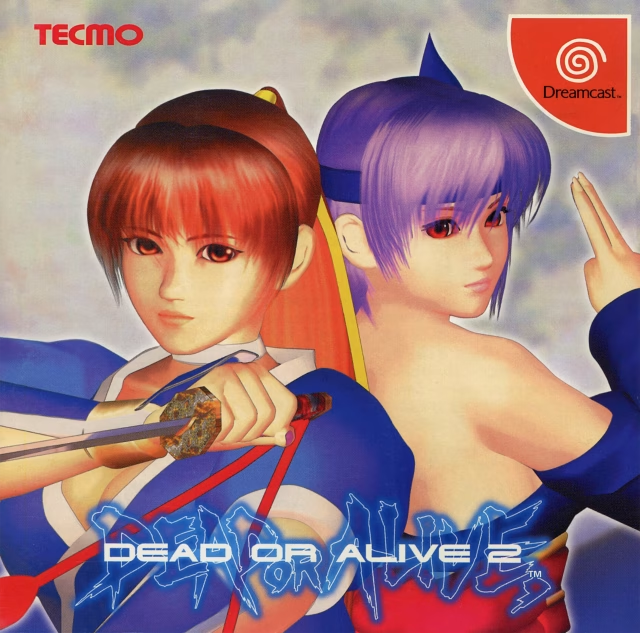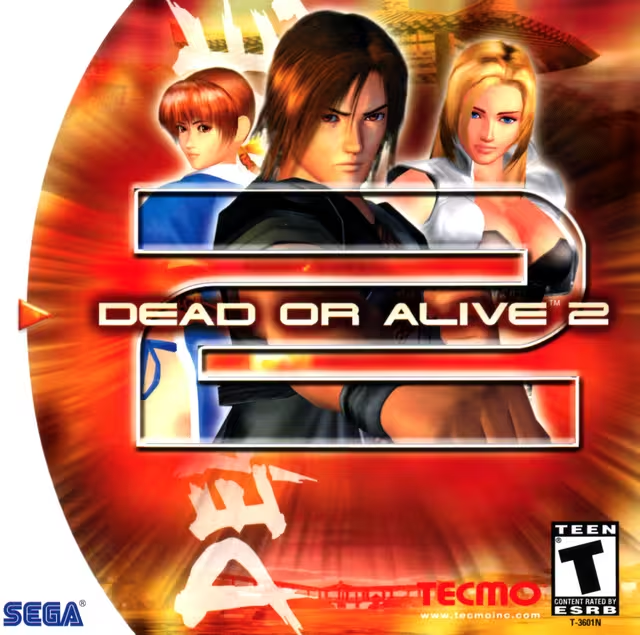
Dead or Alive 2
T-3601N
Video Game Collection


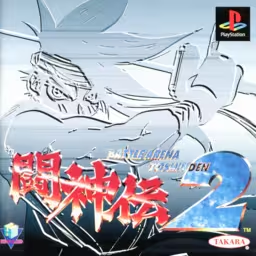 Front Cover
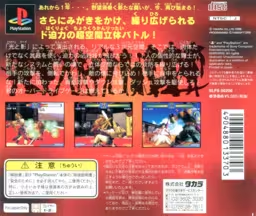 Back Cover
A high-fidelity sports simulation of its era that marks the technical evolution of the weapon-based fighting genre into more fluid, three-dimensional combat. Showcased the visual leap of the PlayStation's early software library, delivering higher polygon counts and more complex lighting effects than its landmark predecessor.
Battle Arena Toshinden 2 centres on the “Toshinden” tournament, a secret martial arts competition that draws the world’s most elite weapon masters into a conflict governed by the mysterious Secret Society. The narrative core follows the original cast, including Eiji Shinjo and Kayin Amoh, as they investigate the emergence of Uranus, a powerful new antagonist seeking to eliminate the tournament’s top fighters. It examines themes of personal honour, the burden of a warrior’s legacy, and the pursuit of power within the shadows of global conspiracy. The atmosphere is defined by its dramatic, anime-inspired character designs and an eclectic musical score that blends hard rock with orchestral flourishes. This release is a pivotal sequel that established the franchise’s identity before the arrival of later competitors like SoulCalibur.
The gameplay integrates a refined version of the series’ signature 3D movement, allowing players to utilise a dedicated “Dodge” button to roll into the foreground or background to avoid incoming strikes. A significant functional addition is the inclusion of the “Overdrive” gauge, a cinematic special-meter system that allows players to execute devastating, multi-hit “Desperation Moves” when their health is critically low. The mechanics provide a balance between rapid weapon-based combos and strategic positioning, benefiting from an increased frame rate that makes the combat feel significantly more responsive than the first entry. The game features an expanded roster of fifteen fighters, including hidden boss characters and newcomers like the chainsaw-wielding Tracy and the lethal Vermilion. The technical framework was notable for its use of Gouraud shading and transparency effects, which at the time set a new visual standard for home console 3D fighters. Compared with Virtua Fighter 2 it has similar technical ambition, though it maintains a more arcade-like, supernatural focus.
Reception was positive on release for its impressive visual upgrades and the added depth provided by the new combat mechanics. Reviewers highlighted the variety of the character roster and the inclusion of more verticality in the arenas as major improvements over the original title. The transition of the arcade experience to the PlayStation was seen as a near-perfect port, solidifying the console’s reputation as a 3D powerhouse.
| Item Name |
|
|---|---|
| Original Name |
|
| Item Code |
|
| Item Number |
|
| Series | |
| Type | |
| Genre | |
| Theme | |
| Region | |
| Territory | |
| Packaging | |
| Documentation | |
| Developer | |
| Publisher | |
| Media | |
| Players | |
| Peripherals | |
| Launch Price |
|
| Release Date | |
| Date Added |
|