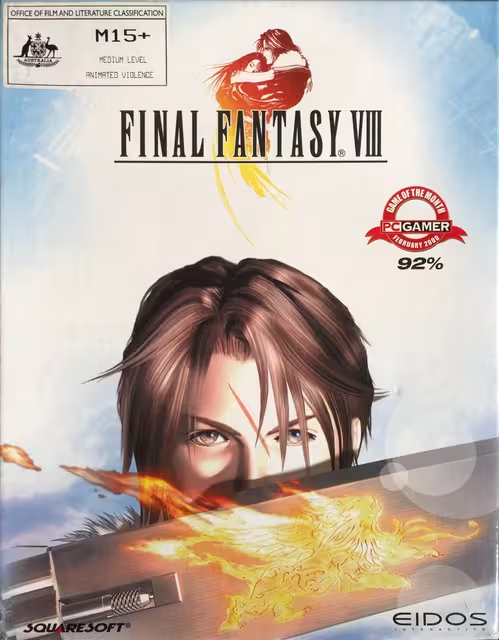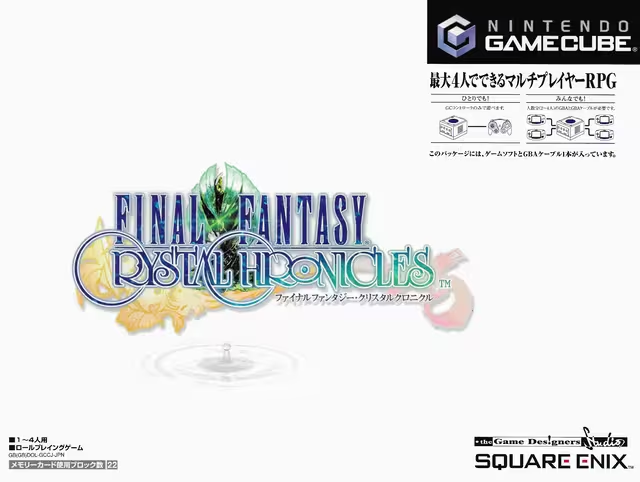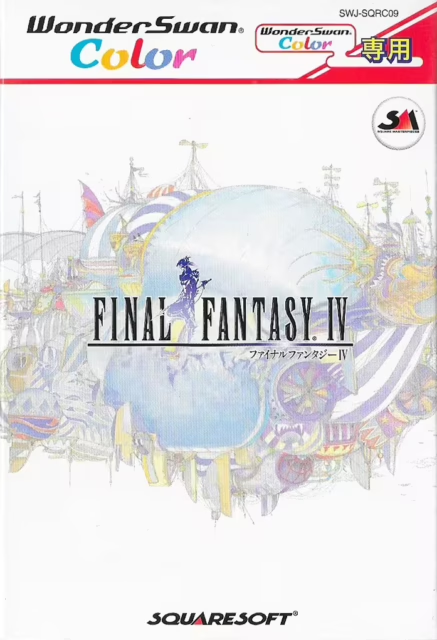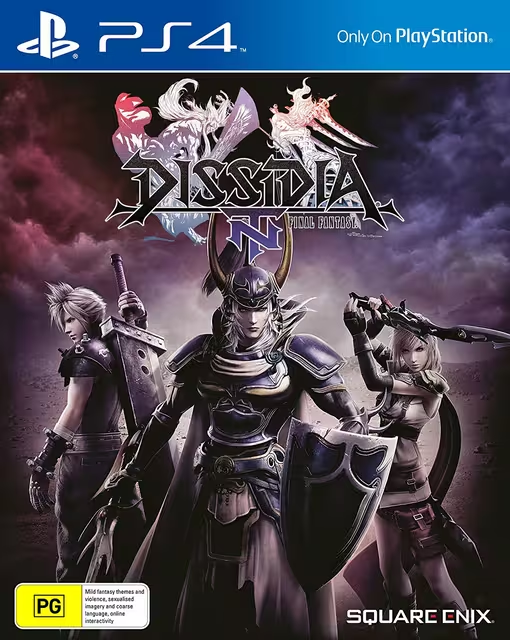
Dissidia Final Fantasy NT
CUSA-09244
Video Game Collection


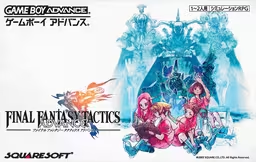 Box Front
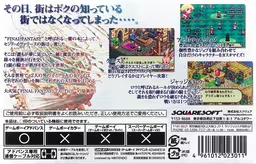 Box Back
A tactical RPG set in the world of Ivalice, where a group of children transported into a magical realm must navigate clan battles, laws, and personal choices as they struggle between remaining in fantasy or returning to reality.
Final Fantasy Tactics Advance reinterprets the tactical systems of its PlayStation predecessor within a handheld framework, presenting grid‑based, turn‑driven combat across isometric battlefields. The narrative begins in the town of St. Ivalice, where Marche, Mewt, Ritz, and Doned discover a mysterious book that reshapes their world into a fantasy kingdom. Marche, cast as the reluctant hero, seeks to undo the transformation and return to reality, while his friends resist, each finding solace or empowerment in the new world. This tension between escapism and acceptance of reality forms the emotional core of the story. The game’s structure revolves around the formation and management of a clan. Players recruit members from multiple races and assign them to jobs that determine their abilities. The job system is central, with over thirty classes ranging from traditional Final Fantasy roles such as Black Mage and White Mage to unique options like Assassin, Gadgeteer, and Morpher.
Abilities are learned by equipping weapons and armour, encouraging experimentation and long‑term planning as characters grow into versatile specialists. Battles are governed by the presence of Judges, who enforce laws that change from fight to fight. These laws restrict or forbid certain actions — for example, banning the use of fire magic or specific weapons — and breaking them results in penalties such as imprisonment. Conversely, following the laws earns Judge Points, a resource that powers special abilities and summons. This system adds a layer of unpredictability and forces players to adapt strategies to shifting conditions. Progression is mission‑based, with quests accepted at pubs across the map. Missions range from story‑critical battles to optional encounters, dispatch assignments, and clan skirmishes. The open structure allows players to pursue side content extensively, building their clan’s reputation and unlocking rare jobs and equipment. The world map itself is constructed by the player, who places new locations as they are discovered, subtly shaping the geography of Ivalice.
The presentation combines detailed isometric sprites with richly coloured environments, accompanied by a soundtrack led by Hitoshi Sakimoto that blends martial themes with whimsical motifs. The tone is lighter than the original Final Fantasy Tactics, reflecting its younger cast and handheld audience, yet it retains moments of moral ambiguity and personal conflict. Reception was strongly positive, with praise for its depth, replay value, and the flexibility of its job system. There was some criticism focused on the restrictive nature of the law system and the softened narrative compared to its predecessor, but the game was widely regarded as a landmark tactical RPG for handhelds. Its success led to a direct sequel, Final Fantasy Tactics A2: Grimoire of the Rift, and cemented the Ivalice setting as a recurring backdrop within the broader Final Fantasy series. In retrospect, Final Fantasy Tactics Advance was both an accessible entry point for newcomers to tactical RPGs and a robust, replayable experience for veterans, balancing mechanical experimentation with a story that explores the allure and cost of living in a dream world.
| Item Name |
|
|---|---|
| Original Name |
|
| Item Code |
|
| Item Number |
|
| Series | |
| Type | |
| Genre | |
| Region | |
| Territory | |
| Packaging | |
| Documentation | |
| Developer | |
| Publisher | |
| Media | |
| Players | |
| Peripherals | |
| Launch Price |
|
| Release Date | |
| Date Added |
|
| External Links |
|