Kirby’s Epic Yarn

En förtrollande, visuellt slående 2D-plattformare ihågkommen för sin briljanta, textilbaserade art direction och för hur den radikalt förändrade seriens traditionella spelmekanik.
Beskrivning
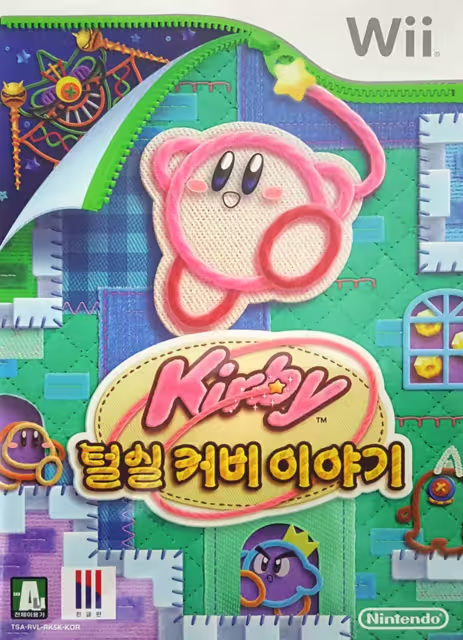
Kirby’s Epic Yarn erbjuder en unik, taktil estetik från en era då etablerade maskotar ofta placerades i helt nya koncept. Spelet var ursprungligen tänkt som en fristående titel med Prince Fluff i huvudrollen, innan Nintendos ledning föreslog att Kirby skulle integreras för att öka den kommersiella attraktionskraften. Resultatet blev en spelupplevelse som prioriterade en rofylld, tillgänglig och djupt utforskande atmosfär.
Världen är uppbyggd helt av texturer: tyg, garn, knappar och dragkedjor. Kirby har här förlorat sin signaturförmåga att suga in luft och kopiera krafter, då luften helt enkelt passerar genom hans garnkropp. Istället förlitar sig spelet på en mångsidig garnpiska. Genom att hålla Wii Remote horisontellt kan spelare nysta upp fiender, svinga sig i trådar och manipulera miljön, som att dra i en dragkedja för att öppna upp bakgrunder och avslöja hemliga områden. Kirby kan även förvandla sig till olika former, som en bil för att kasta sig framåt, en ubåt för undervattensnavigation eller en massiv stridsvagn. Hela kampanjen stöder även samarbetsläge för två spelare, där den andra spelaren tar rollen som Prince Fluff. Rent strukturellt tog utvecklarna ett djärvt och stundtals omdiskuterat beslut: det går inte att dö. Att ta skada eller falla ner i ett bottenlöst hål resulterar bara i att spelaren tappar en mängd samlade pärlor, spelets valuta och poängsystem. Detta flyttade fokus från ren överlevnad till avkopplande utforskande och jakt på perfekta poäng.
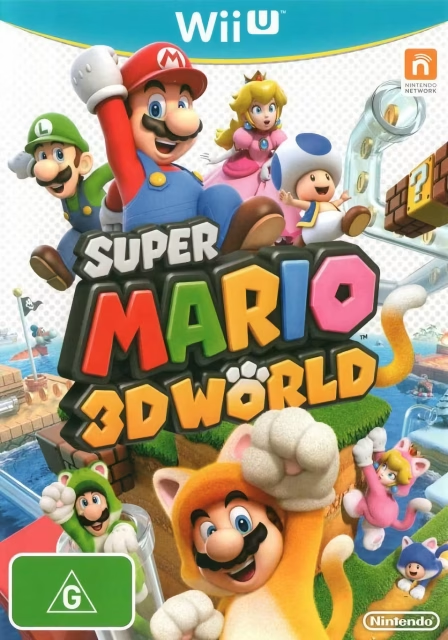
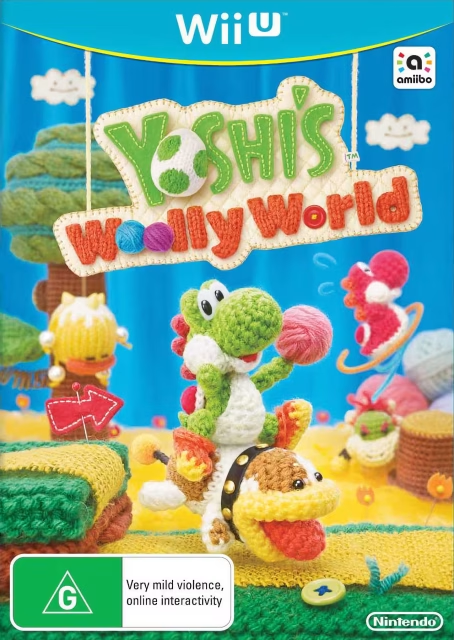
Spelets främsta arv är dess revolutionerande textilmotor och konststil. Det tog steget längre än vad vi sett i Paper Mario-serien, där textilierna blev en integrerad del av själva spelandet (åtminstone fram till Origami King). Det lade den direkta grunden för Good-Feels andliga uppföljare Yoshi’s Woolly World (2015, Wii U), som förflyttade den plana, filtliknande 2D-estetiken till en mer voluminös, 2.5D amigurumi-stil. Epic Yarn fungerade som det avgörande beviset på att Nintendo kunde bygga ett helt plattformsekosystem av virtuella hantverksmaterial.
Vid lanseringen mottog Kirby’s Epic Yarn omfattande kritikerkritik och hyllades för sin genuina charm och innovativa nivådesign. Recensenter lovordade det rogivande, akustiska soundtracket och den kreativa fysiken, även om vissa inbitna kritiker anmärkte på bristen på traditionell svårighetsgrad. I backspegeln ses titeln som en konstnärlig triumf i Wii-biblioteket och en anmärkningsvärt avkopplande upplevelse som permanent vidgade Nintendos visuella vokabulär.
Datablad
| Produktnamn |
|
|---|---|
| Originalnamn |
|
| Artikelkod |
|
| Artikelnummer |
|
| Serie | |
| Typ | |
| Genre | |
| Region | |
| Territorium | |
| Förpackning | |
| Dokumentation | |
| Utvecklare | |
| Utgivare | |
| Distributör | |
| Mediaformat | |
| Spelare | |
| Videolägen | |
| Ljudlägen | |
| Klassificering | |
| Släppdatum | |
| Datum tillagt |
|
| Externa länkar |
|