Marvel vs. Capcom Clash of Super Heroes
マーヴルvs。カプコン クラツシュ オフ スーパーヒーロース

-
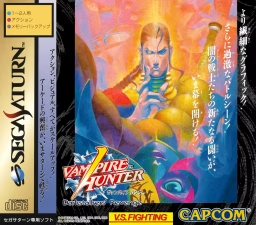
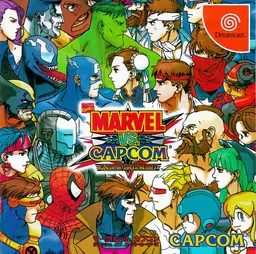 Front Cover
-
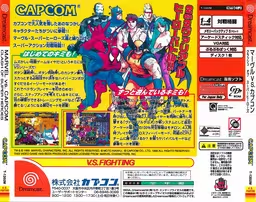 Back Cover
-
Logo
Capcom’s first crossover to feature characters from across its franchises alongside Marvel heroes, introducing the Variable Cross system and cementing the tag‑team format that defined the series.
Description
Marvel vs. Capcom: Clash of Super Heroesbuilt on the foundation of X‑Men vs. Street Fighter (1996) and Marvel Super Heroes vs. Street Fighter (1997). It was the first game in the series to expand beyond Street Fighter characters, drawing from a wider range of Capcom franchises such as Mega Man, Strider, and Darkstalkers, alongside Marvel’s established heroes and villains.
The roster featured 15 core characters plus hidden variants, with iconic match‑ups like Ryu vs. Spider‑Man, Captain America vs. Morrigan, and Wolverine vs. Strider Hiryu. Players selected two fighters per team, switching between them mid‑battle while the inactive partner slowly regenerated health. This tag‑team format created a dynamic flow, encouraging strategic character pairings and combo experimentation.
A major innovation was the Variable Cross system, which allowed both team members to fight on screen simultaneously for a limited time, unleashing devastating combined attacks. The game also replaced the traditional assist system with non‑playable “Guest Characters” cameos such as Thor, Jubilee, or Arthur, who could be summoned briefly to perform a single supportive move. This added variety and spectacle without expanding the playable roster.
First released in arcades on Capcom’s CP System II arcade hardware, the game was ported to the Dreamcast the following year. It was widely praised for its near‑arcade perfect fidelity, and became the definitive home release. An inferior PlayStation port was released but quite a compromise. Later, the game was reissued in the Marvel vs. Capcom Origins collection (2012) for PlayStation 3 and Xbox 360, and in Marvel vs. Capcom Fighting Collection: Arcade Classics (2024).
Critically, Clash of Super Heroes was celebrated for its fluid animation, colourful sprite work, and frenetic pace, though some noted its smaller roster compared to later entries. It was commercially successful and laid the groundwork for Marvel vs. Capcom 2: New Age of Heroes (2000), which expanded the formula dramatically with a 56‑character roster and multiple “Groove” styles.
Datasheet
| Item Name |
|
|---|---|
| Original Name |
|
| Item Code |
|
| Item Number |
|
| Series | |
| Type | |
| Genre | |
| Region | |
| Territory | |
| Packaging | |
| Documentation | |
| Developer | |
| Publisher | |
| Media | |
| Players | |
| Peripherals | |
| Video Modes | |
| Sound Modes | |
| Classification | |
| Launch Price |
|
| Release Date | |
| Date Added |
|