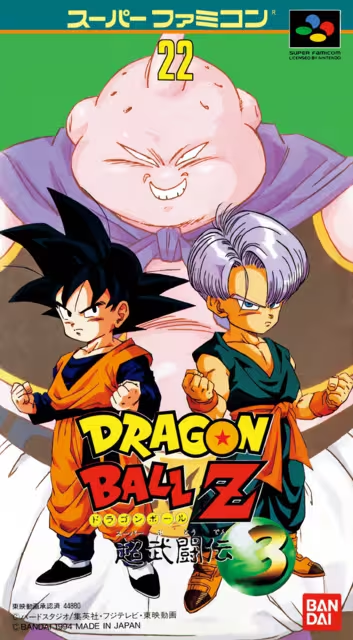
Dragon Ball Z: Super Butōden 3
SHVC-AZ4J-JPN
Video Game Collection
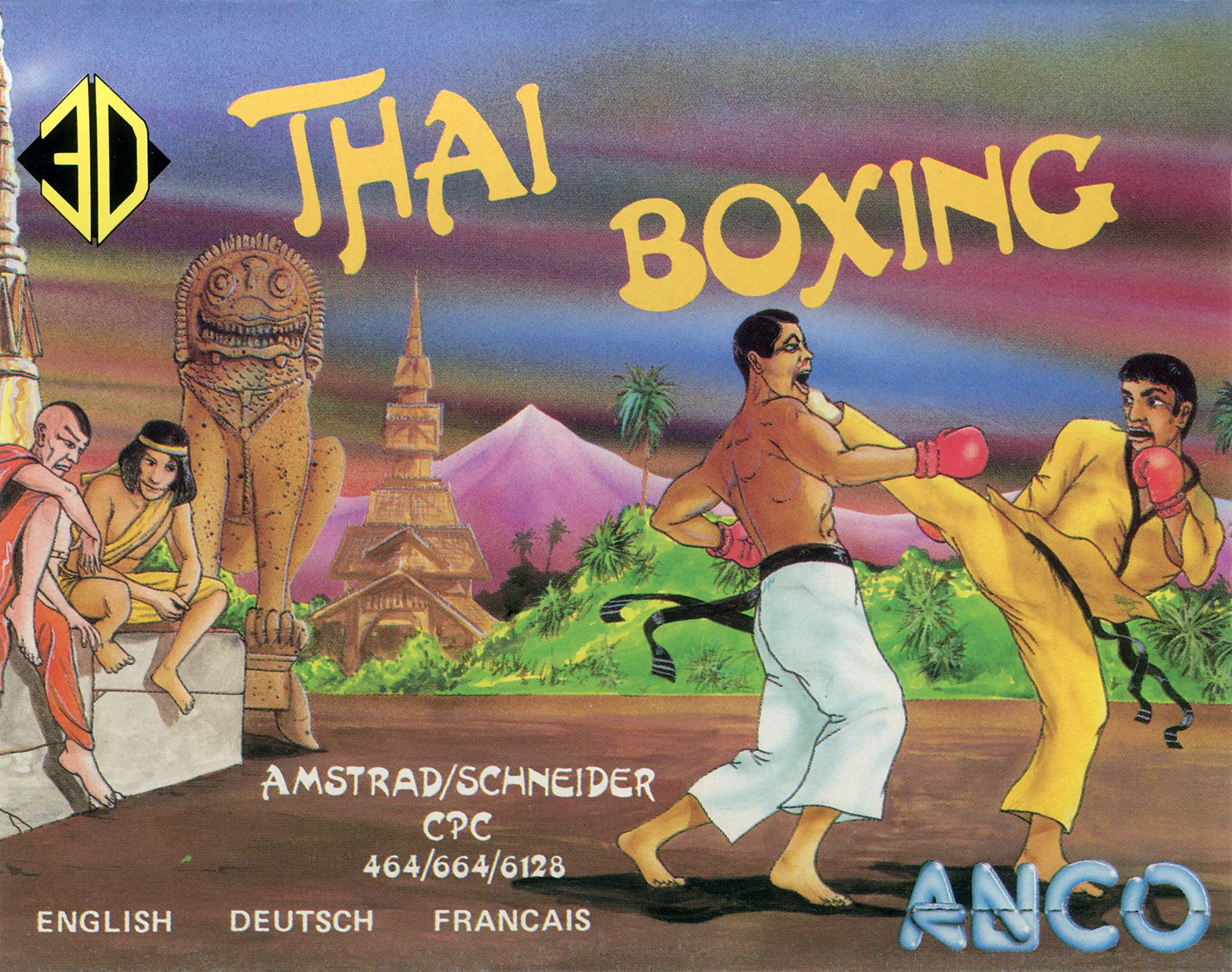
A one-on-one martial arts game combining punches, kicks, blocks, and evasive movement across three scored rounds.
Thai Boxing presents two fighters from an angled side view against a selection of colourful backgrounds. The player faces a computer-controlled opponent, attempting to win by knockout or by holding the higher score after three rounds. Joystick combinations produce high, middle, and low attacks, together with defensive blocks and dodges. Successful strikes increase the score and reduce the opponent’s stamina, with more difficult techniques earning greater rewards. Portraits beside the fighting area show the competitors’ faces and accumulating damage, while stamina meters indicate their remaining energy.
Despite the angled presentation, movement is limited to a single plane rather than allowing fighters to circle around the arena. The large fighters and visible damage provide some character, but the limited movement, awkward controls, slow responses, and unreliable combat make matches repetitive. The computer opponent can also be frustrating to engage, with little tactical depth beyond finding attacks that connect consistently. Retrospectively, it offers a recognisable early fighting title, but its restricted mechanics and unrefined controls leave it considerably weaker than the better martial-arts games available on the system. Notably the game was developed by Richard Chappells under the label Software Work Shop, which has no other game credits. Chappells developed several other titles such as Kokotoni Wilf (1986), Hyper Sports (1985), and later Chase H.Q. (1990), under companies including NMS Software, Tiertex, and Elite Systems.
| Item Name |
|
|---|---|
| Item Number |
|
| Type | |
| Genre | |
| Territory | |
| Packaging | |
| Documentation | |
| Publisher | |
| Media | |
| Players | |
| Release Date | |
| Date Added |
|