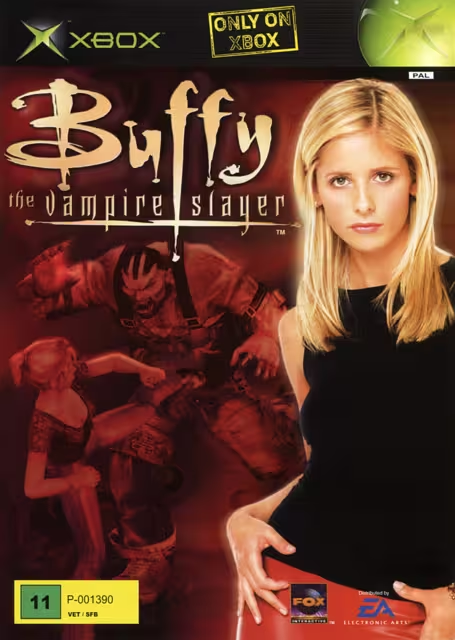
Buffy the Vampire Slayer
FXEX7403228, EA-018
Video Game Collection


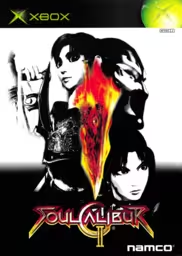 Front Cover
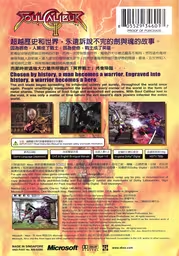 Back Cover
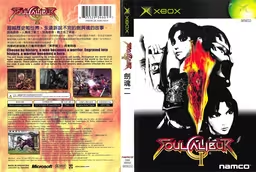 Full Cover
A weapon‑based fighting game built around technical mastery of movement and timing, and sequel to the extremely popular and highly acclaimed original Dreamcast title. This East Asian version (Chinese/English) reflects the domestic Japanese (NTSC-J) release.
SoulCalibur II continues the story of warriors drawn to the cursed sword Soul Edge, with each character pursuing their own motives across a series of battles. It features fast-paced combat with a diverse cast of characters, each wielding unique weapons and fighting styles. It expands the roster with new fighters such as Talim and Raphael, while retaining established figures like Mitsurugi, Sophitia, and Nightmare. The story is presented through arcade progression and individual character endings, situating each fighter within the broader mythos of the series.
The game was released on all three major consoles: PlayStation 2, Xbox, and GameCube. The console versions are notable for exclusive guest fighters: Link on GameCube, Heihachi on PlayStation 2, and Spawn on Xbox. These additions gave each platform a unique identity and broadened the appeal of the release.
Mechanically, SoulCalibur II refines the 8‑way run system, allowing free movement around opponents, and introduces improved guard impacts and combo opportunities. Each character wields a distinct weapon style, from dual blades to polearms, with differences in reach, speed, and power. The game offers multiple modes including arcade, versus, weapon master, and training.
Compared to the PS2 and GameCube versions, the Xbox release of SoulCalibur II delivered superior audiovisual fidelity. Benefiting from the Xbox’s more powerful GPU, the game featured enhanced textures, lighting effects, and slightly shorter loading times. Notably, the Xbox version was one of the very few titles on the 6th generation of consoles to support native 720p HD resolution. This combined with the 16:9 widescreen and 5.1 surround sound provided an experience ahead of its time.
The game was praised for its graphics, fluid animation, and balanced roster. Reviewers highlighted the guest characters as a major draw, and the depth of the combat system was noted as accessible yet rewarding for advanced play. Retrospectively, SoulCalibur II is remembered as one of the strongest entries in the series and remains a landmark in the franchise, emblematic of the era when fighting games were expanding across multiple platforms with distinctive features.
| Item Name |
|
|---|---|
| Original Name |
|
| Localised Name |
|
| Item Code |
|
| Item Number |
|
| Series | |
| Type | |
| Genre | |
| Characteristics | |
| Region | |
| Territory | |
| Packaging | |
| Documentation | |
| Developer | |
| Publisher | |
| Media | |
| Players | |
| Video Modes | |
| Sound Modes | |
| Launch Price |
|
| Release Date | |
| Date Added |
|