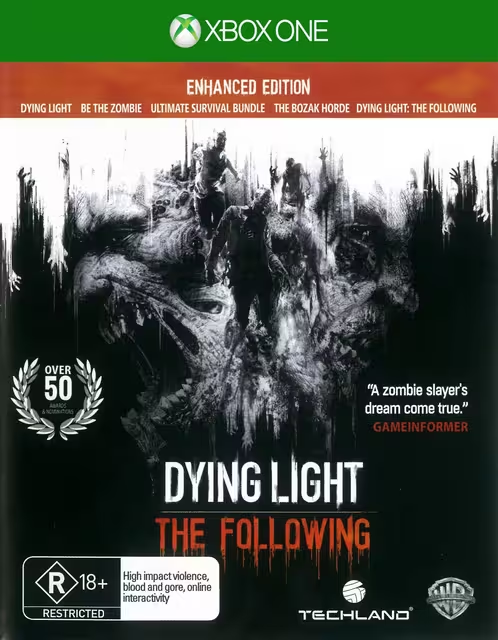
Dying Light: The Following - Enhanced Edition
362-01824
Video Game Collection

A visually stunning, narratively ambitious finale with some of the best combat and atmosphere in the series. Its reception was tempered by criticism of the Batmobile’s overuse and the disastrous PC release, but its oppressive tone, hallucinatory narrative, and militarised Gotham turn the fantasy into one of the most significant superhero games of its era.
Batman: Arkham Knight is the final chapter of Rocksteady’s Arkham trilogy, set in an evacuated Gotham City under siege by Scarecrow and the mysterious Arkham Knight. It expands the series’ open‑world design, introduces the Batmobile as a central mechanic, and explores Batman’s psychological unravelling under the influence of fear and the lingering presence of the Joker.
The game presents Gotham as a city hollowed out by terror, its streets abandoned by civilians and filled only with criminals, militia, and Batman’s allies. This emptiness creates a stage‑like atmosphere where every encounter feels personal, as if the city itself has become a reflection of Batman’s fractured psyche. The tone is relentlessly oppressive: rain‑soaked streets, neon reflections, and Scarecrow’s toxin saturating the air. Arkham Knight is about identity, legacy, and fear. Batman is forced to confront the consequences of his crusade: the protégés who follow him, the villains who define him, and the myth he has built around himself. The Arkham Knight embodies betrayal and vengeance, a distorted mirror of Batman’s own methods, while Scarecrow represents exposure, stripping away the mask to reveal the man beneath. The Joker, now a hallucination, becomes the voice of doubt and temptation, turning Batman’s inner struggle into a literal presence that taunts him throughout the story.
The Batmobile is both a tool and a symbol. Its tank‑like combat mode underscores the militarisation of Gotham and the escalation of Batman’s war on crime. While divisive in execution, it reinforces the theme that Batman’s methods have grown indistinguishable from open warfare. Combat and stealth systems remain refined, with the addition of dual‑play sequences that highlight Batman’s reliance on allies even as he isolates himself emotionally. The ending, through the Knightfall Protocol, leans into ambiguity. Batman’s apparent sacrifice blurs the line between man and myth, suggesting that while Bruce Wayne may fall, the symbol of the Bat endures, perhaps even more terrifying than before. This conclusion ties the trilogy together as a meditation on obsession, fear, and the cost of becoming a legend.
The PC version was so broken it was temporarily withdrawn from sale and really put a stain on the entire game. No such issues with the console versions, but the Batmobile aspects of the game divided opinions. An otherwise great game that was commercially a top seller.
| Item Name |
|
|---|---|
| Item Code |
|
| Item Number |
|
| Series | |
| Type | |
| Genre | |
| Theme | |
| Territory | |
| Packaging | |
| Documentation | |
| Developer | |
| Publisher | |
| Media | |
| Players | |
| Video Modes | |
| Classification | |
| Launch Price |
|
| Release Date | |
| Date Added |
|