The Legend of Zelda: Links Awakening
ゼルダの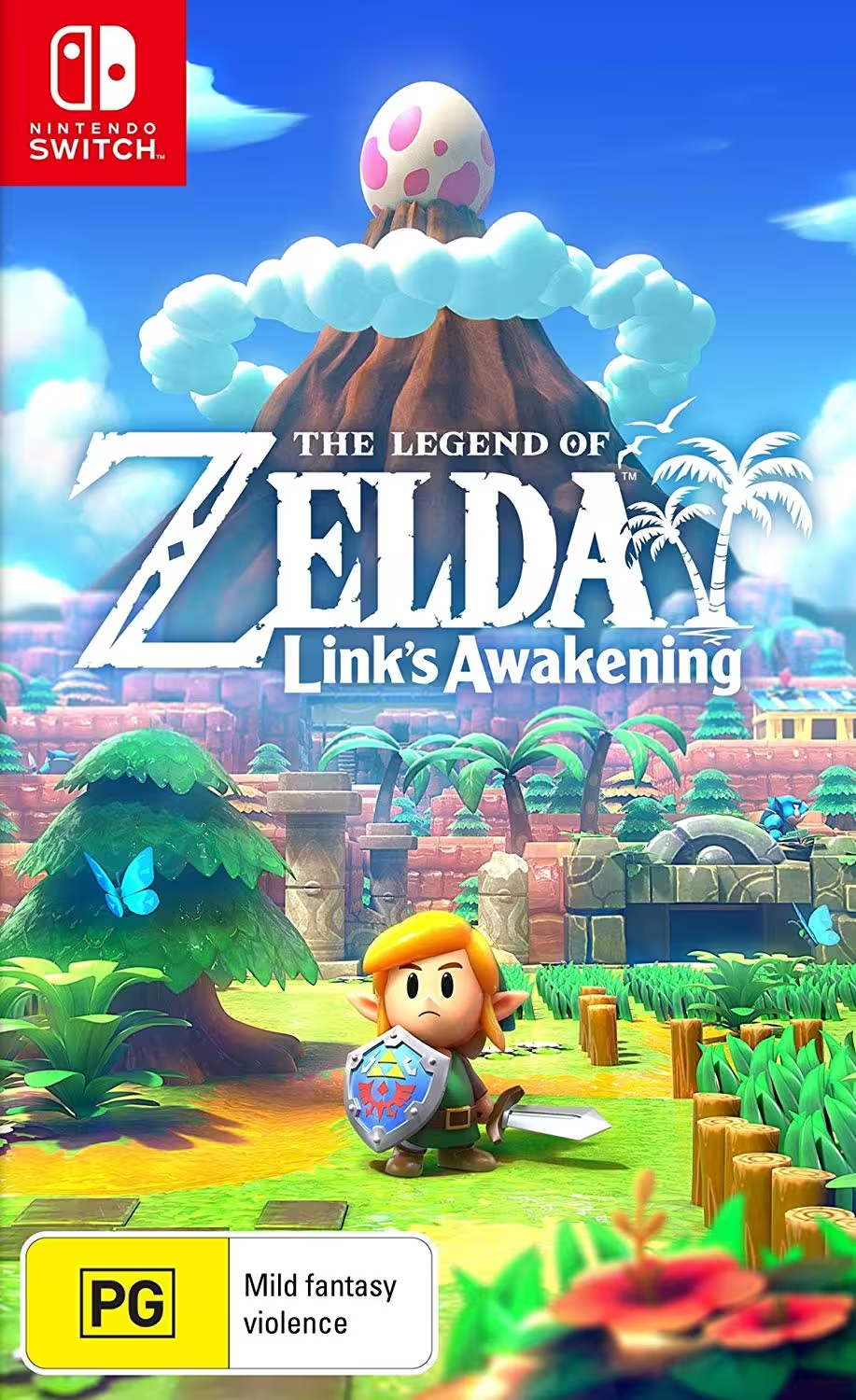
This remake honours the Game Boy classic with a faithful recreation of its story and design, while its toy‑like art style and expressive presentation deepen the game’s themes of dreams, impermanence, and identity. It is both a preservation of the original and a reimagining that highlights its emotional resonance for a new generation.

Description
The Legend of Zelda: Link’s Awakening (2019) is a faithful remake of the 1993 Game Boy classic and its enhanced DX version (1998), retaining its story and structure while reimagining it with a toy‑like diorama art style. It preserves the top‑down perspective, dungeon design, and side‑scrolling segments, while introducing modernised controls, quality‑of‑life improvements, and a new dungeon‑building feature hosted by Dampé. The remake deepens the original’s themes of dreams, identity, and impermanence, offering both nostalgia and reinterpretation.
The story centres on Link’s shipwreck on Koholint Island, his quest to awaken the Wind Fish, and the gradual revelation that the island and its inhabitants exist only within a dream. Characters like Marin, who longs for life beyond the island, embody the tension between aspiration and limitation. The polished visuals and expressive animations amplify these themes, making the dreamlike quality of Koholint both enchanting and fragile. The bittersweet ending resonates more strongly in the remake, as the enhanced presentation makes the characters and island feel more tangible, heightening the emotional impact.
The most striking change is the diorama‑like art style, with tilt‑shift visuals, glossy textures, and toy‑like character models. It captures the childlike wonder of the original’s pixel art while translating it into a modern, high‑definition form. Conceptually similar but creatively unique to Square’s 2.5D HD remakes. The world resembles a handcrafted miniature, reinforcing the sense of a contained dream. The art direction also distinguishes itself within the Zelda series, when compared to the realism of Twilight Princess or the cel‑shaded vibrancy of Wind Waker, Link’s Awakening embraces a playfulness. It mirrors the Game Boy’s simplicity, where limited sprites suggested a world that players filled in with imagination.
The remake is remarkably faithful to the 1993 design, preserving dungeon layouts, puzzles, and even quirks like side‑scrolling platforming sections. Yet it also introduces refinements: Link’s sword, shield, and key items are permanently mapped, freeing up action buttons; the overworld scrolls seamlessly rather than screen‑by‑screen; and mini‑games such as the claw crane benefit from updated physics. By retaining the structure while re‑presenting it with modern polish, the remake functions as both nostalgic preservation and reinterpretation.
Datasheet
| Item Name |
|
|---|---|
| Original Name |
|
| Item Code |
|
| Item Number |
|
| Series | |
| Type | |
| Genre | |
| Territory | |
| Packaging | |
| Developer |
|
| Publisher | |
| Distributor | |
| Media | |
| Players | |
| Peripherals | |
| Video Modes | |
| Sound Modes | |
| Classification | |
| Launch Price |
|
| Release Date | |
| Date Added |
|
Related Products
-
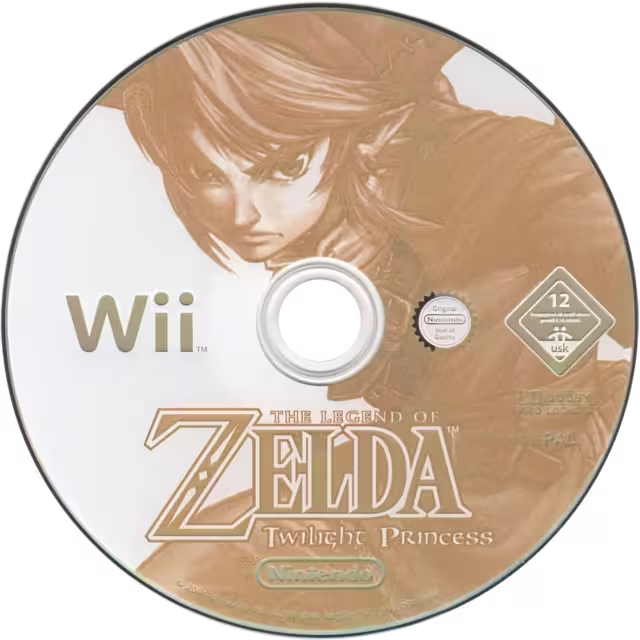 The Legend of Zelda: Twilight PrincessRVL-RZDP-EUR
 -
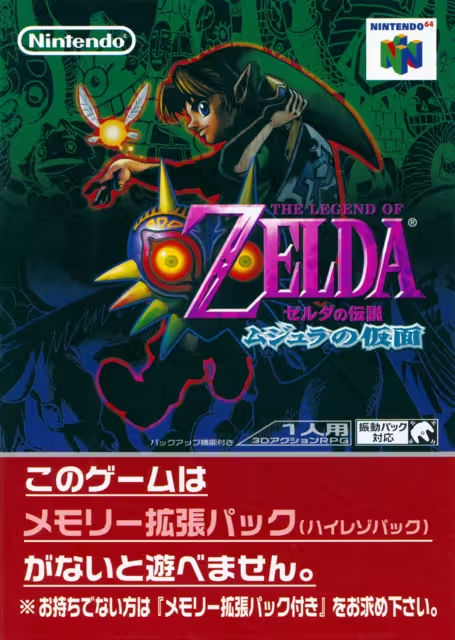 Zelda no Densetsu: Majora no KamenNUS-NZSJ-JPN
 -
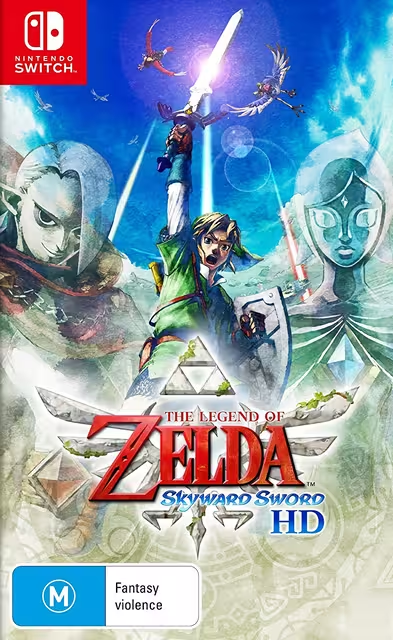 The Legend of Zelda: Skyward Sword HDHAC-AZ89A-AUS
 -
 The Legend of Zelda: Skyward SwordRVL-SOUP-EUR-B0
 -
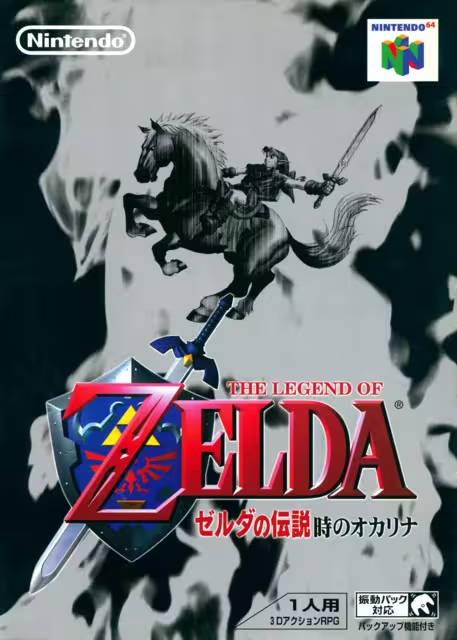 Zelda no Densetsu: Toki no OcarinaNUS-CZLJ-JPN
 -
 Hyrule Warriors: Definitive EditionHAC-AK6JA-AUS
 -
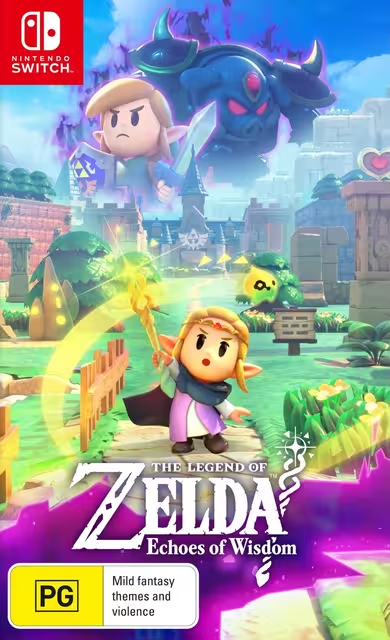 The Legend of Zelda: Echoes of WisdomHAC-ADGEA-AUS
 -
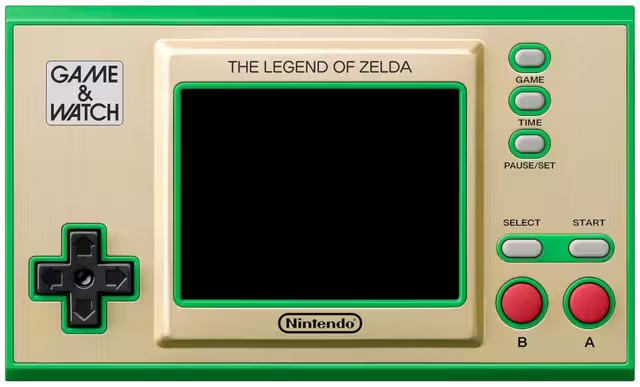 Game & Watch: The Legend of ZeldaZL-35