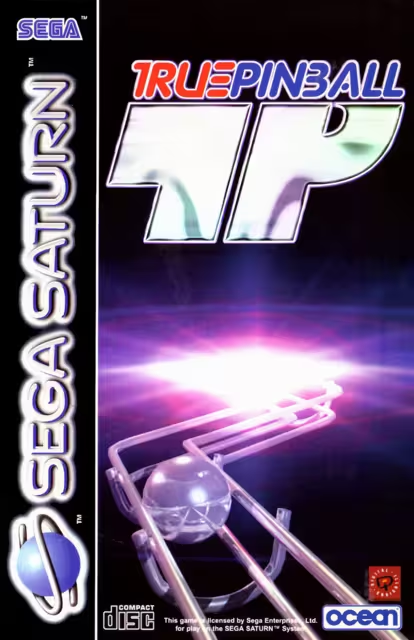
True Pinball
T-16406H-50
Video Game Collection
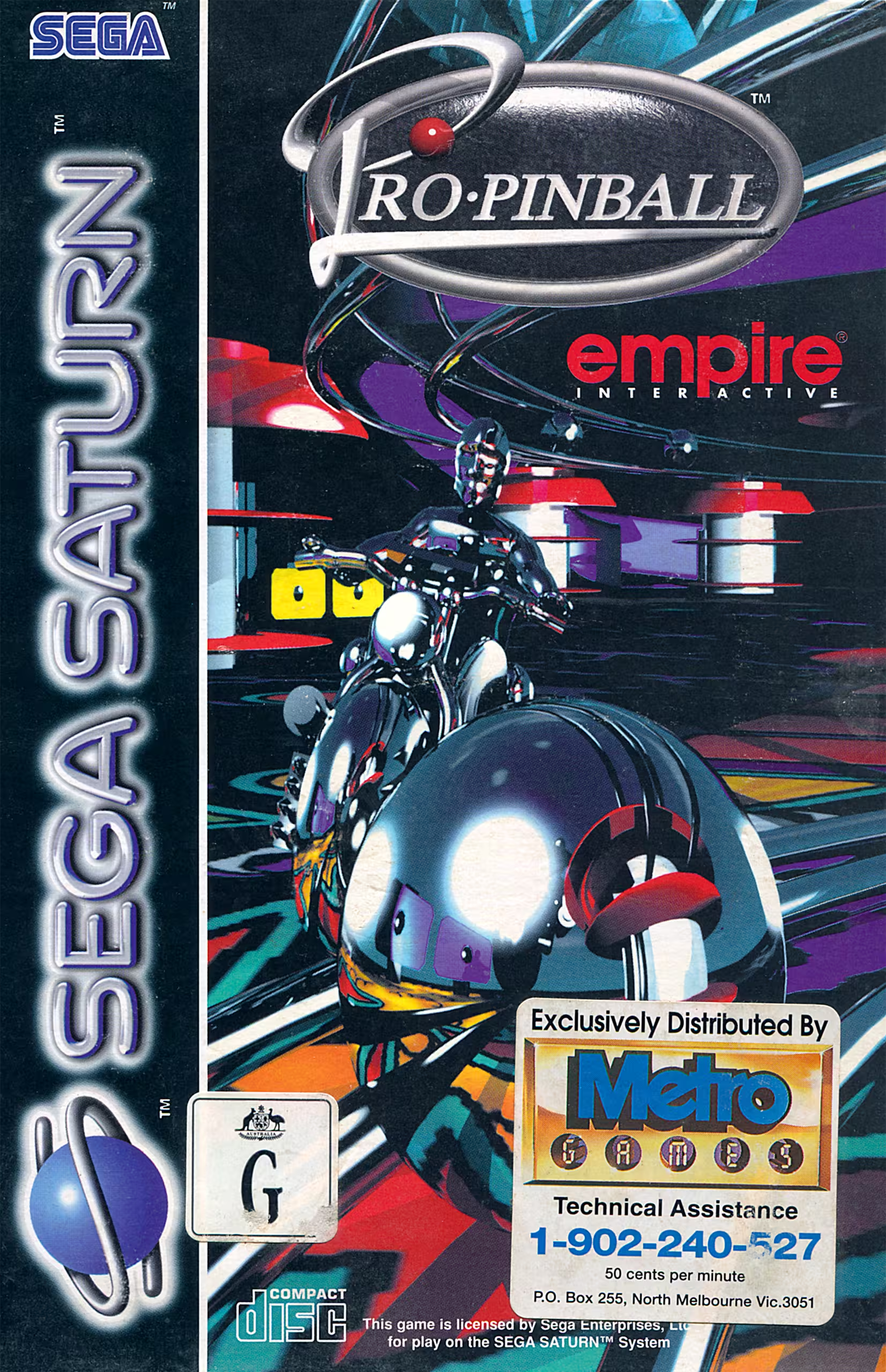
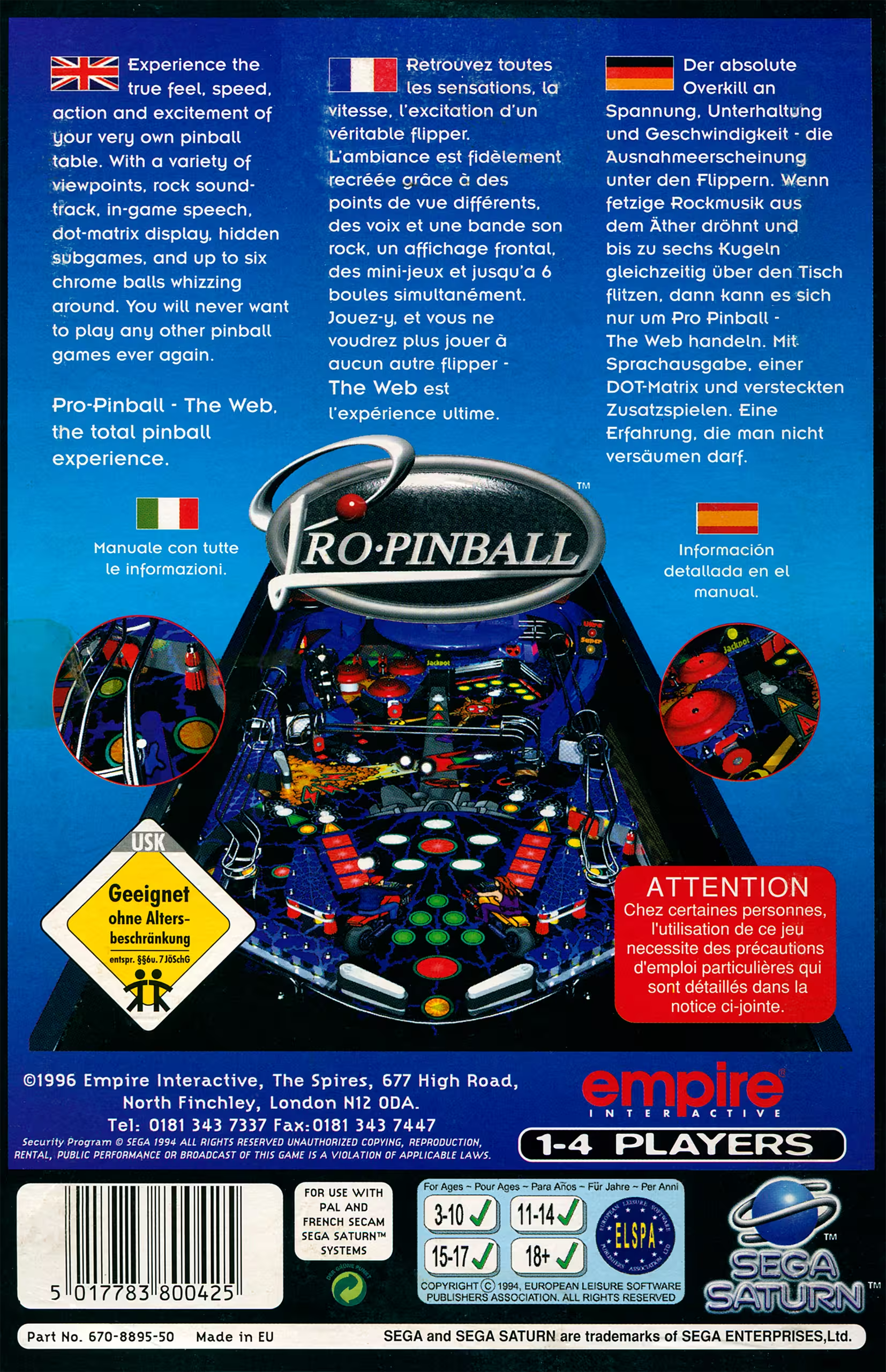
 Front Cover
 Back Cover
A clinical, professional-grade simulation that redefined digital pinball by prioritising advanced physics and mechanical depth over arcade variety. It is widely regarded by purists as the most accurate recreation of a physical pinball table available during the 32-bit era and served as the debut of the legendary series.
Pro Pinball: The Web represents a paradigm shift for the virtual pinball genre. While contemporary titles like True Pinball or Tilt! often presented a collection of varied, Pro Pinball focuses exclusively on a single, highly complex machine. This singular table saw a level of mechanical detail that was unprecedented; the game was built using high-resolution pre-rendered assets derived from high-fidelity source files, pushing the Saturn to display a dense, atmospheric environment.
The experience is centered on a high-tech, cyberpunk-inspired table with a deep, multi-layered mission structure. Unlike the simpler “hit the blinking light” objectives of earlier games, The Web requires players to complete specific sequences to advance toward the ultimate “Frenzy” modes. The immersion is anchored by its technical execution: the game features incredibly sophisticated ball physics that account for friction, spin, and momentum with a realism that surpassed its peers. The audio is equally high-fidelity, utilizing Redbook CD-DA tracks for a gritty, industrial soundtrack that complements the mechanical Foley effects of the bumpers and flippers, creating a cohesive “arcade basement” atmosphere.
Within the Sega Saturn’s library, the game sits at the top of a highly competitive rivalry. Compared to True Pinball, which utilised the Saturn’s VDP2 for a crisp high-resolution mode across four tables, The Web remains a more clinical simulator; the former was built upon its “Amiga-style” and was accessible, comparatively the latter prioritises granular ball-spin and momentum. Against the other “gold standard” of the system, KAZe’s Digital Pinball: Last Gladiators, it offers a different kind of immersion. Last Gladiators captures the crunchy feedback and flamboyant flair of a Japanese arcade, The Web feels like a laboratory for physics simulation, demanding a professional level of precision and timing that was rare for console gaming in the mid-1990s.
As a PAL-native title, the game represents a moment where European developers pushed 32-bit hardware to its limits not through sprite-count, but through complex mathematical modelling. The Saturn and the PlayStation releases both received mixed reviews. Comparably, the DOS/PC version faired much better and was regularly lauded. Despite being well optimised for consoles, this simulation-heavy type of development on such a devices was always going to be a generally compromised experience. Yet, the brave one-table-only design choice, despite being a potential marketing weakness, became its greatest strength. Today it is worth a look if you are exploring the many pinball simulations of the era.
| Item Name |
|
|---|---|
| Item Code |
|
| Item Number |
|
| Series | |
| Type | |
| Genre | |
| Region | |
| Territory | |
| Packaging | |
| Documentation | |
| Developer | |
| Publisher | |
| Distributor | |
| Media | |
| Players | |
| Sound Modes | |
| Classification | |
| Release Date | |
| Date Added |
|