Nintendo Labo Robot Kit
HAC-R-ADFVA-AUS, HAC-052
Video Game Collection
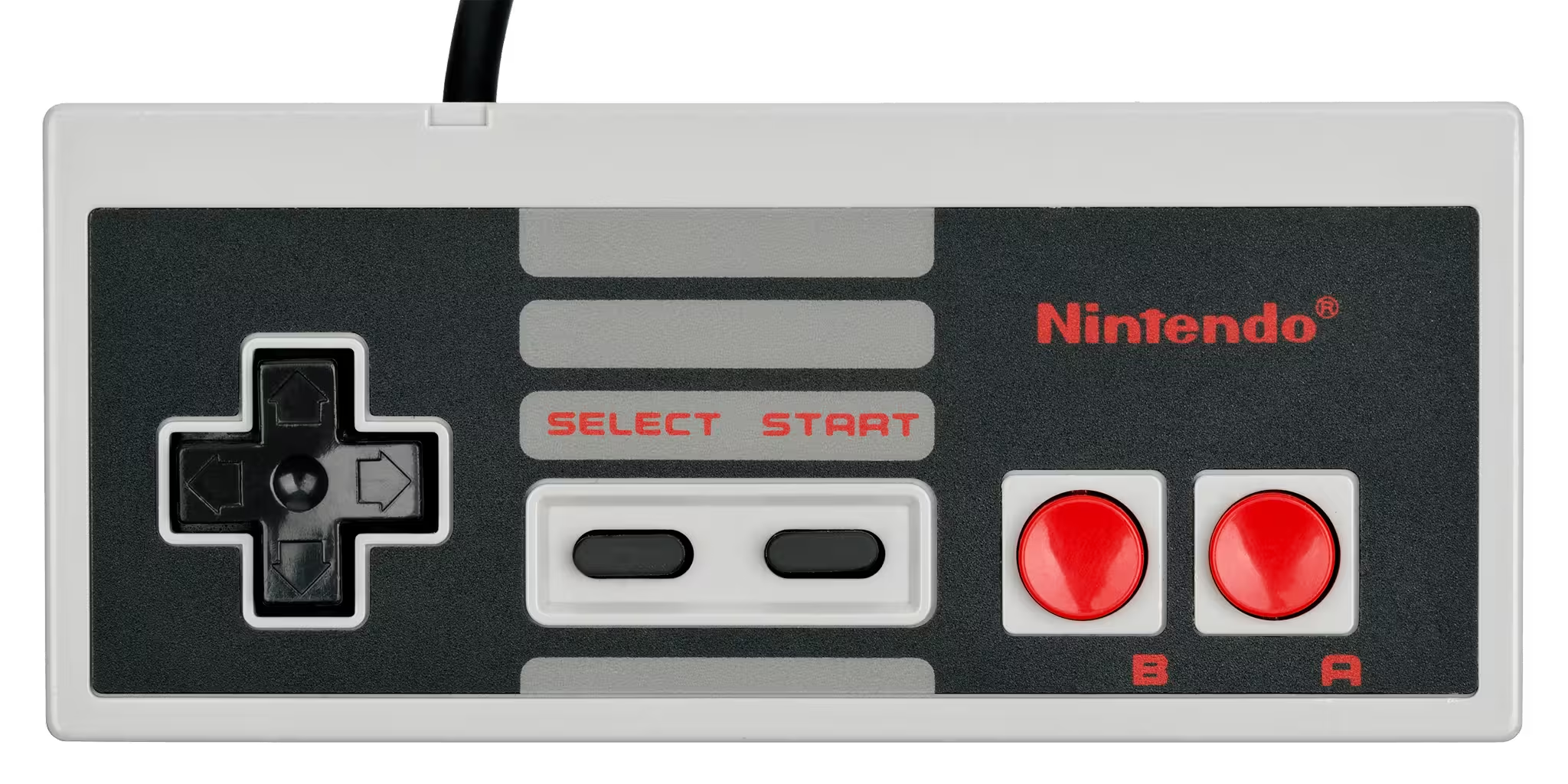
A controller that brought the D-pad from the Game and Watch to a home console and became the archetype of modern gamepad design.
The standard Nintendo Entertainment System controller is a rectangular gamepad introduced with the NES in 1985 for international markets. Its design is iconic: a compact grey body with a black faceplate, a cross‑shaped directional pad on the left, two red action buttons labelled “A” and “B” on the right, and “Start” and “Select” buttons in the centre.
The detachable design allowed players to plug and replace controllers, unlike the permanently wired Famicom pads. The D‑pad offered precise digital input, while the two action buttons provided straightforward interaction for platformers, shooters and puzzle games. Its flat, angular shape emphasised minimalism and durability, reflecting Nintendo’s focus on accessibility and mass appeal.
The NES D‑pad differed from prior controllers by replacing bulky joysticks, rotary dials, and numeric keypads with a compact, cross‑shaped pad that offered precise, comfortable, and intuitive directional input. Before the NES, most home consoles relied on arcade‑style joysticks or experimental input devices. The Atari 2600 used a single stick with one button, which was functional but limited. Systems like the Intellivision and ColecoVision had disc‑shaped pads and numeric keypads, which were complex and awkward for casual play. These designs reflected experimentation rather than refinement, often prioritising novelty over usability.
Nintendo’s breakthrough came from its Game & Watch handhelds, where designer Gunpei Yokoi introduced the D‑pad in 1982. This “flattened joystick” design was compact, durable, and perfect for portable devices. When the NES launched internationally in 1985, the D‑pad became the centrepiece of its controller. Unlike joysticks, which required larger movements and were prone to wear, the D‑pad allowed quick thumb presses in four directions, making it ideal for platformers like Super Mario Bros..
The D‑pad becoming a defining innovation that influenced nearly every controller design that followed. Its ongoing reputation positions it as one of the most recognisable peripherals in gaming history, remembered for shaping the language of console input and for its enduring cultural symbolism.