
Nintendo Labo Robot Kit
HAC-R-ADFVA-AUS, HAC-052
Video Game Collection

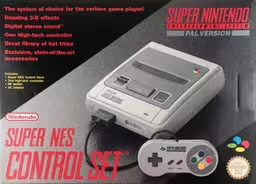
The iconic gamepad for the Super Nintendo system, specifically for the PAL region console. These look similar to the Japanese model, except for the Super Nintendo branding and a significantly longer cable.
The Super Nintendo Controller introduced Nintendo’s now‑standard diamond button layout and shoulder buttons, combining ergonomic design with expanded input for more complex gameplay. It retained the cross‑shaped D‑pad and Start/Select buttons, but added four face buttons (A, B, X, and Y) arranged in a diamond formation. This layout allowed for more nuanced control schemes, especially in fighting games, RPGs, and platformers. The L and R shoulder buttons, introduced here for the first time, expanded input possibilities without crowding the face of the controller, setting a precedent that nearly every major console would follow.
Ergonomically, the Super Nintendo controller featured a rounded “dog‑bone” shape, designed to sit comfortably in the hands for extended play. The Japanese and European (PAL) versions used distinctly coloured convex buttons, which gave the controller a playful, toy‑like aesthetic. This contrasted with the US version which was marketed toward dated masculine stereotypes of game customers that reflected that local market.
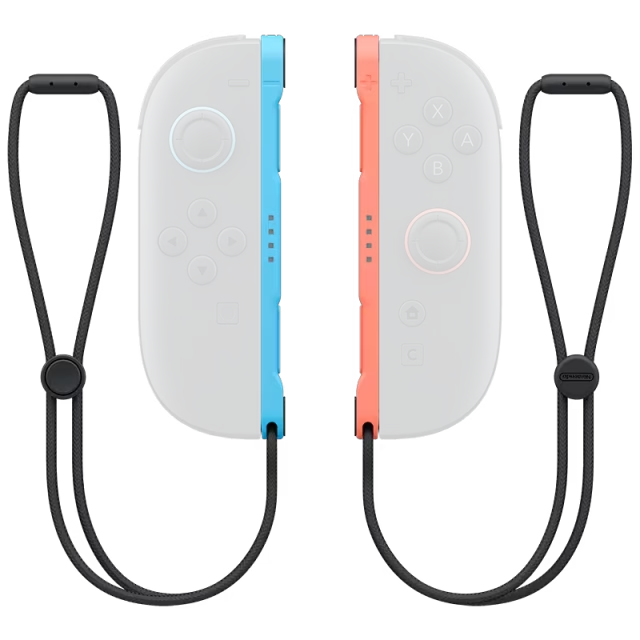
Functionally, the controller was wired and connected via a 7‑pin port. Internally, it transmitted 16 bits of input data, allowing for simultaneous button presses and responsive control. By default the console supported two controllers, but this could be expanded with one of the Super Multitaps. Ultimately Nintendo’s influence and the success of the console made layout so echoes of it remain in the Game Boy Advance SP, Nintendo DS, the Switch’s Joy‑Cons, and in some ways all other console today.