Mega CD 2
メガCD 2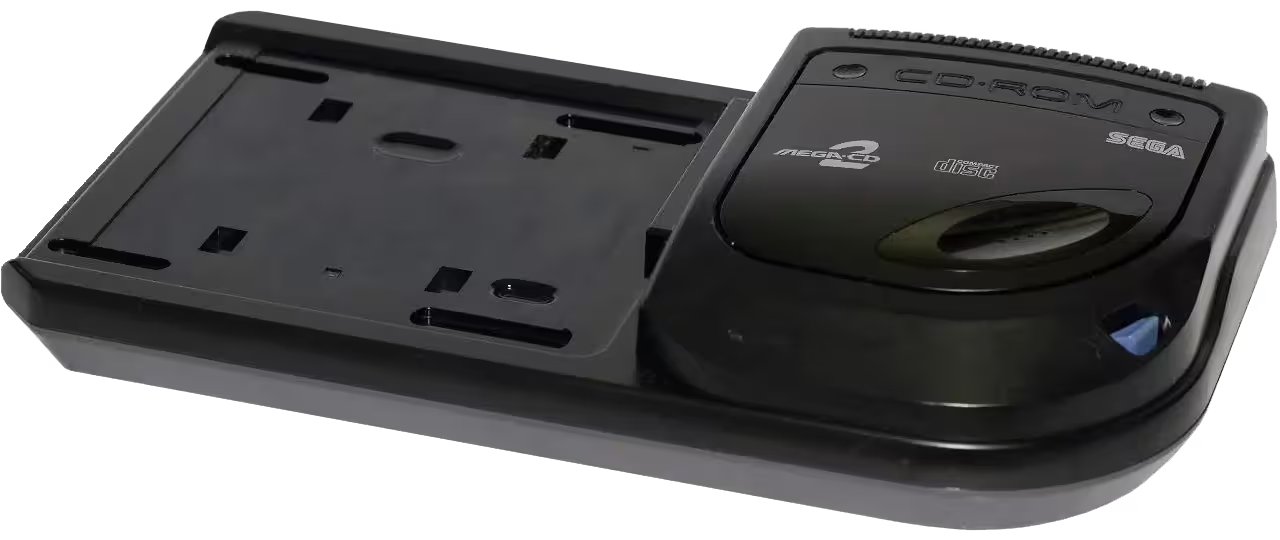
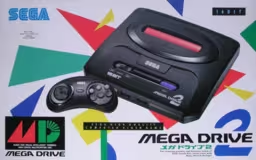
An add‑on for the Mega Drive, designed to expand the console’s capabilities with CD‑ROM technology. This second version streamlined the hardware, reduced manufacturing costs, and made the add‑on more visually cohesive with the Mega Drive 2.
Description
The Mega CD added a faster 12.5 MHz 16‑bit processor, extra RAM, and the ability to play audio CDs and CD‑ROM games. This allowed for larger storage capacity compared to cartridges, enabling full‑motion video sequences, CD‑quality soundtracks, and more complex game data. However, the system still relied on the Mega Drive’s core hardware for graphics, meaning that while audio and storage improved dramatically, visual performance was only modestly enhanced.
- CPU: Motorola M68000 (12.5 MHz) – doubles existing Mega Drive CPU
- Graphic Engine: Existing Mega Drive specs with sprite rotation and scaling
- Sound Circuitry: 16 bit D/A Converter, PCM + CD Sound Mixing
- RAM: Main 6Mbit, Sound 512Kbit, Disc Cache 128Kbit, Backup Memory 64Kbit
- Boot ROM: 1 Mbit – BIOS w/ CD Player Software
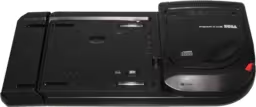
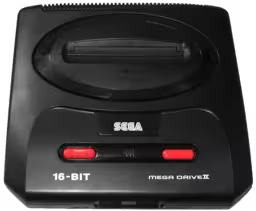
The original Mega‑CD sat beneath the Mega Drive, giving the console a stacked appearance. The Mega‑CD 2 instead attached to the right side of the Mega Drive, using a front‑loading CD tray and a sleeker, more compact shell. This made it easier to fit into entertainment setups and gave the system a more modern look. Internally, the Mega‑CD 2 was functionally identical to the first model. The redesign was largely about cost reduction and usability, not performance. Sega also bundled it with a new mixing cable to simplify audio connections between the Mega Drive and the add‑on, addressing one of the complaints about the original unit’s setup.
The CD format was a duality. On one hand, there were ambitious titles like Lunar: The Silver Star and Snatcher, which used the CD format to deliver rich storytelling, voice acting, and atmospheric music. On the other, the system became infamous for its reliance on FMV (full‑motion video) games, which showcased the novelty of video playback but often lacked depth.
Commercially, the Mega‑CD struggled. Its high price, limited graphical improvements, and reliance on gimmicky FMV titles meant it never achieved mass success. Retrospectively these early CD based systems were a transitional period, providing a futuristic multimedia presentation but without the computational advancements or a clear path for game design.