Power Smash
HDR-0113
Video Game Collection


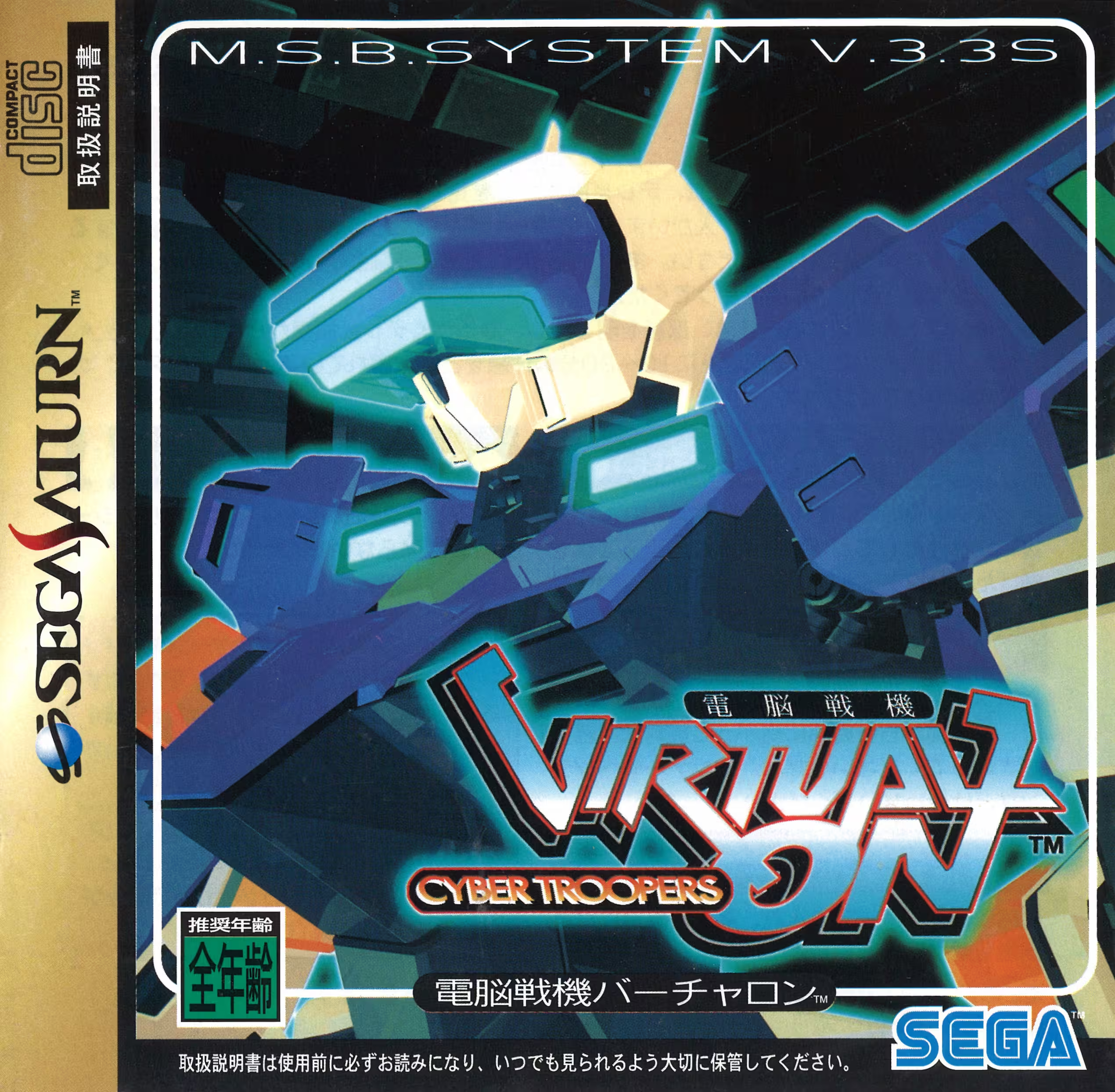
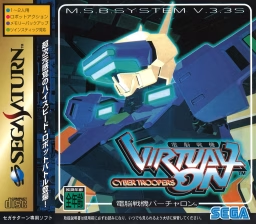 Front Cover
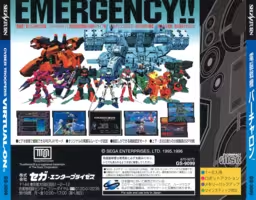 Back Cover
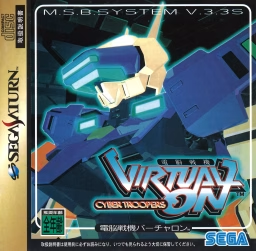 Instruction Manual
A home conversion of the high-octane 3D mecha fighter that brings the arcade’s dash-based combat and "Twin Stick" precision to the Saturn with impressive technical stability.
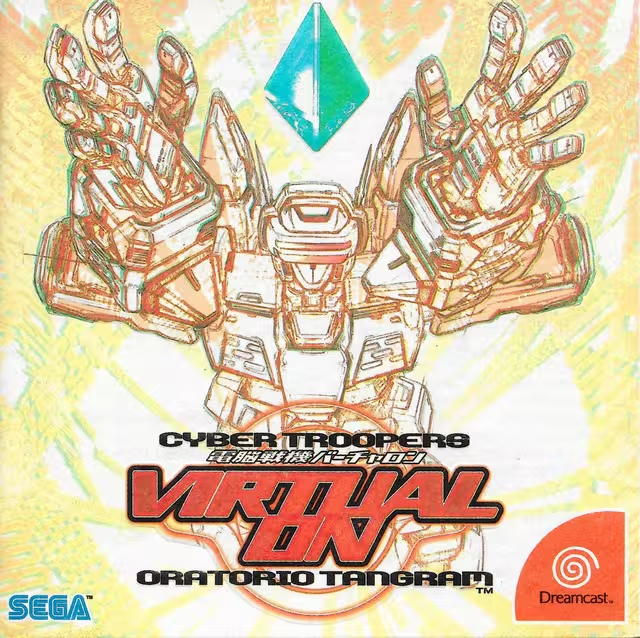
Dennō Senki Virtual-On (retrospectively often referred to as Cyber Troopers Virtual-On, combining the Japanese and Western names), is a high-speed 3D mecha arena fighter developed by the AM3 division, that serves as a technically ambitious port of the Model 2 arcade original. It is a defining title for the console, documenting one of the earliest successful translations of high-end 3D arcade hardware to a home system during the peak popularity of the series.
The gameplay features intense, one-on-one battles between massive robotic combatants “Virtuaroids” within various 3D arenas containing obstacles like buildings and pillars. You choose from a roster of eight distinct machines, such as the balanced Temjin or the heavy-hitting Dorkas. Each Virtuaroid possesses three primary weapon types: a primary projectile, a secondary explosive or area-of-effect attack, and a close-quarters melee strike. The experience is defined by its focus on movement, utilizing a dash-based system that allows you to perform high-speed manoeuvres and aerial attacks to out-position your opponent.
The title is famous for its dedicated Twin Stick control scheme, which replicates the arcade’s dual-joystick interface for enhanced precision. The game also supports a vertical split-screen mode for two-player competitive matches. The game prioritises performance, maintaining a stable 30 frames per second in both single-player and multiplayer modes. This feat was particularly noted at the time as a major accomplishment for the Saturn’s hardware, despite necessary graphical compromises such as reduced polygon counts and simpler texture mapping compared to the arcade version. A later SegaNet revision also provided online play over Sega’s Japanese XBAND system.
At the time of its release, Dennou Senki Virtual-On was praised for its fluidity and the depth of its combat system. Reviews in major magazines highlighted it as a showcase for the system’s 3D capabilities and noted that the AI provided a significant challenge for solo players. While some critics mentioned that the standard controller could feel “wonky” compared to the arcade sticks, the overall reception was overwhelmingly positive. It reflects the birth of a franchise that would go on to define the 3D mecha genre for decades, proving it could thrive outside the arcade and laying the groundwork for the series’ long-term presence on home hardware. It was succeeded by the Dreamcast version, Oratorio Tangram, which refined Virtual‑On with faster movement, tighter mechanics, console link support, and dramatically smoother visuals, representing a true next‑generation evolution of the formula
| Item Name |
|
|---|---|
| Original Name |
|
| Item Code |
|
| Item Number |
|
| Series | |
| Type | |
| Genre | |
| Theme | |
| Region | |
| Territory | |
| Packaging | |
| Documentation | |
| Developer | |
| Publisher | |
| Media | |
| Players | |
| Peripherals | |
| Sound Modes | |
| Classification | |
| Launch Price |
|
| Release Date | |
| Date Added |
|