ShellShock: Nam ’67
-
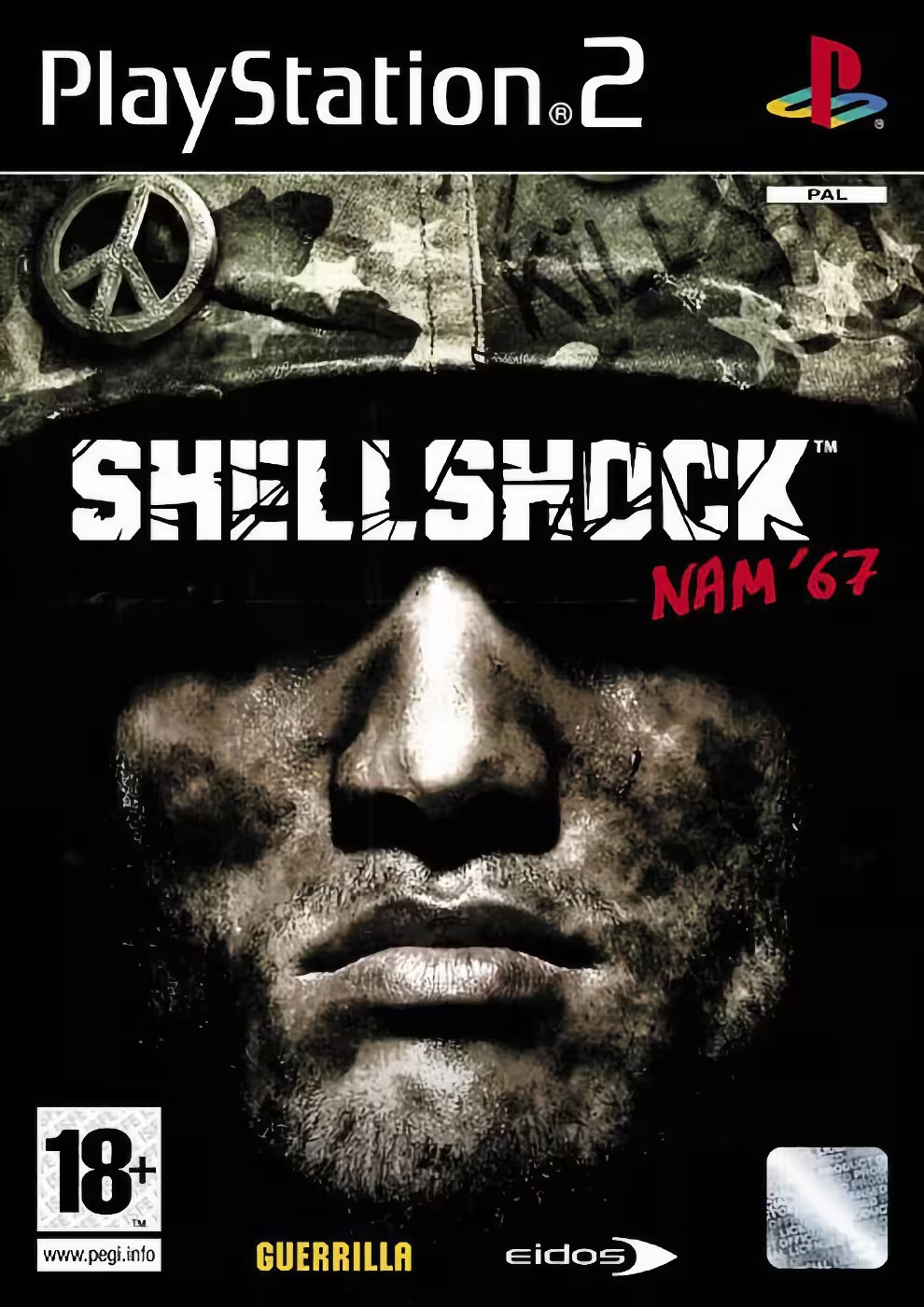
 Front Cover
-
 Back Cover
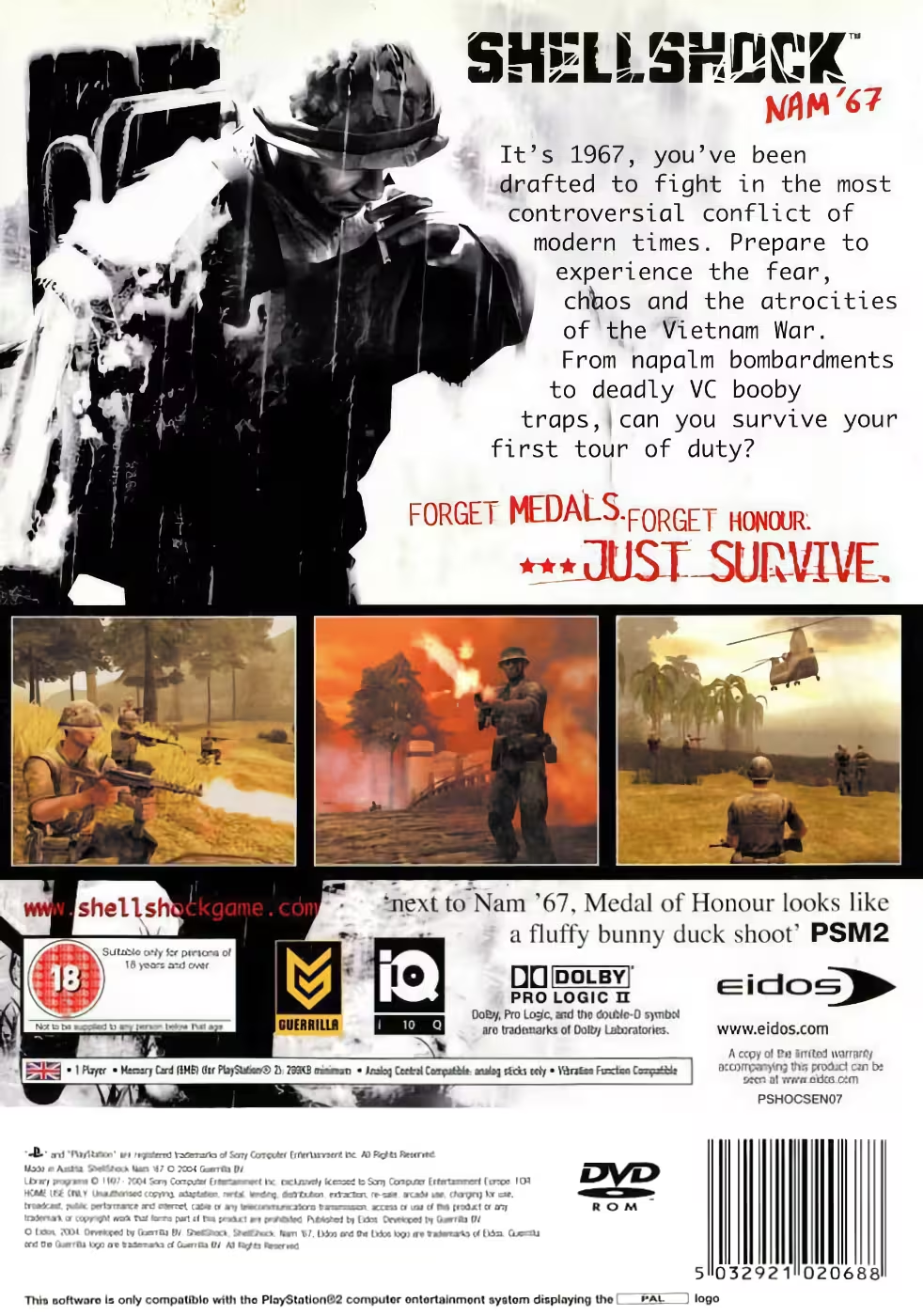
A gritty and controversial third-person shooter notable for its uncompromising depiction of the Vietnam War and for being the final multi-platform project from Guerrilla Games before their PlayStation exclusivity.
Description
ShellShock: Nam ’67 saw the genre attempt to pivot from the heroic, cinematic tone of Medal of Honor toward a grim, realistic portrayal of the horrors of war. The title arrived during a peak in the industry’s fascination with historical conflicts. It captures the psychological toll and moral ambiguity of the Vietnam era, moving away from the sanitised combat of the fifth generation in favour of an R rated experience that utilised a grainy 1960s film filter to mimic period war photography. The design direction prioritises immersion and shameless brutality, serving as an atmospheric, if provocative, snapshot of the mid-2000s shooter market.
The gameplay experience is built around a squad-based third-person perspective, where players assume the role of Caleb “Cal” Walker during his first tour of duty. Unlike the linear “corridor” shooters common at the time, the game features a central Base Camp hub where players can interact with NPCs, acquire “trophy” items from fallen enemies, and partake in light RPG elements like purchasing drugs or postcards. The combat is defined by a namesake Shellshock meter that simulates suppression and the physical toll of damage, forcing a more deliberate and tactical approach to the jungle’s booby traps and tunnel networks. Notably, the game features a detailed (and often graphic) damage system, allowing for the dismemberment of enemies, which was a core and controversial marketing point for the unrated vibe the developers were targeting.
On a technical level, the development involved the team’s transition from their work on the original Killzone to a multi-platform engine that prioritised atmospheric effects like volumetric fog and long draw distances on the PlayStation 2. A major technical positive was the audio presentation; the game is natively encoded in Dolby Pro Logic II, providing a dense 3D soundscape where the rustle of jungle foliage and the distant crackle of radio chatter are matrixed into a surround field. However, the game faced technical limitations, particularly regarding the control scheme and environmental interaction; the lack of a dedicated jump button resulted in notorious collision issues, where players would frequently get stuck on low-lying logs or small rocks. Additionally, while the frame rate is relatively stable, the grain filter while stylistic, can obscure enemy positions on standard-definition televisions.
The release of ShellShock: Nam ’67 received a polarising reception, with many praising its atmospheric immersion while others criticised its superfluous violence as tasteless. Magazine reviewers lauded the period-accurate soundtrack and the harrowing base-camp interactions, though they frequently noted that the actual shooting mechanics felt clunky compared to giants like Halo or Socom. Reception was particularly mixed in the PAL region, where its blunt portrayal of war atrocities led to significant debate regarding the limits of historical entertainment. Retrospectively, while technically unpolished and mechanically simplistic, it is an example of the “gritty” early-2000s aesthetic and a notable milestone in Guerrilla Games’ development history.
Datasheet
| Item Name |
|
|---|---|
| Item Code |
|
| Item Number |
|
| Series | |
| Type | |
| Genre | |
| Region | |
| Territory | |
| Packaging | |
| Documentation | |
| Developer | |
| Publisher | |
| Media | |
| Players | |
| Video Modes | |
| Sound Modes | |
| Classification | |
| Release Date | |
| Date Added |
|