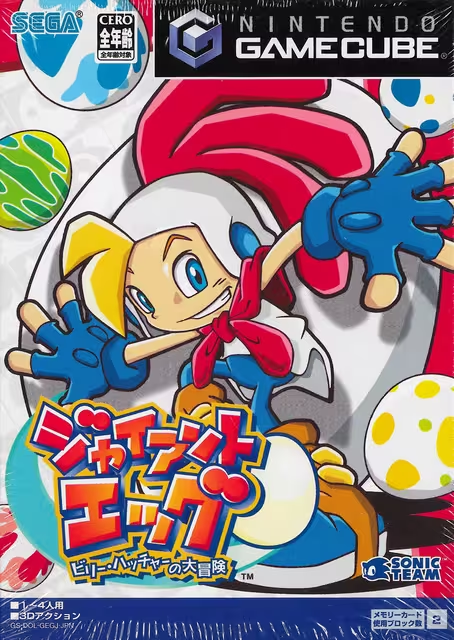
Giant Egg: Billy Hatcher no Daibōken
DOL-GEGJ-JPN
Video Game Collection


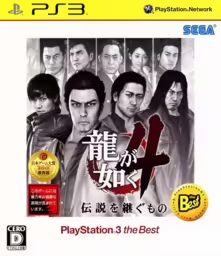 Front Cover
 Back Cover
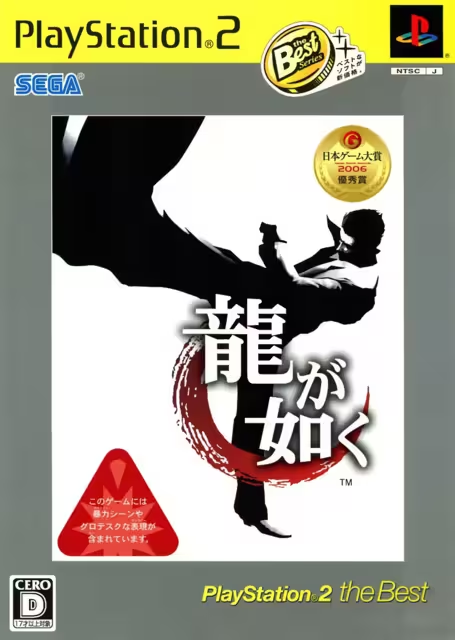
A multi-perspective urban drama that expands the structural scope of the series by distributing the narrative across four distinct protagonists. Exhibited the technical capacity to maintain individual mechanical identities within a unified open world environment.
Ryu ga Gotoku 4: Densetsu o Tsugumono examines the intersection of four disparate lives within the district of Kamurocho following a mysterious shooting incident. The narrative shifts focus from the established perspective of Kiryu Kazuma to include Shun Akiyama, a benevolent moneylender, Taiga Saejima, a death row inmate with ties to the Tojo Clan, and Masayoshi Tanimura, a young detective investigating his father’s death. It explores themes of financial redemption, the burden of a twenty five year old secret, and the systemic corruption within the police force and the yakuza hierarchy. The atmosphere is defined by a sense of interconnected fate as the specific motives of each man eventually converge on a conspiracy involving a massive amount of missing clan money. This entry follows the personal journey of Kiryu from Ryu ga Gotoku 3 while introducing characters who become central to the later events of Ryu ga Gotoku 5 and beyond.
The gameplay introduces a unique four part structure where each protagonist possesses a dedicated combat style and specific side activities. Akiyama utilises high speed kicks and evasion, Saejima relies on brute force and the ability to pick up massive objects, Tanimura focuses on parrying and arrests, and Kiryu maintains his balanced and powerful fighting techniques. A significant technical addition is the expansion of the Kamurocho map to include accessible rooftops and a subterranean sewer network, which provides more verticality than the previous PlayStation 3 title. The mechanics feature character specific heat actions and the introduction of the master training system where players engage in unique challenges to unlock advanced abilities. Players interact with the world through the fighter maker mode and the hostess management system, which were refined from the earliest instalments of the series. In contrast, the single protagonist structure of Ryu ga Gotoku 3 for its more complex and layered approach to storytelling.
Critics at the time of release praised the game for its narrative ambition and the successful integration of the four playable characters. Reviewers noted that the variety in combat styles effectively addressed the repetition found in earlier entries. The inclusion of the new vertical areas in Kamurocho was highlighted as a positive technical step forward for the franchise. Retrospectively it proved the series could thrive beyond the perspective of its original hero, expanding its scope without losing the intimacy of its urban setting. The work reflects the transition toward the ensemble cast dynamics that define the modern era of the franchise.
| Item Name |
|
|---|---|
| Original Name |
|
| Item Code |
|
| Item Number |
|
| Series | |
| Type | |
| Genre | |
| Characteristics | |
| Region | |
| Territory | |
| Packaging | |
| Documentation | |
| Developer | |
| Publisher | |
| Media | |
| Players | |
| Classification | |
| Launch Price |
|
| Release Date | |
| Date Added |
|