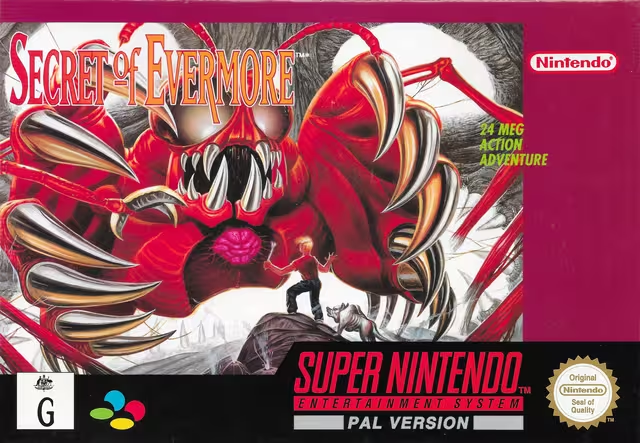
Secret of Evermore
SNSP-AEOP-AUS
Video Game Collection
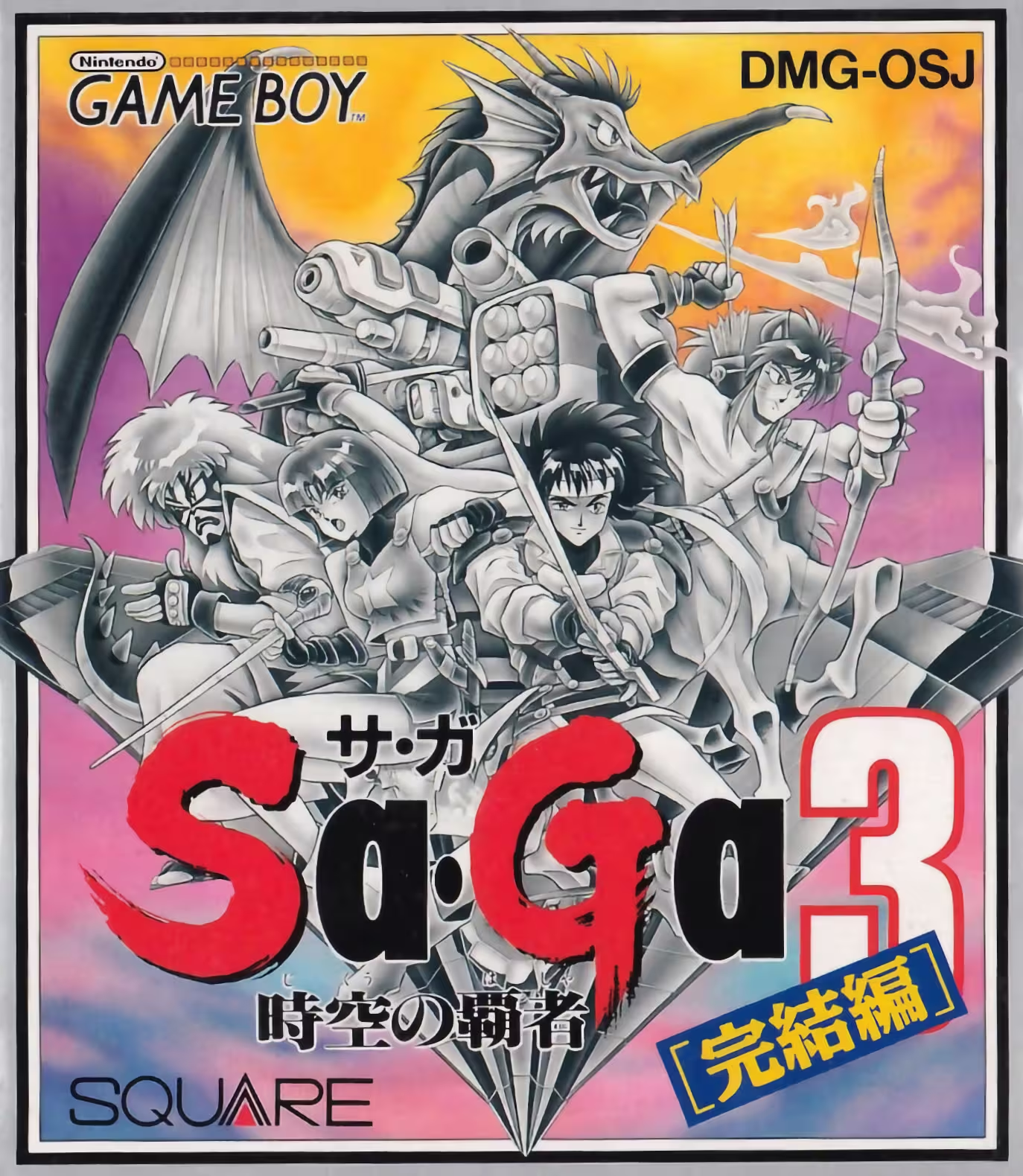
 Box Front
 Box Back
A handheld RPG about children sent across time to prevent a drowned future and confront the godlike force behind the world’s collapse. Its compact adventure mixes fantasy, science fiction, time travel, and class-changing systems into a more traditional RPG structure than the earlier Game Boy SaGa titles.
SaGa 3: Jikū no Hasha closed out the original Game Boy trilogy, arriving at a point where the series was splitting into two identities: the portable SaGa line, known overseas as Final Fantasy Legend, and the more ambitious Super Famicom direction that would become Romancing SaGa. Unlike the first two entries, this game was developed without Akitoshi Kawazu leading the original production, as Kawazu was working on Romancing SaGa; development instead shifted to Square’s Osaka team, which helps explain why it feels more conventional than its predecessors.
The journey follows four young heroes travelling between past, present, and future to stop a destructive Water Entity and alter history before the world is overwhelmed. Rather than moving through separate miniature worlds linked by a tower or pillar, the adventure is structured around different time periods and the gradual restoration and upgrading of the Talon, a time-travelling vessel central to progression. [strategywiki.org], [saga.fandom.com]
Its party system keeps some SaGa identity but softens the series’ harsher edges. The main cast is fixed rather than built entirely from scratch, and character growth uses more familiar experience points and ability development alongside transformation mechanics. Humans and mutants form the basic party, while meat and parts from enemies allow characters to shift into monsters, beasts, cyborgs, or robots, making the system more approachable than the earlier games while still retaining some of the series’ experimental flavour.
SaGa 3 is almost the counterpoint to SaGa 2, which carried forward the unusual, usage-based design philosophy that linked Kawazu’s work back to Final Fantasy II. This entry moves closer to a conventional story-driven RPG, with a preset cast, clearer plot direction, less punishing progression, and a stronger sense of linear adventure. This makes it feel more adjacent to mainstream Square RPGs of the period than the earlier, stranger SaGa entries.
Retrospectively, that conventionality makes it an unusual entry in the wider series. It is part of the original SaGa trilogy, but many of the traits later associated with the franchise: freeform structure, highly unusual growth, sharp mechanical opacity, and creator-driven experimentation, were carried forward more strongly by Romancing SaGa series than by this game. In that sense, SaGa 3 acts as both a finale to the handheld trilogy and a side branch. In the West it would again reflect Square’s overseas strategy of the era, being sold under the Final Fantasy Legend name despite belonging to the SaGa series in Japan.
| Item Name |
|
|---|---|
| Original Name |
|
| Item Code |
|
| Item Number |
|
| Series | |
| Type | |
| Genre | |
| Territory | |
| Packaging | |
| Documentation | |
| Developer | |
| Publisher | |
| Media | |
| Players | |
| Launch Price |
|
| Release Date | |
| Date Added |
|