Super Famicom
スーパーファミコン-
Super Famicom
-
Left
A 16-bit home video game system designed to deliver advanced graphics and audio capabilities for the early 1990s, establishing Nintendo’s leading position in the fourth console generation.
Description
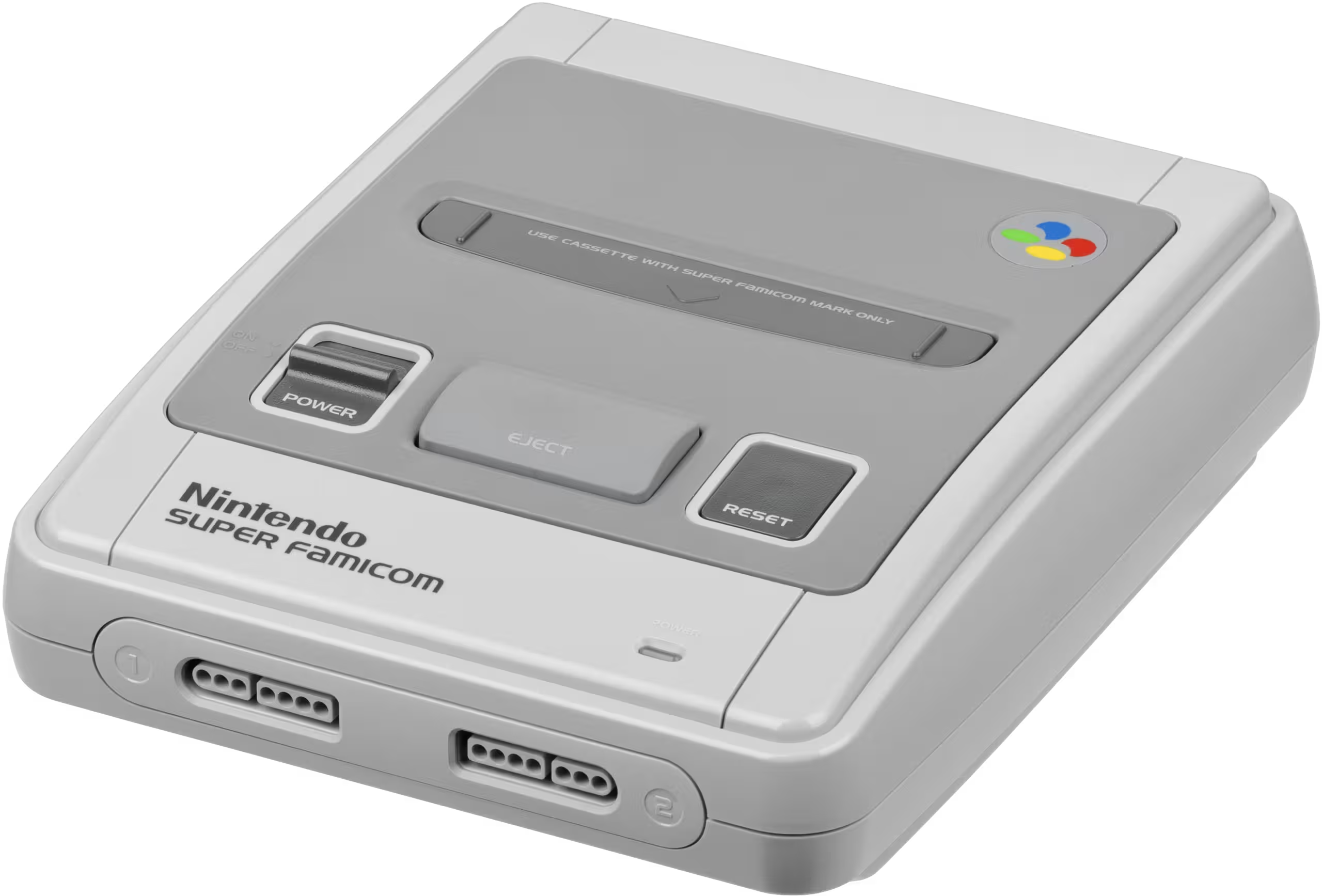
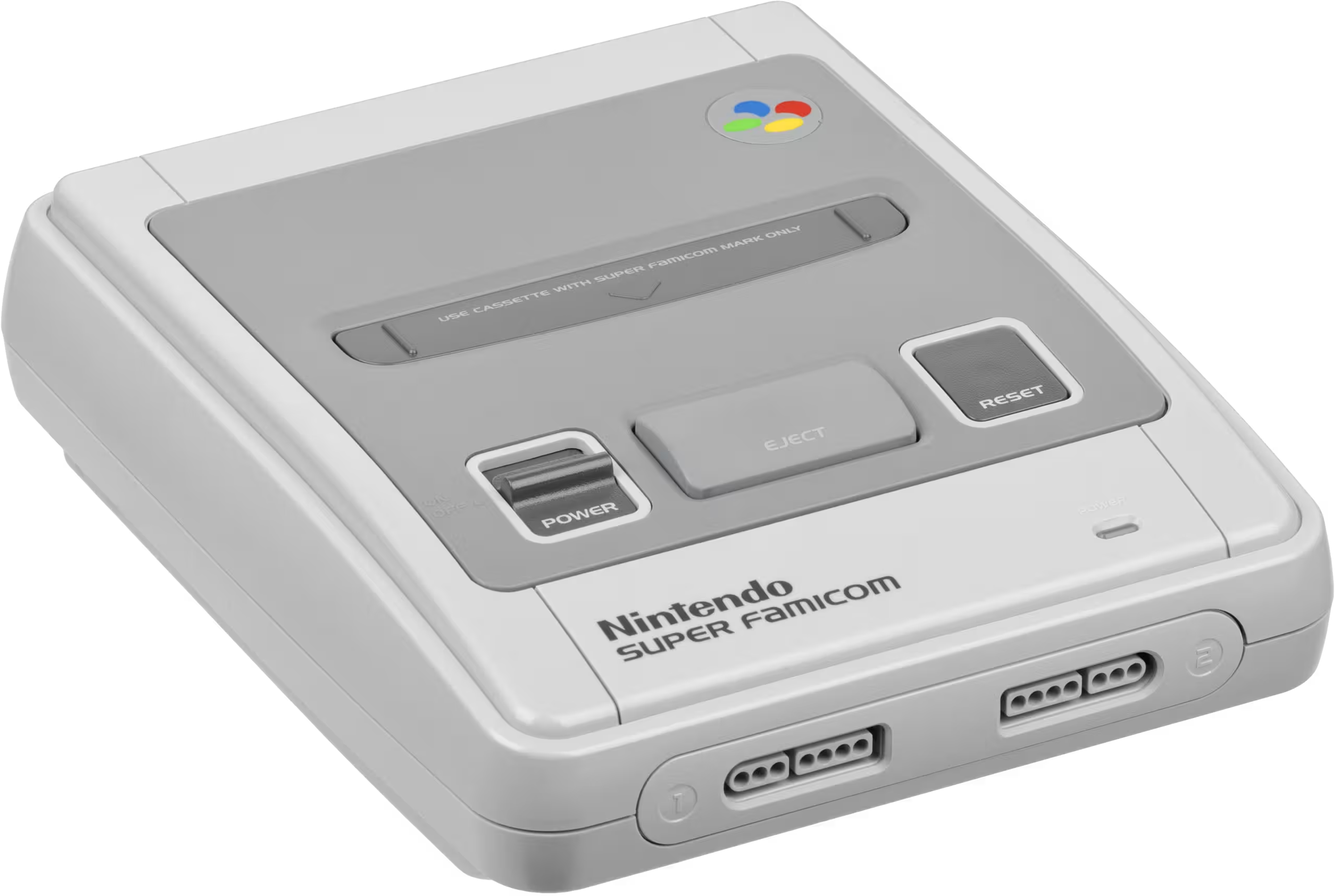
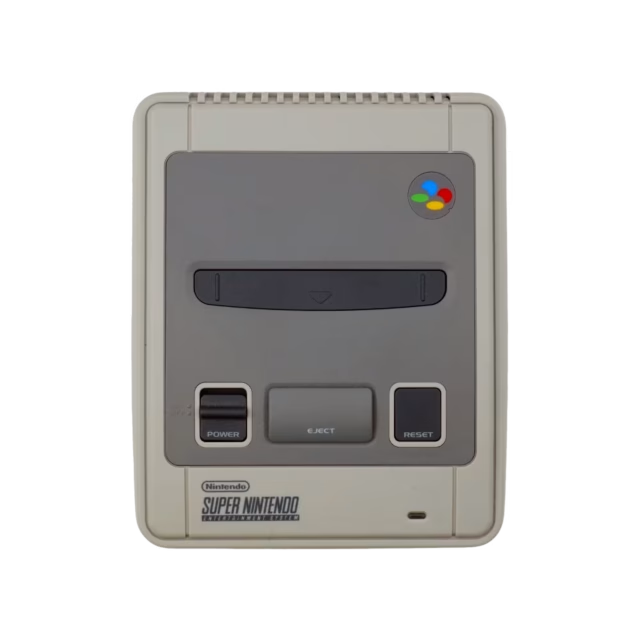
The Super Famicom features a compact grey chassis with a top-loading cartridge slot, two controller ports, and a front-mounted power and reset switch. Internally, it contains:
- Ricoh 5A22 CPU based on the 65C816 architecture, running at 3.58 MHz.
- Memory includes 128 KB of main RAM
- Graphics are handled by a custom PPU (Picture Processing Unit) supporting multiple background layers, hardware scrolling, and Mode 7 affine transformations for pseudo-3D effects.
- Video outputs at 256×224 resolution (or 512×448 interlaced) with a palette of 32,768 colours, displaying up to 256 colours simultaneously.
- Audio is processed by a Sony SPC700 sound chip with an 8-channel sample-based system and 64 KB of dedicated audio RAM, enabling high-quality music and effects.
- Internal RF modulator for output to older TVs by antenna input.
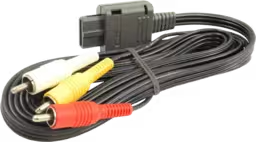
- Multi AV output supporting composite, s-video, and RGB video with stereo audio output.
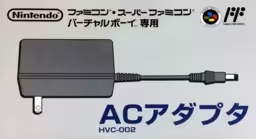
- Power input supplied through a 10 V DC adapter, although early models would accept 10 V AC and rectify internally.
- Game cartridges often incorporated additional RAM or enhancement chips such as Super FX for advanced rendering.
At release in Japan (1990), the Super Famicom was praised for its graphical sophistication and rich audio, positioning Nintendo as a dominant force in the 16-bit era. Retrospectively it was the most influential consoles of its generation, with technical versatility, an extensive software library, with the greatest cultural impact during the early 1990s.