Hundred Swords
ハンドレッド ソード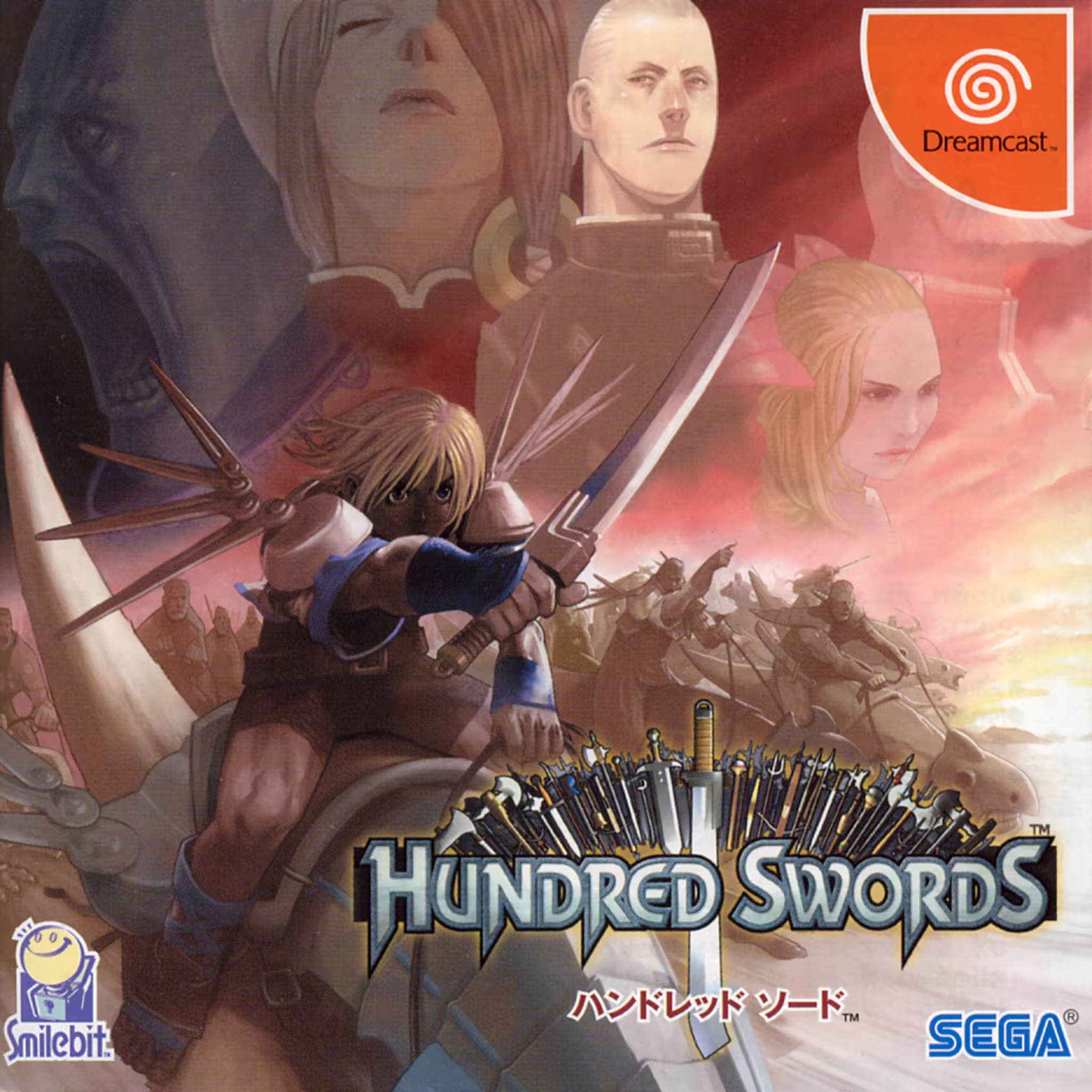
-
 Front Cover
-
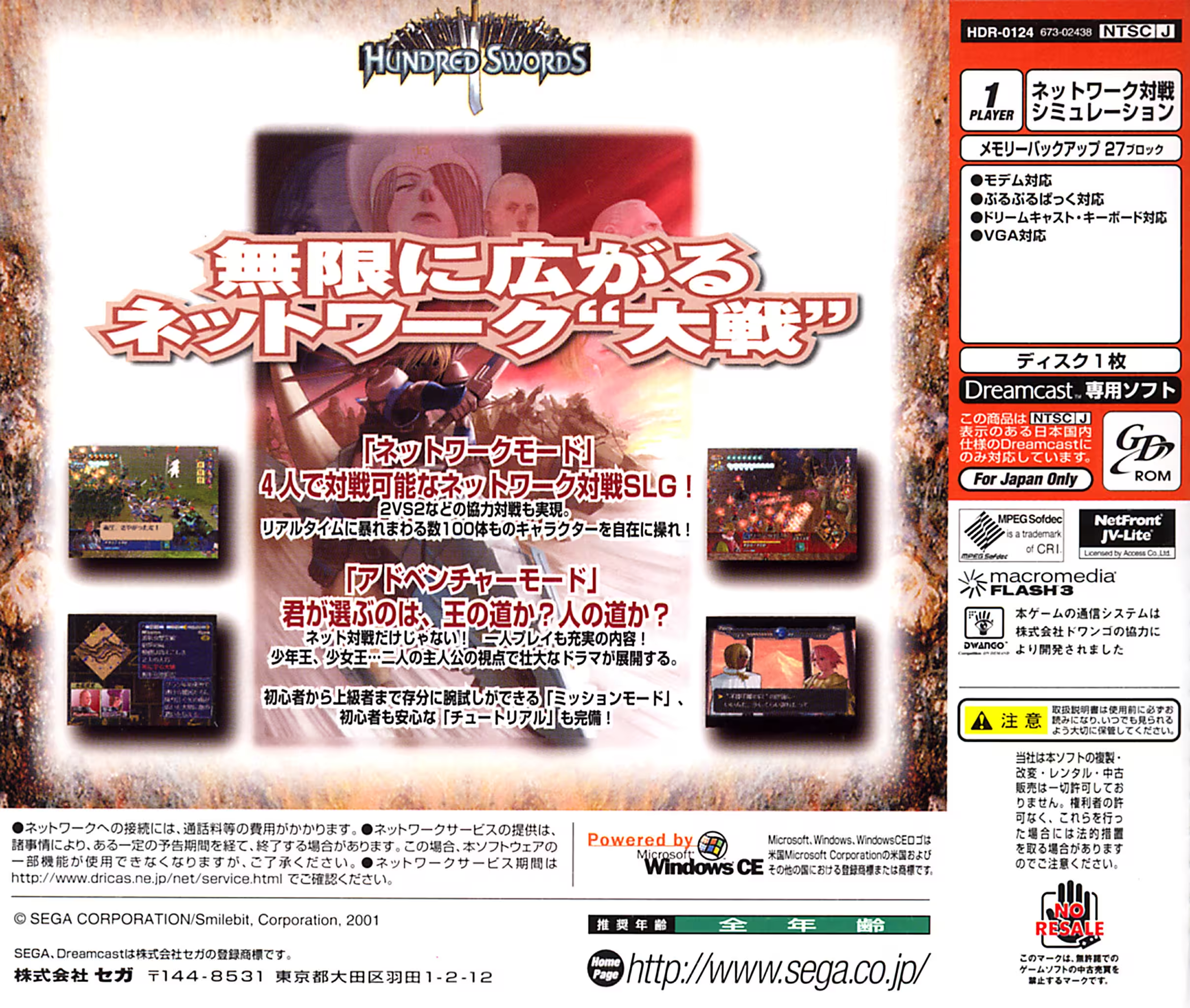
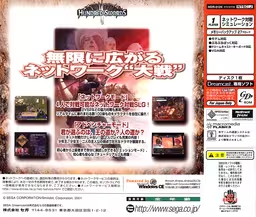 Back Cover
-
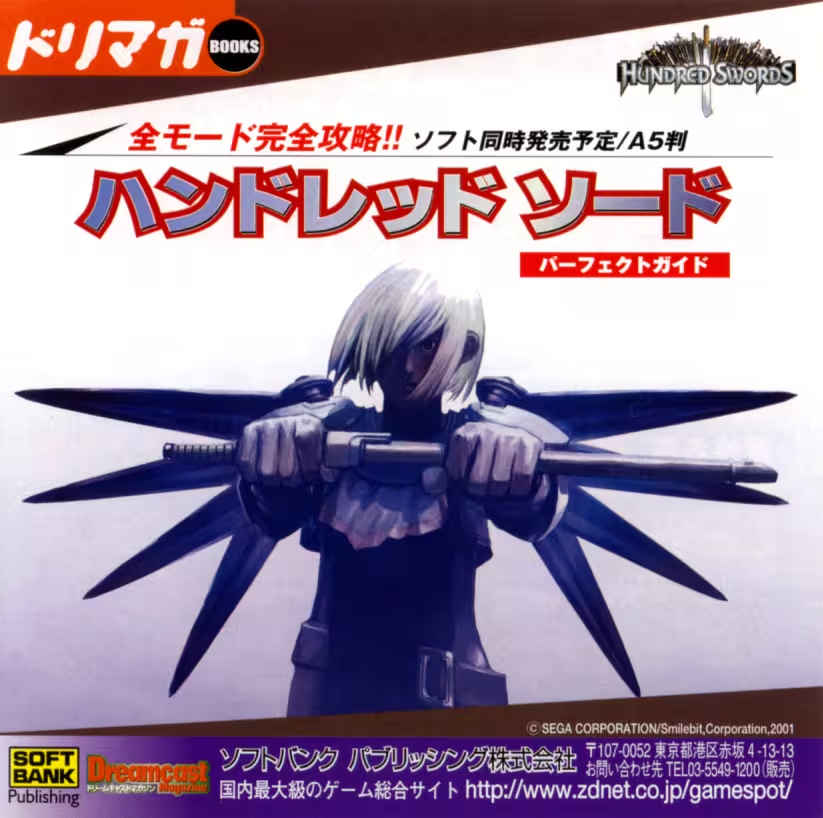
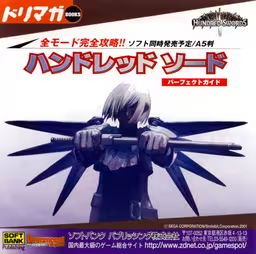 Guide Book Flyer
A real‑time strategy game that combines traditional RTS mechanics with a distinctive fantasy setting and was one of the few attempts to bring the genre to Dreamcast console.
Description
Hundred Swords stood out because Sega rarely published large‑scale strategy games on its consoles. The title attempted to adapt the PC‑centric RTS formula to a controller‑based interface, which was a challenge in itself. Gameplay revolves around commanding armies of fantastical units across sprawling maps, with the player managing resources, constructing bases, and deploying troops in real time. Unlike some of its contemporaries, Hundred Swords placed a strong emphasis on unit formations and group tactics rather than micromanagement of individual soldiers. The game’s name reflects the idea of commanding vast numbers of troops, creating the spectacle of large‑scale fantasy battles.
The tone is firmly rooted in high fantasy, with a narrative that pits rival kingdoms and factions against one another in a struggle for dominance. Story sequences are presented with anime‑inspired artwork and voice acting, giving it a distinct personality compared to the more utilitarian presentation of Western RTS games. This hybrid of Japanese style of a more western genre really worked for me. As a person who had grown up with both PC RTS games and Japanese console titles, it found the best of both.
Reception was mixed. Critics praised its ambition, art style, and attempt to bring RTS gameplay to a console audience, but many felt the controls were cumbersome compared to mouse‑based PC strategy titles. You could of course play with a keyboard and mouse, which really cancelled the major criticism. On Dreamcast, Hundred Swords is also notable for supporting online multiplayer in Japan, making it one of the console’s early experiments with networked strategy play. The game found a small cult following among Dreamcast enthusiasts, partly because of its rarity and partly because it represents Sega’s willingness to experiment with genres outside its usual arcade‑driven comfort zone.
Datasheet
| Item Name |
|
|---|---|
| Original Name |
|
| Item Code |
|
| Item Number |
|
| Type | |
| Genre | |
| Characteristics | |
| Region | |
| Territory | |
| Packaging | |
| Documentation | |
| Developer | |
| Publisher | |
| Media | |
| Players | |
| Peripherals | |
| Video Modes | |
| System Software | |
| Middleware | |
| Classification | |
| Launch Price |
|
| Release Date | |
| Date Added |
|