Sega GT 2002
セガGT2002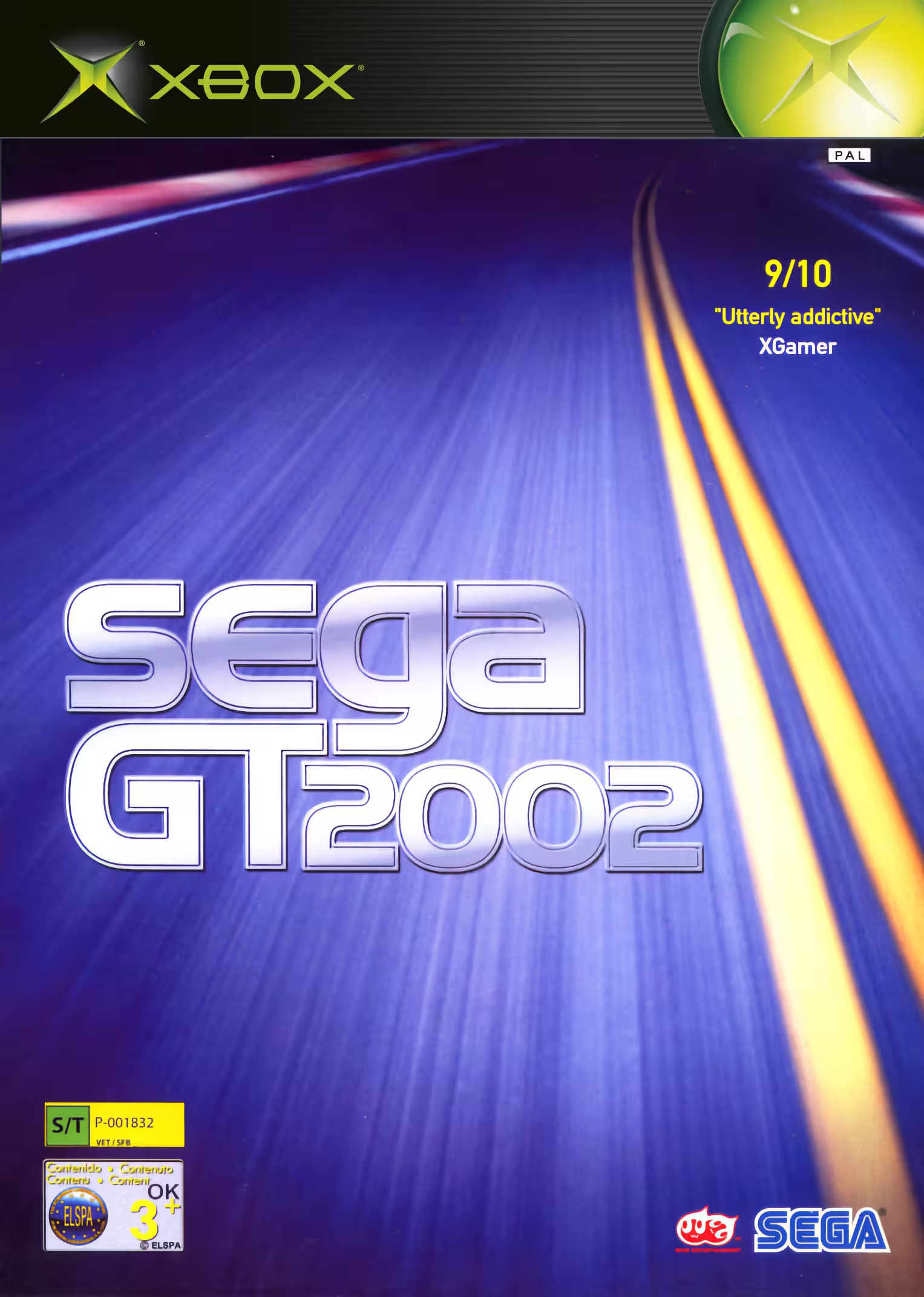
-
 Front Cover
-
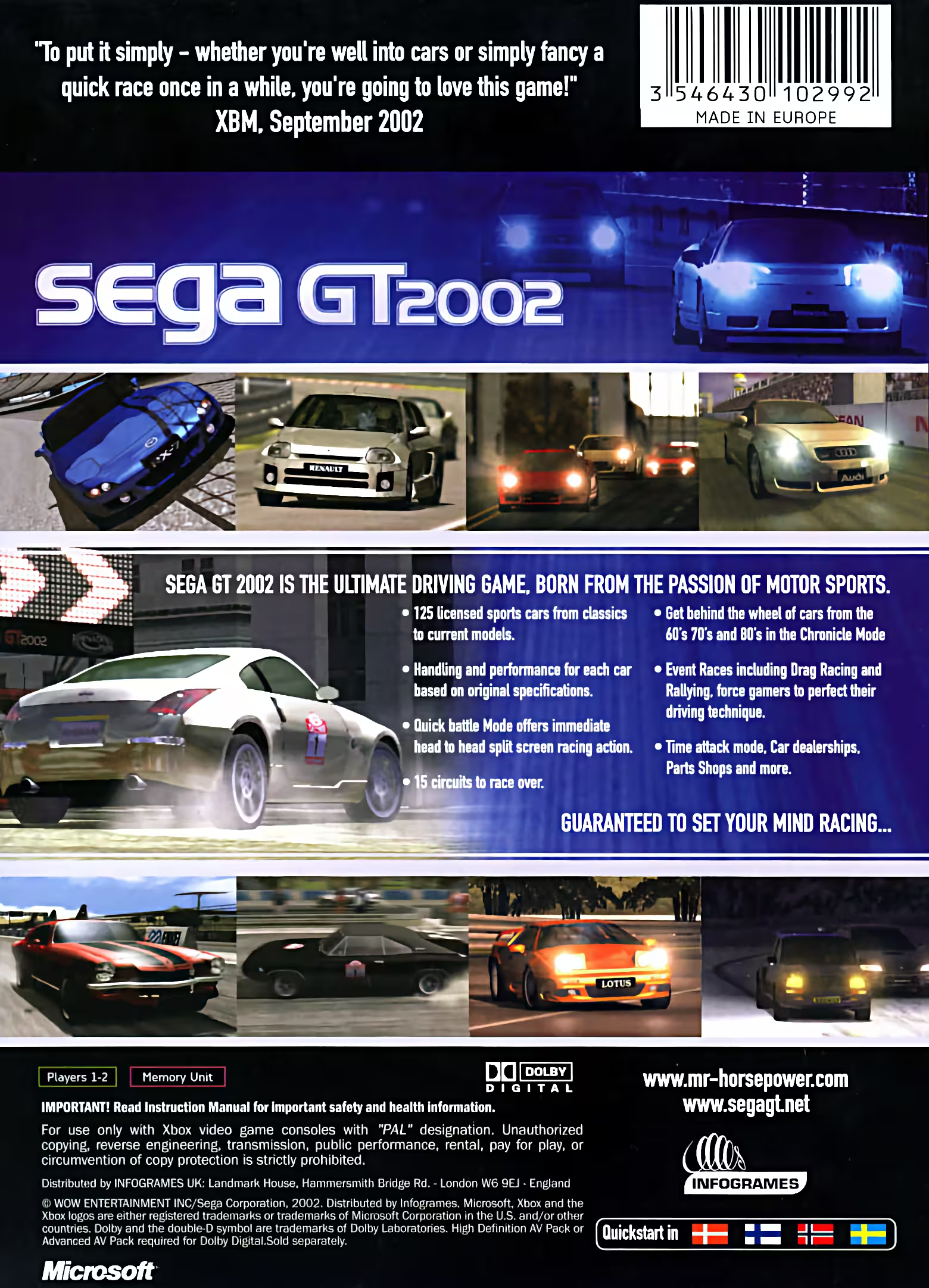
 Back Cover
An Xbox-exclusive racing simulation racer that expanded upon its Dreamcast predecessor with deep tuning mechanics, a time-spanning Chronicle Mode, and a unique damage-penalty economy. Praised its presentation and engaging career progression, but ultimately compared unfavourably to Gran Turismo 3 with a smaller scope.
Description
Sega GT 2002 is the direct sequel to the Dreamcast original Sega GT, positioned as Sega’s primary competitor to the Gran Turismo franchise. The game blends simulation driving physics with slightly forgiving arcade sensibilities. A standout feature of the title is Chronicle Mode, which tasks players with purchasing classic 1970s vehicles and tuning them to compete against increasingly modern cars as the in-game decades progress. The campaign also introduces a unique damage economy; while cars do not show physical deformation, reckless driving fills a damage meter that actively deducts from the player’s prize money at the end of a race, heavily incentivizing clean, precise driving over aggressive cornering.
During its release, the game was warmly received by critics and racing fans. Reviewers frequently praised the detailed car models, the steady 60 frames-per-second performance, and the deep, rewarding vehicle tuning mechanics. The introduction of Chronicle Mode was specifically highlighted as a clever, engaging way to experience the historical evolution of global automotive engineering. However, the title was almost universally compared to Gran Turismo 3: A-Spec, with critics penalising Sega GT 2002 for its significantly smaller roster of around 125 cars and a comparatively forgiving difficulty curve that lacked the punishing simulation depth of its main rival.
In North America the game was heavily distributed by Microsoft as a massively popular dual-disc pack-in bundle alongside Jet Set Radio Future, making standalone copies far less common. This wasn’t the case in PAL territories where both titles were regular releases. In retrospect, it is a premier example of Sega’s strong early-2000s transition onto Xbox hardware, effectively continuing the company’s Dreamcast-era arcade and simulation lineage. While it may not have dethroned the dominant simulation racers of the sixth console generation, it nicely balanced accessible handling and realism with smooth performance and the novelty of its economy-driven career mode.
Datasheet
| Item Name |
|
|---|---|
| Original Name |
|
| Item Code |
|
| Item Number |
|
| Series | |
| Type | |
| Genre | |
| Characteristics | |
| Region | |
| Territory | |
| Packaging | |
| Documentation | |
| Developer | |
| Publisher | |
| Distributor | |
| Media | |
| Players | |
| Video Modes | |
| Sound Modes | |
| Classification | |
| Launch Price |
|
| Release Date | |
| Date Added |
|
| External Links |
|
Related Products
-
 Alias40232.11 AUS, AC-022
 -
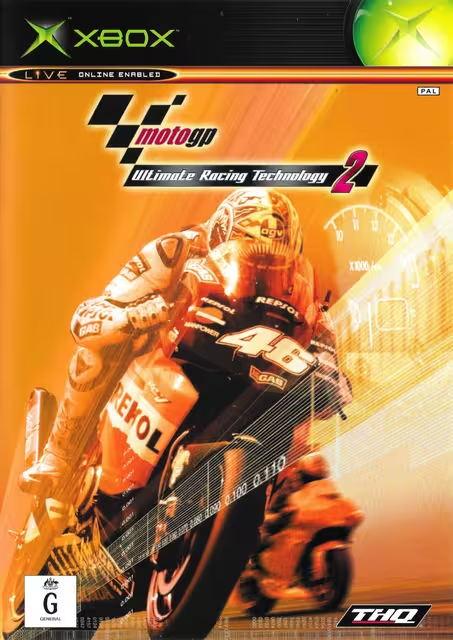 MotoGP Ultimate Racing Technology 2TQ-022, T29-000??
 -
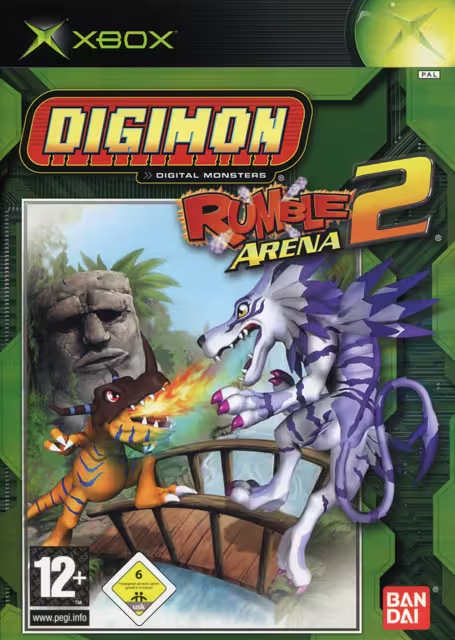 Digimon Rumble Arena 2BA-001
 -
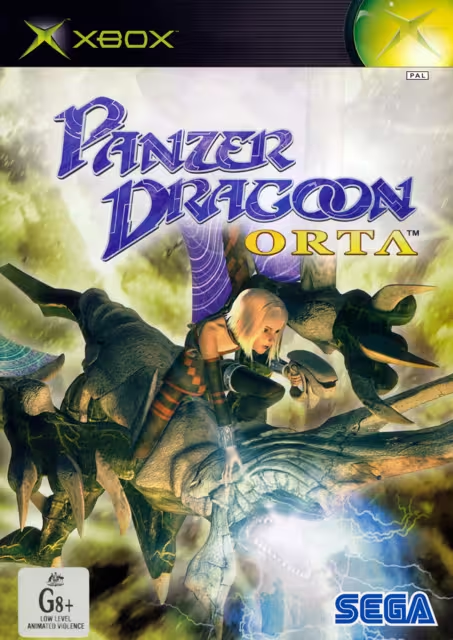 Panzer Dragoon OrtaIG-043
 -
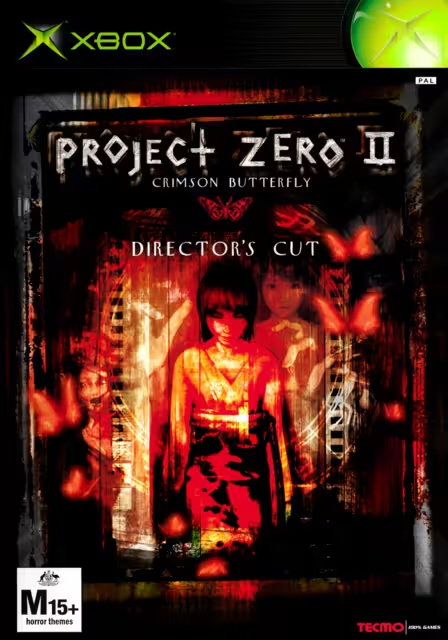 Project Zero II: Crimson Butterfly - Director's CutZJ5-00020, TC-010
 -
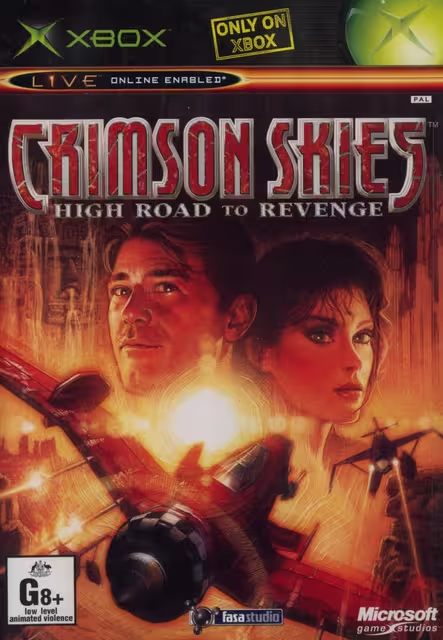 Crimson Skies: High Road to RevengeP06-00002, MS-033
 -
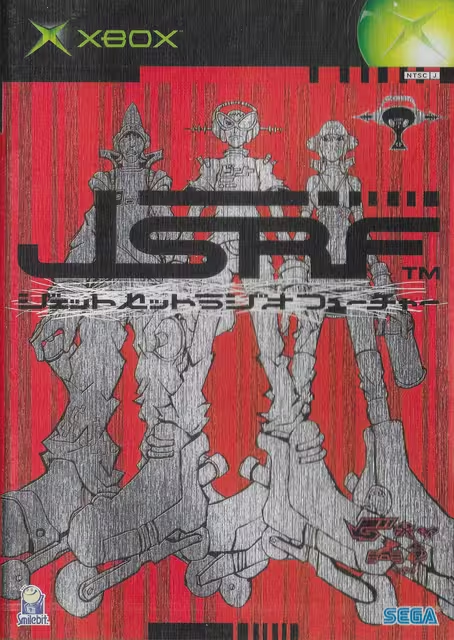 Jet Set Radio FutureK56-00003, SE-010
 -
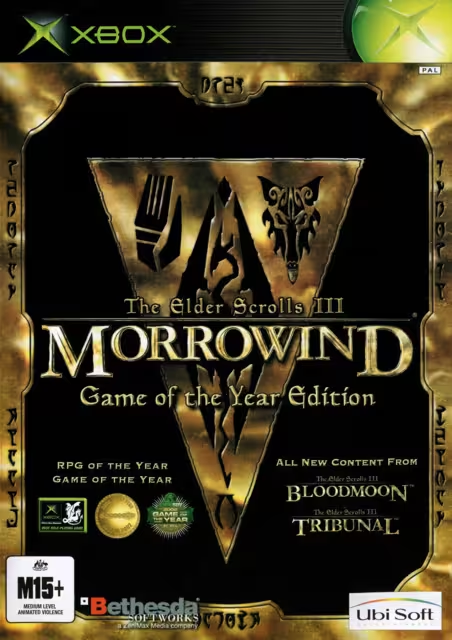 The Elder Scrolls III: Morrowind (Game of the Year Edition)1128367, BS-005